

4 million Umrah visas issued in 5 months: Ministry

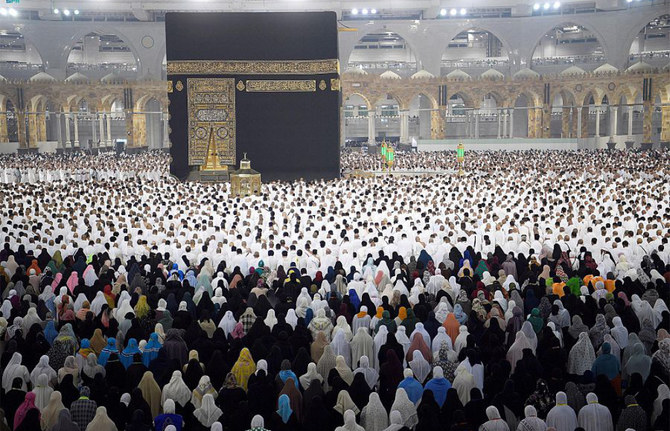
4 million Umrah visas were issued by the Saudi government to pilgrims from around the world. (SPA)
Short Url
Updated 13 December 2022
Follow

4 million Umrah visas issued in 5 months: Ministry

  • The Nusuk platform facilitates procedures to book an appointment for the Umrah pilgrimageSaudi Arabia has also extended the Umrah visa from 30 to 90 days, along with allowing pilgrims to enter the Kingdom through all air, land and sea entry points

RIYADH: Saudi Arabia issued 4 million Umrah visas for pilgrims from around the world since the start of this year’s season, the Ministry of Hajj and Umrah said.

It comes within the framework of the ministry’s efforts — in partnership with several sectors in the Hajj and Umrah industries — to facilitate the arrival of Umrah pilgrims through online visa applications on its website and Nusuk platform.

This aims to facilitate the arrival of Umrah pilgrims to the Kingdom, offering them high-quality services to perform rituals peacefully and enrich their cultural and spiritual journey, in line with Saudi Vision 2030 programs.

Pilgrims and visitors from abroad can find information about obtaining a visa and applying at haj.gov.sa/ar/InternalPages/Umrah. They can select packages and pay online through the Nusuk (nusuk.sa) and Maqam platforms at the following link: Maqam.gds.haj.gov.sa.

Muslims who have obtained personal, visit and tourism visas, along with other types of visas, can perform Umrah, as well as visit and pray in the Rawdah at the Prophet’s Mosque after booking appointments through the Nusuk platform.

Saudi Arabia has also extended the Umrah visa from 30 to 90 days, along with allowing pilgrims to enter the Kingdom through all air, land and sea entry points.

The Nusuk platform facilitates procedures to book an appointment for the Umrah pilgrimage and visit the Prophet’s Mosque for pilgrims who have obtained a visa, as part of easy online procedures around the clock.

Information on the list of authorized agents is provided by the ministry on: Eservices.haj.gov.sa/eservices3/pages/VisaInquiry/SearchVisa.xhtml?dswid=-4283.


Saudi deputy FM attends OIC ministers’ meeting on Somalia situation

Updated 11 January 2026
Follow

Saudi deputy FM attends OIC ministers’ meeting on Somalia situation

JEDDAH: Saudi Arabia Vice Minister of Foreign Affairs Waleed Elkhereiji has reaffirmed the Kingdom’s full support for Somalia’s sovereignty, unity and territorial integrity, while strongly rejecting any actions that undermine the country’s stability.

Speaking at an extraordinary meeting of foreign ministers from member states of the Organization of Islamic Cooperation, Elkhereiji condemned the declaration of mutual recognition between Israeli occupation authorities and the Somaliland region, describing it as a unilateral separatist move that violated international law, the UN Charter and the OIC Charter.

He stressed the Kingdom’s categorical rejection of any attempts to impose parallel entities that contradict Somalia’s unity and territorial integrity, or that seek to divide or diminish its sovereignty. Elkhereiji also reiterated Saudi Arabia’s support for Somalia’s legitimate state institutions and its commitment to preserving the country’s stability and the security of its people.

Elkhereiji called on the OIC and its member states to adopt a firm and unified Islamic position rejecting any recognition of, or engagement with, separatist entities in Somalia. He urged coordinated action in international forums to affirm Somalia’s unity and prevent what he described as dangerous precedents that could threaten the sovereignty of OIC member states.

He further called for holding the Israeli entity fully responsible for any political or security consequences resulting from such actions, and for rejecting any cooperation arising from the declaration of mutual recognition.

During the meeting, he also reiterated the Kingdom’s position on the Palestinian cause, emphasizing its centrality and Saudi Arabia’s support for efforts to secure a ceasefire in the Gaza Strip. He said this would enable the Palestinian people to exercise their right to self-determination and establish an independent state along the 1967 borders, with East Jerusalem as its capital.