

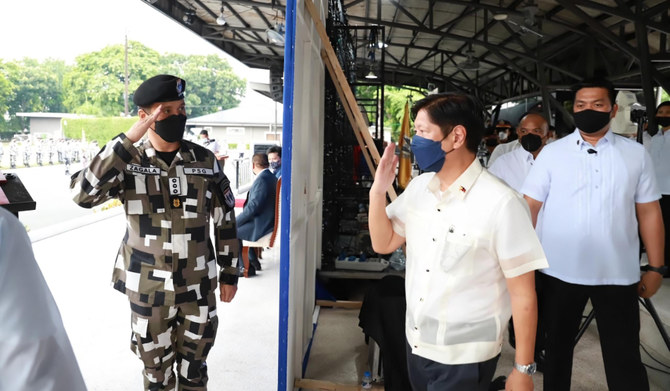


MANILA: When Col. Ramon Zagala took on his new duties in late June, he knew that every day might require of him the sacrifice of life — like of the other 1,000 elite security men protecting the most powerful person in the Philippines.
Col. Zegala became Presidential Security Group commander and senior military assistant on June 30, chosen by President Ferdinand Marcos Jr. who on the same day took over from Rodrigo Duterte to rule the country until 2028.
Marcos remembered Zagala, a special forces member and former military spokesman, from the time he served as aide-de-camp of President Joseph Estrada — the actor-turned-politician who was ousted in 2001, just three years after taking office.
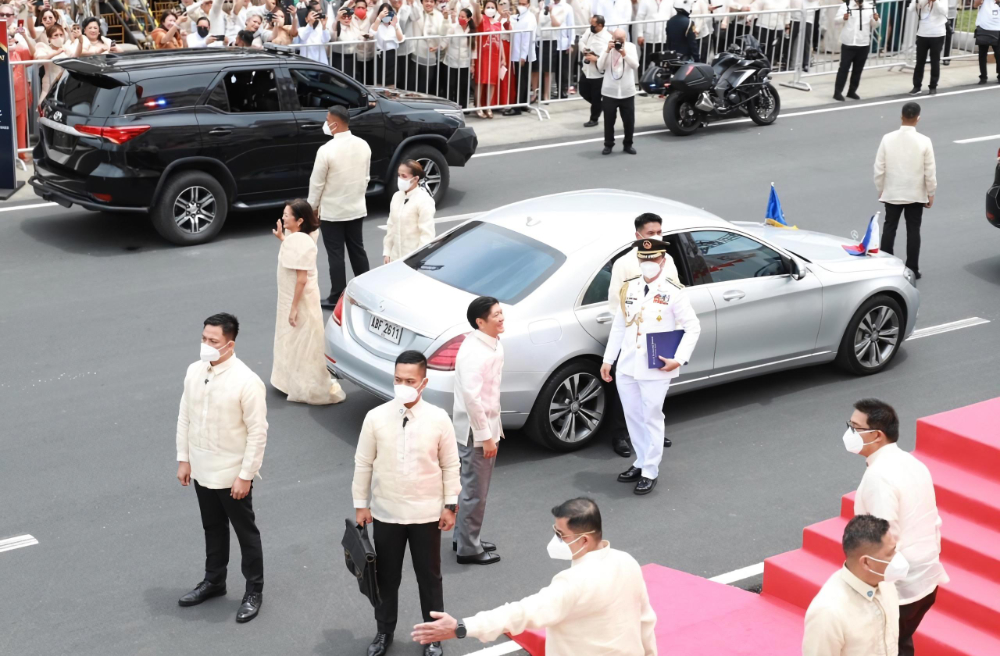
Surrounded by Presidential Security Group personnel, Philippine President Ferdinand Marcos Jr. attends his first State of the Nation address at the House of Representatives in Quezon City, suburban Manila on July 25, 2022. (Presidential Security Group Commander Office)
“He told me that he got me because he saw how I defended President Estrada. That I never left President Estrada. That I did all I can to protect President Estrada,” Zagala told Arab News in a recent interview.
FASTFACT
The joint service unit that Col. Ramon Zagala is now heading is the primary agency concerned with providing close-in security to the president and the first family, everywhere they go — at home and abroad.
“He said he saw (how) when everybody abandoned President Estrada, I did not…He said that he saw that. And he knows that he that I will protect him also, that I will not abandon him.”
But the appointment two decades later came as a surprise.
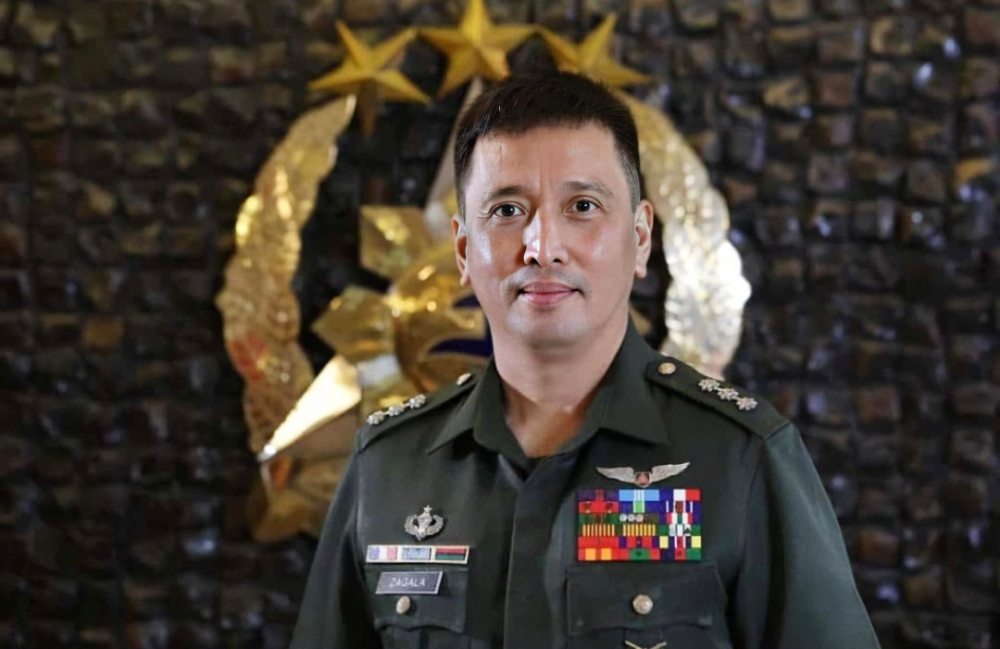
Former Armed Forces of the Philippines spokesman Col. Ramon Zagala became Presidential Security Group commander on June 30, 2022. (Photo courtesy of Col. Ramon Zagala)
“I wasn’t expecting it,” Zagala said. “It is a privilege to return to continue a mission that I left behind 21 years ago…With so many lessons learned, so many experiences in the past 21 years, I’m ready to take on this mission again.”
Zagala is the son of retired Maj. Gen. Rafael Zagala, army chief from 1972 to 1975 during the time of Marcos’s father, Ferdinand Marcos Sr., who ruled the country for three decades until he was removed in a popular uprising in 1986.
The joint service unit that Zagala is now heading is the primary agency concerned with providing close-in security to the president and the first family, everywhere they go — at home and abroad. Its formation dates back to 1897 when a unite was established to protect the first Philippine president, Emilio Aguinaldo, from attempts on his life.
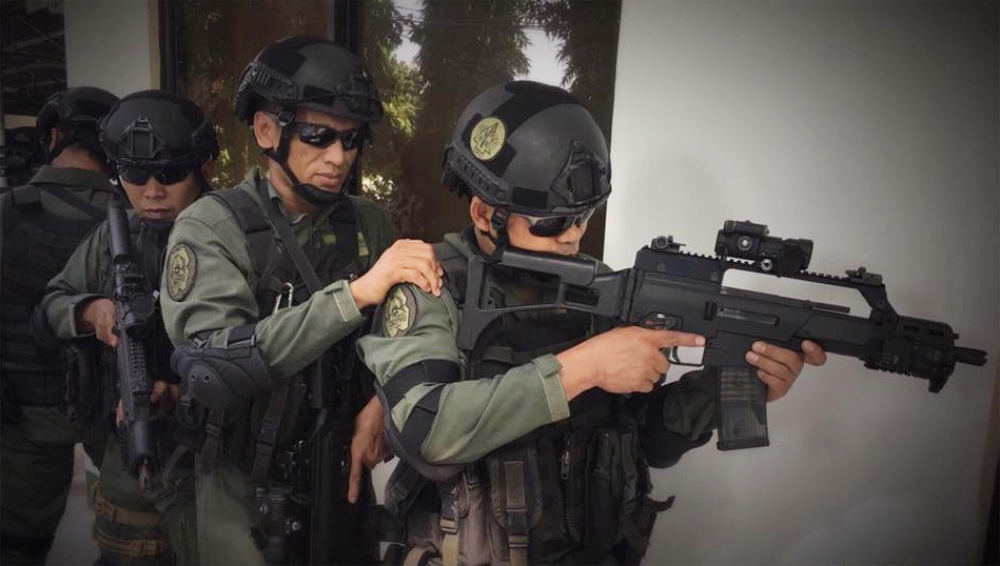
Presidential Security Group personnel carry arms during a drill in 2016. (Presidential Security Group/File)
“We’re more or less 1,000 personnel,” he said. “This is a unique unit. This is the only unit of the Armed Forces of Philippines that has control of other agencies outside of the AFP.”
Together with attached personnel from other forces, which also include the Philippine National Police and Coast Guard, the PSG comprises over 1,800 members of security forces.
They are the best of the best.
“The PSG is an elite unit, primarily because the nature of the mission is to protect the president. So, we choose the best, always,” Zagala said.
“In the oath of the PSG, there is a stanza there: ‘When it becomes necessary that I make the ultimate sacrifice, then let it be so.’ So can you imagine the commitment that is needed to come from you to be able to fulfill that…(to) give your life to protect the president…This is high-level engagement.”
PSG officers never drop their guard. They all know they are on a mission and follow its requirements.
“There is never a time that we will leave the president. There is always a blanket of protection. There is no time for those on duty to lower their guard,” Zagala said. “Probably the most relaxing thing we can do is to sit down.”
What makes the task slightly easier is the fact that the president is an armed forces officer and has received rigorous military training in his youth. He understands the tasks of his security team and relates to them.
“He considers himself a soldier,” Zagala said. “We talk about training, hardships of soldiers, how you endure training, and funny moments in training.”
What poses the biggest difficulty in protecting him is his popularity.
Marcos, 64, scored a landslide victory in the presidential election in May, winning nearly 60 percent of the vote, as he promised unity, prosperity and happiness to the 110 million population weary of years of political polarization and pandemic hardship.
His public appearances attracted huge crowds during the presidential campaign and continue to do so since he assumed office.
“He’s a very popular president and people gravitate to him. Being part of PSG is sometimes difficult because when people swarm, you don’t know (what could happen). But of course, we understand that the president is loved by the people. And wherever he goes, he expects to see the people,” the PSG commander said.
“He’s popular; people go near him. And, of course, nowadays because of COVID, because of sicknesses and all that, we just want to protect him.”
Service requires of officers to be entirely nonpartisan and see the president solely as the “chief executive, as our commander in chief.”
“Nothing more, nothing less. And from there we can do our jobs well,” Zagala added.
“We don’t look at politics. Because if we look at that, we won’t be able to do our job. I have to put emphasis: We are not politicians, we are soldiers.”
Personal thoughts and opinions return to them only when their service is over.
“But while in the service, you just fulfill that mission…We see ourselves as non-partisan, and we see the president as someone who needs to work. And he cannot do his work well if he is not safe. And he cannot be safe if we do not do our work well.
“He will only be able to deliver the promise of unity, the promise of economic recovery, the promise of prosperity if he is safe and his mind is safe from any thoughts of aggression against him.”
The suspension in political views, full-time availability, and vigilance are not the only personal sacrifices that PSG officers make to fulfill their duty. The engagement also comes at the significant cost of renouncing their family life throughout the period of service.
But it is also in family where many of them, including the top commander, find the strength to carry on.
The families of PSG officers are the unknown soldiers of the force, playing a significant role when the men protecting the country’s top leader have succeeded.
For Zagala, his wife Nenita has been the key source of support not only for himself but also for the families of other members of his team.
“We draw our strengths from them because the job requires you to have support. And for me, my biggest supporter is my wife and my family. They’re an integral part in what I succeeded in,” he said.
“My wife, she takes care of…the morale and welfare of other members of the PSG, especially the wives, the children — she takes care of that.
“She makes sure she makes activities for the wives. She looks out for them. She makes projects that will be beneficial to them…She does it because she knows that the PSG is not just a unit, it’s a community.”


