

Ceer EV plant to be built in Emaar EC in $95m deal

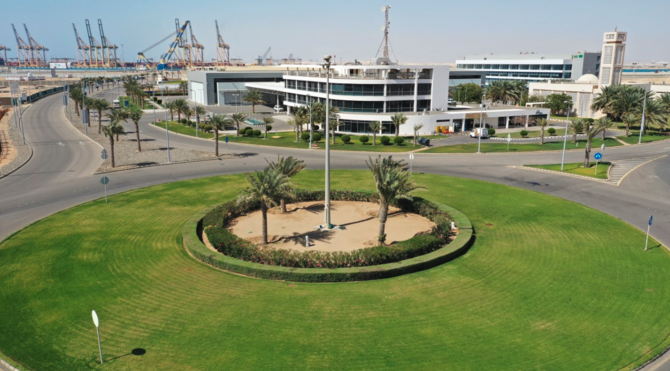
The site location covers over 1 million sq. m. and will be the location for Ceer’s manufacturing facility (Supplied)
Short Url
Updated 29 November 2022
Follow

Ceer EV plant to be built in Emaar EC in $95m deal

RIYADH: Emaar The Economic City has announced the sale of an industrial plot to Ceer National Automotive Co. to build a specialized factory for electric vehicles in a move that will create thousands of high-skilled jobs. 

The deal was valued at SR359.04 million ($95.53 million), which Ceer will pay Emaar EC in installments over 15 years, the company said in a statement to Tadawul. The asset book value stood at SR19 million. 

Once complete, the manufacturing facility will create thousands of direct and indirect high-skilled jobs, the majority of which will be filled by Saudi nationals. Construction at the site will begin in early 2023. 

Ceer, the first Saudi electric vehicle brand, was announced by Crown Prince Mohammed bin Salman at the beginning of November, and will see EVs designed, manufactured, and sold to consumers in Saudi Arabia and the Middle East and North Africa region.

“We have found a place that meets all our needs. KAEC offers us a great location with world-class logistics, effective access for our global and Saudi-based suppliers, and an ideal location to develop our future workforce,” said Ceer CEO James DeLuca in a press statement. 

According to a Ceer press release, the site in Industrial Valley near King Abdullah Port in KAEC will cover over 1 million square meters. 

The factory will feature the latest technologies to ensure manufacturing efficiency while minimizing energy and water usage, making it a zero-waste-to-landfill site. 

Ceer, a joint venture between the Public Investment Fund and Hon Hai Precision Industry Co., also known as Foxconn, will license component technology from BMW to design and build vehicles, including sedans and sport utility vehicles in the Kingdom. 

Foxconn will develop the electrical architecture of the vehicles, resulting in a portfolio of products that will lead in infotainment, connectivity and autonomous driving technologies. 

The establishment of Ceer comes in line with the PIF strategy to focus on unlocking the capabilities of promising sectors in the Kingdom, including the automotive industry and creating opportunities for the growth and diversification of its economy. 


Acwa inks deal to establish ammonia export corridor from Saudi Arabia to Germany

Updated 7 sec ago
Follow

Acwa inks deal to establish ammonia export corridor from Saudi Arabia to Germany

RIYADH: Saudi utility giant Acwa has signed a memorandum of understanding with Energie Baden-Wrttemberg AG, Rostock Port, and Verbundnetz Gas AG to establish an ammonia export corridor from the Kingdom to Germany.

According to a press statement, the signing ceremony was witnessed by Saudi Arabia’s Energy Minister, Prince Abdulaziz bin Salman, and Germany’s Minister for Economic Affairs and Energy, Katherina Reiche.

Under the deal, the new corridor will extend green ammonia from its project in Yanbu to Germany’s Rostock Port. Later, VNG will convert ammonia to green hydrogen and will be injected into the European country’s national core network.

The development aligns with Acwa’s expansion strategy, as the company aims to establish itself as a key global player in the renewable energy sector.

Commenting on the latest deal, Marco Arcelli, CEO of Acwa, said: “The signing of this memorandum of understanding is an important move for all partners involved. By working together with Acwa, Rostock Port, and VNG, we are taking a step toward building a reliable green ammonia corridor from Saudi Arabia to Germany.”

He added: “It leverages Acwa’s Yanbu hub, where we lead development with support from EnBW, to deliver scale for Europe’s hydrogen needs, with processing at Rostock for core network injection.”

Arcelli further said that these assets are expected to accelerate global decarbonization efforts, bolster energy security, and affirm Saudi Arabia’s role as a key player in the renewable sector.

According to the statement, the ammonia, which will be processed by the cracker under development by VNG, will help Germany to decarbonize hard-to-abate sectors while also serving as a strategic entry point into the German market.

Acwa, with the support of EnBW, is currently leading the development of the green hydrogen and ammonia production site in Yanbu in Saudi Arabia, with a planned commercial operation date in 2030.

“By working together with Acwa, Rostock Port, and VNG, we are taking a step toward building a reliable green ammonia corridor from Saudi Arabia to Germany. International partnerships like this are essential if we want to advance and make the transformation of the energy system affordable and bring innovative solutions to market,” said Georg Stamatelopoulos, CEO of EnBW.

EnBW will act as an offtaker of green ammonia from the Yanbu site and manage its commercial and logistical delivery to the Port of Rostock, which will serve as the port operator.

VNG is progressing plans for an ammonia cracker near the port to convert imported green ammonia into green hydrogen for German customers

“By forming this cooperation, we are establishing a strategic, more efficient and forward-thinking framework for securing a long-term supply of green energy and further investment in Germany,” said Jens Scharner, managing director of Rostock Port.

The agreement came as the Kingdom’s Minister of Industry and Mineral Resources, Bandar Alkhorayef, met with Reiche and discussed ways to strengthen economic ties between the two countries, the Saudi Press Agency reported.

The leaders also explored opportunities to develop investment partnerships in the industrial and mining sectors.

During the meeting, Alkhorayef outlined Saudi Arabia’s potential in the mining sector, which includes the country’s strategic geographical location that connects three continents, advanced infrastructure, competitive energy prices, as well as the presence of advanced industrial cities.

Additional factors that enhance Saudi Arabia’s competitiveness in the mining sector include a business-friendly environment, streamlined government procedures, and a range of enablers and incentives provided by the Kingdom’s industrial and mining ecosystem to support local and international investors.

Attracting international investments in the mining sector also aligns with Saudi Arabia’s ambitious goal to secure $100 billion a year in foreign direct investments by the end of this decade.