WTTC members to invest $10.5bn in Saudi Arabia’s tourism sector over next 5 years

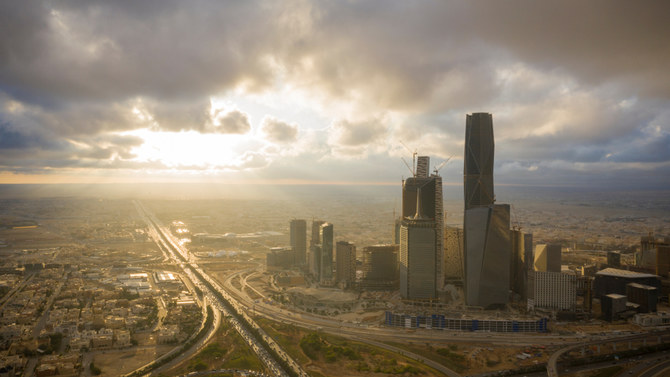
The Kingdom is steadily evolving as a global tourist destination in line with the goals outlined in Vision 2030. (Shutterstock)
Short Url
Updated 28 November 2022
Follow

WTTC members to invest $10.5bn in Saudi Arabia’s tourism sector over next 5 years

RIYADH: The World Travel and Tourism Council members will invest $10.5 billion in Saudi Arabia’s tourism sector, as the Kingdom steadily evolves as a global tourist destination in line with the goals outlined in Vision 2030, according to Julia Simpson, president and CEO of WTTC. 

Speaking at a press conference ahead of the WTTC Global Summit in Riyadh on Nov. 28, Simpson noted that Saudi Arabia is showing incredible commitment to developing the tourism sector, and is planning to attract 100 million visitors globally by 2030. 

Saudi Arabia’s Minister of Tourism Ahmad Al-Khateeb said the sector is still recovering from the pandemic, but the number of international arrivals in the Kingdom has already climbed to 70 percent of pre-COVID-19 levels. 

“I am proud of the progress we made in building resilience in this sector. We believe in the power of partnership, and we want to bring the global community together. Saudi Arabia is the fastest growing destination in the world,” said Al-Khateeb. 

WTTC also announced that American actor, environmentalist and entrepreneur Edward Norton will be a keynote seeker at its global summit in Riyadh on Nov. 30.

Norton, who has been a long-time advocate for sustainable business practices, will speak about the vitality of maintaining healthy environmental operational standards in the tourism sector as he will be in a conversation with Saudi Tourism Authority CEO Fahd Hamidaddin during the event, according to a press release.

“It is clear that people who have such a global platform as Edward Norton help to transcend borders and reinforce the work that we do in promoting sustainable development strategies and we are delighted he is with us at the WTTC Summit in Riyadh,” said Hamidaddin.

This year’s WTTC Global Summit is being organized at the King Abdul Aziz International Conference Center under the theme “Travel for a Better Future.”

Some other prominent personalities who will speak at the summit include former UK Prime Minister Theresa May, Jerry Inzerillo — Group CEO of Diriyah Gate Development Authority, and Paul Griffiths, CEO of Dubai International Airports. 

Former UN Secretary-General Ban Ki-Moon will also address delegates in person during the event. In October, Al-Khateeb said that Riyadh is set to become the capital of the global tourism industry, and the tourist destinations in the Kingdom are being built and will operate in a sustainable manner. 

“We have the vision, we put the plan, and we put all the resources, especially the financial resources to deliver the plan,” said Al-Khateeb.


US trade policy uncertainty sees muted response from markets

Updated 7 sec ago
Follow

US trade policy uncertainty sees muted response from markets

RIYADH: President Donald Trump renewed his condemnation of the US Supreme Court on Monday after it ruled against his sweeping tariff program last week, vowing to ‌turn to ‌other ​powers ‌and ⁠licenses ​but giving no ⁠details.

The Supreme Court, in a 6-3 ruling on Friday, voided most of the tariffs Trump imposed in 2025, finding that the emergency law he relied on did not allow the imposition of the levies.

Trump said on Saturday he would raise ‌a temporary tariff from 10 percent to 15 percent on US ⁠imports ⁠from all countries, the maximum level allowed under the law, a day after the court ruled he had exceeded his presidential authority when he imposed an array of higher rates ​under an ​economic emergency law.

"The court has also approved all other Tariffs, of which there are many, and they can all be used in ⁠a much more ‌powerful and obnoxious ‌way, with legal ​certainty, than ‌the Tariffs as initially ‌used," he wrote in a social media post.

US stock index futures slipped on Monday as traders reacted to the latest twist in the US’s economic policy. 

At 12noon GMT, Dow E-minis were down ​162 points, or 0.33 percent, Nasdaq 100 E-minis ‌were down 129 points, or 0.51 percent, and S&P 500 E-minis were down 23.75 points, or 0.34 percent.

Most ‌megacap and growth stocks were lower in premarket trading, though Alphabet bucked the trend with a 0.3 percent gain after rising around 4 percent on Friday.

“It’s really hard from ​a ‌business ⁠standpoint when ​you ⁠are at a company to know how do you plan if you’re not even sure about suppliers, supply chains and what the tariffs are going to look like,” said Arthur Laffer Jr., president of Laffer Tengler Investments, according to Reuters.

“That’s a huge concern for corporate America and why it was really important to get that hammered out and ironed out as fast as possible, so that companies know what the playing field really looks like, and they can plan accordingly,” he added.

All three main stock ⁠indexes clocked weekly gains on Friday as markets took the Supreme ‌Court’s decision in stride, with the Nasdaq snapping a five-week ‌losing streak.

Other stock markets across the world greeted the latest wave of uncertainty with a muted response.

In the Gulf region, Saudi Arabia’s main market — which had been closed on Sunday due to a national holiday — ended the day up 0.34 percent.

Dubai’s main share index closed up 1.82 percent, led by a 3.64 percent gain in blue-chip developer Emaar Properties and a 2.92 percent leap in Emirates NBD Bank.

In Abu Dhabi, the index ended the session up 0.55 percent, with Americana Restaurants International leading the gainers with its share price surging 7.73 percent.

Qatar’s index closed up 1.08 percent, driven ​by banking shares, including ​a 0.43 percent uptick in Qatar National Bank, the region’s largest lender. 

Other global markets faced a mixed picture, with the UK's FTSE 100 subdued on Monday.

The blue-chip ‌index was up ‌0.1 percent at 12:00noon GMT, after closing ​at ‌record ⁠highs ​last week. For the UK, the ⁠tariff rate has increased from 10 percent ‌to 15 percent,

Unicredit analysts noted, ‌following Trump's latest announcement.

Vijay Valecha, chief investment officer at Century Financial said the possible US tariff increase from 10 percent to 15 percent “ has brought trade tensions back into focus, tempering the optimism seen after the recent Supreme Court tariff ruling.”

He added: “Markets are now reassessing the economic impact of higher import costs, possible retaliation from trade partners, and the broader implications for global growth.”