LONDON: The UK Supreme Court ruled Wednesday that Scotland does not have the power to hold a new referendum on independence without the consent of the British government. The judgment is a setback for the Scottish government’s campaign to break away from the United Kingdom.
The top court ruled that the Scottish Parliament “does not have the power to legislate for a referendum on Scottish independence.”
Supreme Court President Robert Reed said the five justices were unanimous in the verdict.
The semi-autonomous Scottish government wants to hold a referendum next October with the question “Should Scotland be an independent country?”
The Conservative UK government in London refuses to approve a vote, saying the question was settled in a 2014 referendum that saw Scottish voters reject independence by a margin of 55 percent to 45 percent.
The pro-independence government in Edinburgh wants to revisit the decision, though, arguing that Britain’s departure from the European Union — which a majority of Scottish voters opposed — has radically changed the political and economic landscape.
First Minister Nicola Sturgeon argues that she has a democratic mandate from the Scottish people to hold a new secession vote because there is an independence-supporting majority in the Scottish Parliament.
During Supreme Court hearings last month, Dorothy Bain, the Scottish government’s top law officer, said the majority of Scottish lawmakers had been elected on commitments to hold a fresh independence referendum. She also said a referendum would be advisory, rather than legally binding — though a “yes” vote would create strong momentum for Scotland to break away.
UK government lawyer James Eadie argued that power to hold a referendum rests with the UK Parliament in London, because “it’s of critical importance to the United Kingdom as a whole,” not just Scotland.
Polls suggest Scots are about evenly split on independence — and also that a majority of voters do not want a new referendum anytime soon.
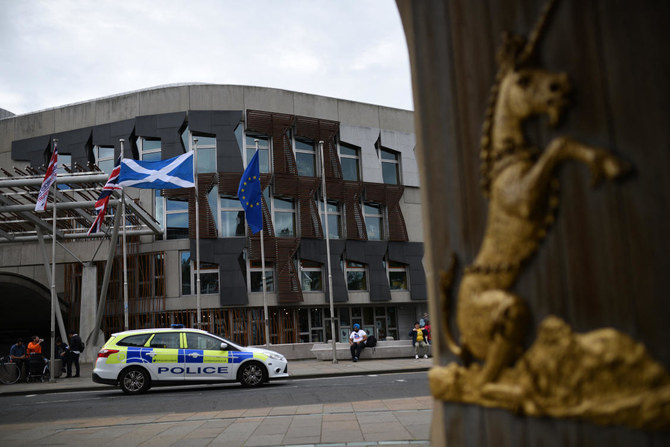
Independence supporters plan to rally outside the Scottish Parliament in Edinburgh and at other sites later Wednesday.
Scotland and England have been politically united since 1707. Scotland has had its own parliament and government since 1999 and makes its own policies on public health, education and other matters. The UK-wide government in London controls matters such as defense and fiscal policy.
Sturgeon has said that if her government loses the court case, she will make the next UK national election a de-facto plebiscite on ending Scotland’s three-century-old union with England. She has not given details of how that would work.


![]()

UK top court rules against Scottish independence vote plan
Short Url
https://arab.news/b864j
UK top court rules against Scottish independence vote plan
- he semi-autonomous Scottish government wants to hold a referendum next October


Latest updates


© 2026 SAUDI RESEARCH & PUBLISHING COMPANY, All Rights Reserved And subject to Terms of Use Agreement.