Citigroup targets more deals in Gulf region

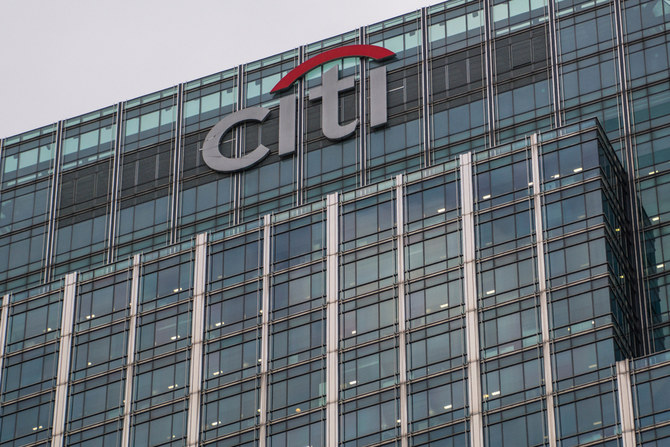
The Gulf region has become a bright spot for public share sales this year. (Shutterstock)
Short Url
Updated 23 November 2022
Follow

Citigroup targets more deals in Gulf region

DUBAI: Citigroup Inc's C.N investment banking team has increased by 50 percent in size over the past two years and more people are being added in the UAE and Saudi Arabia, joining rivals seeking to take advantage of a red-hot Gulf initial public offering market.

The Gulf region has become a bright spot for public share sales this year, boosted by high oil prices and government-led privatization programs.

Gulf issuers have raised about $16 billion in IPOs this year, accounting for about half of total IPO proceeds from Europe, the Middle East and Africa, Refinitiv data shows.

The growth in Gulf equity capital markets is in sharp contrast to the US and Europe, where global banks have been trimming headcount in a dealmaking drought.

Citigroup moved its director for power, renewables and utilities, Omar El Duraie, to Dubai from London this year.

It is planning to add more people in Saudi Arabia and the UAE by the end of the year, said Miguel Azevedo, Citi’s head of investment banking for the Middle East and Africa, excluding South Africa.

"This year the region has been extremely active while the rest of the world has been on pause," he told Reuters. "I expect next year to be very similar to this year."

Many IPOs have had books covered within an hour or a few hours from opening. Some have increased the size of offerings during the process to accommodate the strong demand.

Others expanding in the Gulf include Rothschild & Co ROTH.PA, which has opened an office in Saudi Arabia, while Goldman Sachs GS.N is hiring bankers for its wealth management and investment banking businesses in the region.


Saudi stock market opens its doors to foreign investors

Updated 06 January 2026
Follow

Saudi stock market opens its doors to foreign investors

RIYADH: Foreigners will be able to invest directly in Saudi Arabia’s stock market from Feb. 1, the Kingdom’s Capital Market Authority has announced.

The CMA’s board has approved a regulatory change which will mean the capital market, across all its segments, will be accessible to investors from around the world for direct participation.

According to a statement, the approved amendments aim to expand and diversify the base of those permitted to invest in the Main Market, thereby supporting investment inflows and enhancing market liquidity.

International investors' ownership in the capital market exceeded SR590 billion ($157.32 billion) by the end of the third quarter of 2025, while international investments in the main market reached approximately SR519 billion during the same period — an annual rise of 4 percent.

“The approved amendments eliminated the concept of the Qualified Foreign Investor in the Main Market, thereby allowing all categories of foreign investors to access the market without the need to meet qualification requirements,” said the CMA, adding: “It also eliminated the regulatory framework governing swap agreements, which were used as an option to enable non-resident foreign investors to obtain economic benefits only from listed securities, and the allowance of direct investment in shares listed on the Main Market.”

In July, the CMA approved measures to simplify the procedures for opening and operating investment accounts for certain categories of investors. These included natural foreign investors residing in one of the Gulf Cooperation Council countries, as well as those who had previously resided in the Kingdom or in any GCC country. 

This step represented an interim phase leading up to the decision announced today, with the aim of increasing confidence among participants in the Main Market and supporting the local economy.

Saudi Arabia, which ‌is more than halfway ‍through an economic plan ‍to reduce its dependence on oil, ‍has been trying to attract foreign investors, including by establishing exchange-traded funds with Asian partners in Japan and Hong Kong.