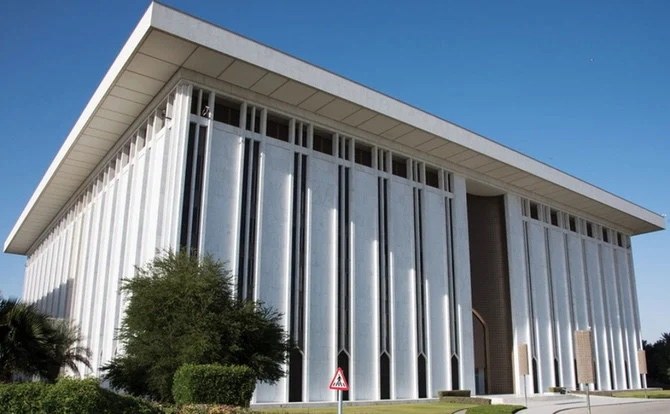
Saudi Central Bank to kick off Qualification Program to aid insurance sector

The program is set to launch in Jan. 2023 and will be held for two consecutive months. (Supplied)
Short Url
Updated 20 November 2022
Follow

Saudi Central Bank to kick off Qualification Program to aid insurance sector

RIYADH: The Saudi Central Bank, also referred to as SAMA, has announced the kickoff of a Qualification Program to aid the financial departments in the insurance sector, according to a statement.

The program is set to launch in Jan. 2023 and will be held for two consecutive months.

The program also falls in line with SAMA’s plan to further develop the insurance sector and the national talent in an attempt to boost specialized human resources which is one of the key pillars of the sector.

Specializing in insurance, the program has been developed, prepared, and designed in such a way that offers top-notch training and development solutions.

The main objective of the program is to provide members with the required skills and knowledge which will enable them access to potential job opportunities in financial departments belonging to entities operating in the insurance sector.

During the two-month training period, the program aims to train as many as 30 fresh graduates holding financial management-related academic qualifications.

In addition to being delivered in the English language, the program entails several training courses for participants that cover topics including but not limited to the Insurance Foundation Certificate Exam, structures of financial statements of insurance companies, technical accounts for reinsurance, value-added tax and withholding tax, SAMA’s instructions related to financial departments in the insurance sector, as well as the general content of International Financial Reporting Standards.  

In September, SAMA launched an education program to provide Saudi university graduates with the skills to work in the Kingdom’s rapidly expanding financial services industry.

The Professional Education Program targets male and female graduates of Saudi universities and accredited international universities who hold bachelor’s or master’s degrees. The six-month program will offer trainees a range of advantages and incentives.

It aims to help graduates build careers that will enhance their role in the financial services industry. Candidates will have the opportunity to train in one of the departments of the Saudi Central Bank.


Oil prices rise sharply after attacks in Middle East disrupt global energy supply

Updated 2 sec ago
Follow

Oil prices rise sharply after attacks in Middle East disrupt global energy supply

NEW YORK: Oil prices rose sharply Monday as US and Israeli attacks on Iran and retaliatory strikes against Israel and US military installations around the Gulf sent disruptions through the global energy supply chain.
Traders were betting the supply of oil from Iran and elsewhere in the Middle East would slow or grind to a halt. Attacks throughout the region, including on two vessels traveling through the Strait of Hormuz, the narrow mouth of the Arabian Gulf, have restricted countries’ ability to export oil to the rest of the world. Prolonged attacks would likely result in higher prices for crude oil and gasoline, according to energy experts.
West Texas Intermediate, the light, sweet crude oil produced in the United States, was selling for about $72 a barrel early Monday, up around 7.3 percent from its trading price of about $67 on Friday, according to data from CME group.
A barrel of Brent crude, the international standard, was trading at $78.55 per barrel early Monday, according to FactSet, up 7.8 percent from its trading price of $72.87 on Friday, which had been a seven-month high at the time.
Higher global energy prices could lead to consumers paying more for gasoline at the pump and shelling out more for groceries and other goods, at a time when many are already feeling the impacts of elevated inflation.
Roughly 15 million barrels of crude oil per day — about 20 percent of the world’s oil — are shipped through the Strait of Hormuz, making it the world’s most critical oil chokepoint, according to Rystad Energy. Tankers traveling through the strait, which is bordered in the north by Iran, carry oil and gas from Saudi Arabia, Kuwait, Iraq, Qatar, Bahrain, the UAE and Iran.
Iran had temporarily shut down parts of the strait in mid-February for what it said was a military drill, which led oil prices to jump about 6 percent higher in the days that followed.
Against that backdrop, eight countries that are part of the OPEC+ oil cartel announced they would boost production of crude Sunday. The Organization of Petroleum Exporting Countries, in a meeting planned before the war began, said it would increase production by 206,000 barrels per day in April, which was more than analysts had been expecting. The countries boosting output include Saudi Arabia, Russia, Iraq, the United Arab Emirates, Kuwait, Kazakhstan, Algeria and Oman.
“Roughly one-fifth of global oil supply passes through the Strait of Hormuz, a vital artery for world trade, meaning markets are more concerned with whether barrels can move than with spare capacity on paper,” said Jorge León, Rystad’s senior vice president and head of geopolitical analysis, in an email. “If flows through the Gulf are constrained, additional production will provide limited immediate relief, making access to export routes far more important than headline output targets.”
Iran exports roughly 1.6 million barrels of oil a day, mostly to China, which may need to look elsewhere for supply if Iran’s exports are disrupted, another factor that could increase energy prices.