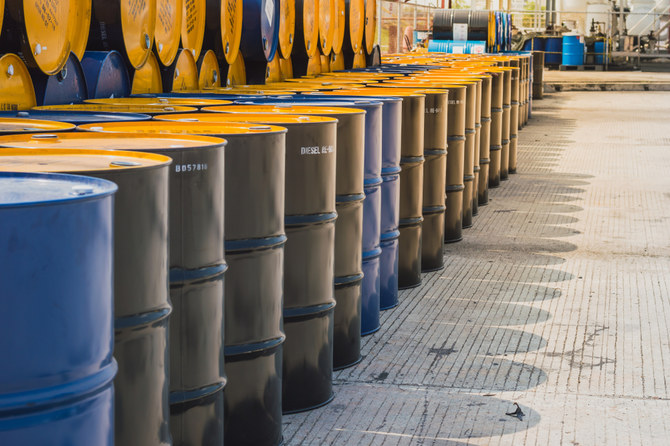
Saudi crude exports rise to 7.72m bpd in September

(Shutterstock)
Short Url
Updated 17 November 2022
Follow

Saudi crude exports rise to 7.72m bpd in September

RIYADH: Saudi Arabia’s crude oil exports in September rose to 7.72 million barrels per day from 7.60 million bpd in August, the International Energy Forum said on Thursday, citing data from the Joint Organizations Data Initiative  

The Kingdom saw a 1.6 percent rise in its crude oil exports from August, sustaining its more than two-year record high.  

JODI data indicated that September, the fourth month in a row to witness an increase, had recorded its highest volume since April 2020.

Saudi Arabia’s crude oil production amounted to 11.04 million bpd in September, falling slightly from 11.1 million bpd the month before.  

This marked the fourth time on record that the Kingdom surpasses the 11 million bpd, the JODI data showed.


On the other hand, domestic crude refinery output dropped by 0.1 million bpd to reach 2.7 million bpd, whereas its direct crude burn fell by 142,000 bpd to reach 522,000 bpd in September. 

The largest petroleum product imported by the Kingdom in September was fuel oil, amounting to 204,000 bpd, and the largest product exported was gas/diesel oil with a total of 692,000 bpd.  

The data revealed that Naphtha was the petroleum product most transferred, with 111,000 bpd of the total 405,000 bpd in September. 

As the global economy remains unstable, the Organization of the Petroleum Exporting Countries is expected to remain cautious in its oil production policy when it meets next month, said the energy minister of OPEC’s de facto leader Saudi Arabia, Prince Abdulaziz bin Salman.  

Speaking to Bloomberg on the sidelines of the COP27 summit in Egypt, Prince Abdulaziz said OPEC+ must be "cautious" in its approach.

He said: “It’s about being responsible and not losing sight of what the market requires." 

OPEC+ took a decision to decrease their headline oil production target by 2 million bpd starting November.  

Even though the actual reduction is to be around half the actual target, at 1.1 million bpd, it still is the largest cut since the record production cut reported in April of 2020 when oil demand plunged at the begining of the pandemic. 

(With inputs from Reuters)


Saudi minister at Davos urges collaboration on minerals

Global collaboration on minerals essential to ease geopolitical tensions and secure supply, WEF hears. (Supplied)
Updated 20 January 2026
Follow

Saudi minister at Davos urges collaboration on minerals

  • The reason of the tension of geopolitics is actually the criticality of the minerals

LONDON: Countries need to collaborate on mining and resources to help avoid geopolitical tensions, Saudi Arabia’s minister of industry and mineral resources told the World Economic Forum on Tuesday.

“The reason of the tension of geopolitics is actually the criticality of the minerals, the concentration in different areas of the world,” Bandar Alkhorayef told a panel discussion on the geopolitics of materials.

“The rational thing to do is to collaborate, and that’s what we are doing,” he added. “We are creating a platform of collaboration in Saudi Arabia.”

Bandar Alkhorayef, Saudi Minister of Industry and Mineral Resources 

The Kingdom last week hosted the Future Minerals Forum in Riyadh. Alkhorayef said the platform was launched by the government in 2022 as a contribution to the global community. “It’s very important to have a global movement, and that’s why we launched the Future Minerals Forum,” he said. “It is the most important platform of global mining leaders.”

The Kingdom has made mining one of the key pillars of its economy, rapidly expanding the sector under the Vision 2030 reform program with an eye on diversification. Saudi Arabia has an estimated $2.5 trillion in mineral wealth and the ramping up of extraction comes at a time of intense global competition for resources to drive technological development in areas like AI and renewables.

“We realized that unlocking the value that we have in our natural resources, of the different minerals that we have, will definitely help our economy to grow to diversify,” Alkhorayef said. The Kingdom has worked to reduce the timelines required to set up mines while also protecting local communities, he added. Obtaining mining permits in Saudi Arabia has been reduced to just 30 to 90 days compared to the many years required in other countries, Alkhorayef said.

“We learned very, very early that permitting is a bottleneck in the system,” he added. “We all know, and we have to be very, very frank about this, that mining doesn’t have a good reputation globally.

“We are trying to change this and cutting down the licensing process doesn’t only solve it. You need also to show the communities the impact of the mining on their lives.”

Saudi Arabia’s new mining investment laws have placed great emphasis on the development of society and local communities, along with protecting the environment and incorporating new technologies, Alkhorayef said. “We want to build the future mines; we don’t want to build old mines.”