

Red Sea Global signs deal for sustainable electric mobility network

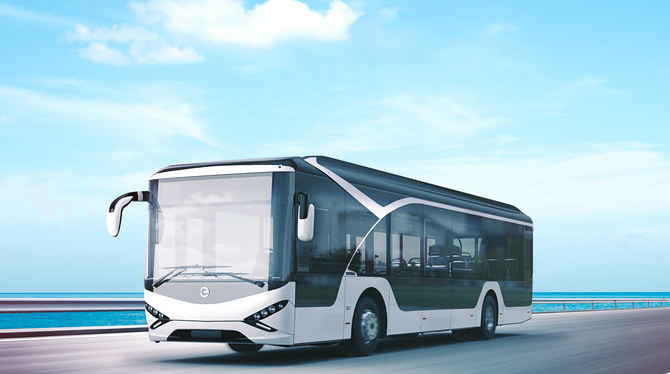
The fleet of zero-emission electric buses will be used initially to transport employees around the site. (Supplied)
Short Url
Updated 15 November 2022
Follow

Red Sea Global signs deal for sustainable electric mobility network

RIYADH: Saudi sustainable tourism development company Red Sea Global has signed a deal with Electromin and Energy International Corporation to deliver a carbon-neutral, electric mobility network to its Red Sea development.

Electromin will assist in the supply of an electric bus fleet in collaboration with the Chinese company Yutong and the European manufacturer and supplier of electric vehicles, EURABUS.

The fleet of zero-emission electric buses, which will be used initially to transport employees around the site, marks the company's first smart sustainable integrated transport network.

“This deal is the first step on the road to a fully integrated mobility network spanning land, sea and air, which will enable safe movement of visitors, residents, and goods,” said Andreas T. Flourou, RSG's executive director of mobility operations. 

To conveniently service regular routes for employees, the fleet will consist of two types of vehicles: a smaller vehicle with a range of around 250km and a larger bus with a range of roughly 350km when fully charged.

Emission-free transport at RSG corresponds with its larger ambition to power the entire destination with solar energy, thus reducing carbon emissions by about 500K tons per year.

Commenting on the deal, RSG's group CEO John Pagano said: “Our mission has always been to set the standard for regenerative tourism. Carbon-neutral operations across the Red Sea are a key part of achieving this."

RSG's moves toward sustainable mobility across its development aligns with the Kingdom's Vision 2030 goals towards reducing carbon emissions and driving sustainability to address the impact of climate change.

In addition, RSG said it will establish a new resort, Faena The Red Sea, in its tourist destination, with operations starting in 2024.

Furthermore, RSG’s mandate has expanded to oversee upwards of a dozen projects stretching the length of the Red Sea coast of Saudi Arabia, with the potential to expand beyond the Kingdom in the future.

Earlier this month, Saudi Arabia's Crown Prince Mohammed bin Salman launched the first Saudi EV brand Ceer. Ceer is set to directly contribute $8 billion to Saudi Arabia’s GDP by 2034.

Part of the Saudi Public Investment Fund’s strategy is to diversify Saudi Arabia’s gross domestic product increases by investing in promising growth industries — Ceer will attract over $150 million of foreign direct investment, and create up to 30,000 direct and indirect jobs.

Speaking at the Saudi Green Initiative, which took place on the sidelines of the UN Climate Change Conference last week, PIF's Governor, Yasir Al-Rumayyan said that the Kingdom plans to build 328,000 EVs per year, with investments in the electronic vehicles sector.

He added that the Kingdom has a target to generate 50 percent of its energy from renewable sources by 2030, and PIF is responsible for developing 70 percent of this renewable energy. 

Elaborating on the expansion of EV plans in Saudi Arabia, Cadillac, a division of the US automobile manufacturer General Motors Corp., is also planning to launch its first EV in the Kingdom during the first half of 2023, said Kristian Aquilina, MD of Cadillac Middle East and international operations.

“We are talking to some government authorities, and their target of electrifying 30 percent of Riyadh’s transportation by 2030 is driving a lot of momentum,” Aquilina said last September.


Reforms target sustained growth in Saudi real estate sector, says Al-Hogail

Updated 26 January 2026
Follow

Reforms target sustained growth in Saudi real estate sector, says Al-Hogail

RIYADH: The Real Estate Future Forum opened its doors for its first day at the Four Seasons Riyadh, with prominent global and local figures coming together to engage with one of the Kingdom’s most prospering sectors.

With new regulations, laws, and investments underway, 2026 is expected to be a year of momentous progress for the real estate sector in the Kingdom.

The forum opened with a video highlighting the sector’s progress in the Kingdom, during which an emphasis was placed on the forum’s ability to create global reach, representation, as well as agreements worth a cumulative $50 billion

With the Kingdom now opening up real estate ownership to foreigners, this year’s Real Estate Future Forum is placing a great deal of importance on this new milestone and its desired outcomes and impact on the market. 

Aside from this year’s forum’s unique discussions surrounding those developments, it will also be the first of its kind to launch the Real Estate Excellence Award and announce its finalist during the three-day summit.

Minister of Municipalities and Housing and Chairman of the Real Estate General Authority Majed Al-Hogail took to stage to address the diverse audience on the real estate market’s achievements thus far and its milestones to come.

Of those important milestones, he underscored “real estate balance” as a key pillar of the sector’s decisions to implement regulatory tools “with the aim of constant growth which can maintain the vitality of this sector.” He pointed to examples of those regulatory measures, such as the White Land Tax.

On 2025’s progress, the minister highlighted the jump in Saudi family home ownership, which went from 47 percent in 2016 to 66 percent in 2025, keeping the Kingdom’s Vision 2030 goal of 70 percent by the end of the decade on track.

He said the opening of the real estate market to foreigners is an indicator of the sector’s maturity under the leadership of Crown Prince Mohammed bin Salman. He said his ministry plans to build over 300,000 housing units in Riyadh over the next three years.

Speaking to Arab News,  Al-Hogail elaborated on these achievements, stating: “Today, demand, especially local demand, has grown significantly. The mortgage market has reached record levels, exceeding SR900 billion ($240 billion) in mortgage financing, we are now seeing SRC (Saudi Real Estate Refinance Co.) injecting both local and foreign liquidity on a large scale, reaching more than SR54 billion”

Al-Hogail described Makkah and Madinah as unique and special points in the Kingdom’s real estate market as he spoke of the sector’s attractiveness.

 “Today, the Kingdom of Saudi Arabia has become, in international investment indices, one that takes a good share of the Middle East, and based on this, many real estate investment portfolios have begun to come in,” he said. 

Al-Ahsa Gov. Prince Saud bin Talal bin Badr Al-Saud told Arab News the Kingdom’s ability to balance both heritage sites with real estate is one of its strengths.

He said: “Actually the real estate market supports the whole infrastructure … the whole ecosystem goes back together in the foundation of the real estate; if we have the right infrastructure we can leverage more on tourism plus we can leverage more on the quality of life … we’re looking at 2030, this is the vision … to have the right infrastructure the time for more investors to come in real estate, entertainment, plus tourism and culture.”