

GCF2022: Inclusion of women in cybersecurity workforce is the need of the hour

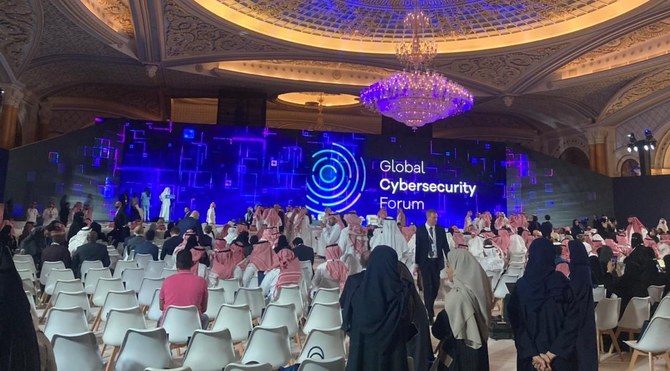
The GCF’s global report found that 88 percent of women in the region are aware of cybersecurity programs at their institutions, making the region a leader in cybersecurity awareness. (AN Photo)
Short Url
Updated 09 November 2022
Follow

GCF2022: Inclusion of women in cybersecurity workforce is the need of the hour

RIYADH: Around 94 percent of women in the Middle East would be interested in studying cybersecurity, but a small percentage of women worldwide are active in that field, according to a global report by the Global Cybersecurity Forum.

Women make up only 25 percent of the global cybersecurity workforce, according to the report.

There has been a surge in cyberattacks in the Middle East and North African region in recent years, with many companies suffering larger losses than in other parts of the world. The problem is compounded by the fact that 57 percent of organizations report unfilled cybersecurity positions.

A weak line of defense increases a company's vulnerability to major damage, the report added.

Speaking to Arab News, Laila bin Hareb Al-Mheiri, founder and president of Alive Group, Alive Medical, Alive Labs, and Alive consulting and education, said that 90 percent of successful cyberattacks are a result of human error.

“That means someone fell for a phishing attack without knowing they were scammed or became a victim of a social engineering scheme,” Al-Mheiri added.
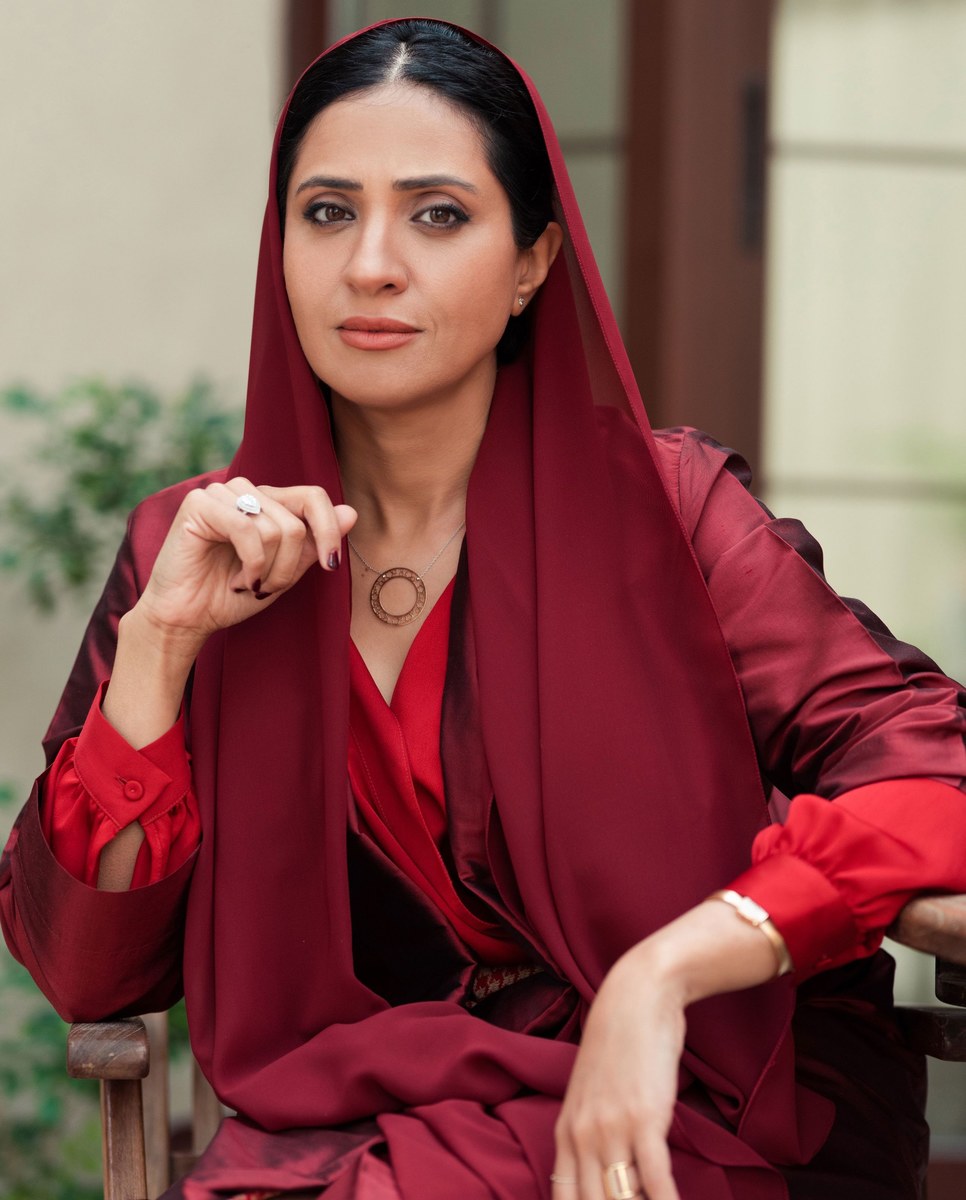


Laila bin Hareb Al-Mheiri, founder and president of Alive Group. (Supplied)

She said that women have a high level of emotional intelligence, and they have a unique perspective on problems and cybersecurity benefits from this extra flair.

Increasing the number of women in cybersecurity is a smart way to enhance the field’s capabilities and numbers. However, why hasn’t this been done? Science, technology, engineering, and mathematics disciplines, including cybersecurity, have long been perceived as a stumbling block for women.

Historically, cybersecurity has attracted males who specialize in threat response, offensive tactics, and white-hat hacking. Yet the question that remains is: to what extent are women included in the cybersecurity sector in the Middle East?

Women to the fore

Speaking to Arab News, Mary O’Brien, the International Business Machines Corp. general manager, said that throughout her journey, she was met with opportunity, respect, and inclusion. However, as a woman, she said, “I am very aware of the lack of women around the table and the lack of diverse thought that comes with that.”

Al-Mheiri also added that there is a misconception that women aren’t qualified to succeed in a male-dominated society.

“I’ve received praise and support from my male counterparts in Saudi Arabia and the UAE. It’s been nothing but positivity for me,” she said.

Role models and allies are critical to creating change, O’Brien said. The report stated that over 70 percent of respondents said a role model encouraged them to learn more about the industry and pursue a degree in cybersecurity.

Many women feel more confident about pushing forward when they see another woman moving through the ranks, she added.

Ultimately, O’Brien suggested engaging young females in STEM early on and helping break some of the stigmas that limit their progress.

The GCF’s global report found that 88 percent of women in the region are aware of cybersecurity programs at their institutions, making the region a leader in cybersecurity awareness.

Speaking to Arab News, Alaa Al-Faadhel, GCF’s head of initiatives and partnerships, said: “In Saudi Arabia, a high number of the cybersecurity sector is female with the government placing significant emphasis on education and training in the field.”

She also said that in the MENA region, interest in cybersecurity is high among women.

Al-Faadhel added that the report showed that 91 percent of women in this part of the world are the most likely to take part in cybersecurity programs relative to the rest of the world.

The importance of teaching cybersecurity to women early in their education was also stressed by Al-Mheiri.

“Women need to know that they don’t always have to rely on their brothers or fathers for technical answers – they have more than what it takes to do it,” she added.

Women can become confident and lead successful careers in cybersecurity by empowering and instilling confidence at an early age before stereotypes form, O’Brien said.

Support from males

“Women supporting women is critical, but we also need the people currently sitting at the table to help,” O’Brien explained, stressing that male intervention is necessary at all times. Having male allies can be a true accelerator for women, she said.

O’Brien added that she had personally seen the benefits of strong male allies in helping women advance to leadership positions.

In a balanced gender discussion, she said people see a broader range of ideas and solutions.

“That’s an ongoing consideration for me whenever I arrange meetings or events,” O’Brien added.

As far as gender diversity in the cybersecurity industry is concerned, some progress has been made, but more can be done by companies and organizations, she said.

Al-Mheiri pointed out that the current global cybersecurity workforce is not a true representation of the talent that exists in the market.

“That said, we’ve come a long way, and we still have quite a way to go in ensuring equity of opportunity,” Al-Mheiri added.

Organizations must assume unconscious bias when it comes to recruitment and retention. In addition, they should set up and track metrics that reflect diversity in their hiring and promotion processes, O’Brien said.

According to Al-Mheiri, more than 70 percent of Alive Group’s employees are women, and many continue to excel outside the workplace, both personally and professionally.

“We found that success across various spheres of life can be achieved when systemic and historical biases are set aside,” Al-Mheiri added.

In addition, Al-Mheiri reported that the system is changing and she has seen progress toward involving women in decision-making.

“Several role models have risen in the field and left footprints in the sand for others to follow. The time has come to educate, mentor, encourage, empower, network, and provide agency to those women who aspire to enter the field,” she added.

Al-Faadhel said that the report proves women are ready to close the cybersecurity skill gap.

“To encourage women to choose cybersecurity as a profession, they need greater support during school, higher education and through their careers. To ensure retention, it is important to implement policies that cater to women, such as family-friendly workplace measures, mentoring, networking, and development opportunities,” Faadhel concluded.


Saudi Arabia sets global benchmark in AI modernization

Updated 15 January 2026
Follow

Saudi Arabia sets global benchmark in AI modernization

  • Executives hail the Kingdom’s robust infrastructure and strategic workforce programs

RIYADH: Saudi Arabia is emerging as a global leader in artificial intelligence, according to executives from OpenText, one of the world’s largest enterprise information management companies. 

With 22 years of international AI experience, Harald Adams, OpenText’s senior vice president of sales for international markets, said the Kingdom’s modernization efforts are now setting a global standard.

“From my perspective, Saudi Arabia is not only leading the modernization towards artificial intelligence in the Middle East, I think it is even not leading it only in the MENA region. I think it is leading it globally,” Adams told Arab News.

In an interview, Adams and George Schembri, vice president and general manager for the Middle East at OpenText, discussed the Kingdom’s significant investments in AI during the inauguration of OpenText’s new regional headquarters in Riyadh.

“So for us (OpenText), from our perspective, it was a strategic decision to move our MENA headquarters to Saudi Arabia because we believe that we will see here a lot of innovation coming out of the country, we can replicate not only to the MENA region, maybe even further to the global level,” Adams said.

The new headquarters, located in the King Abdullah Financial District, will serve as a central hub for OpenText customers and partners across the Middle East. Its opening reflects a broader trend of tech giants relocating to Riyadh, signaling the Kingdom’s rise as a hub for global AI innovation.

Adams attributed Saudi Arabia’s lead in AI modernization to a combination of substantial financial backing, a unified national strategy, and a remarkable pace of execution.

“I mean, a couple of things, because the ingredients in Saudi Arabia are of course, quite interesting. On the one hand side, Saudi Arabia has deep pockets and great ambitions. And they are, I mean, and they are executing fast, yeah,” he said.
“So from that perspective, at the moment, what we see is that there are, especially on the government side, I can’t see any other government organizations globally moving faster into that direction than it is happening in Saudi Arabia. Not in the region, not even on a global level, they are leading the game,” he underlined.

Schembri added, “Saudi’s AI vision is one of the most ambitious in the world, and AI on a national scale is not good without trusted, secured, and governed, and this is where OpenText helps to enable the Saudi organizations to be able to deliver on the 2030 Vision.”

“The Kingdom’s focus on AI and digital transformation creates a powerful opportunity for organizations to unlock value from their information,” Schembri stated.
“With OpenText on the ground in Riyadh, our customers gain direct access to trusted global expertise combined with local insight — enabling them to manage information securely, scale AI with confidence, and compete on a global stage,” he added.

DID YOU KNOW?

• Saudi Arabia ranks 5th globally and 1st in the region for AI growth under the 2025 Global AI Index.

• The Kingdom is also 3rd globally in advanced AI model development, trailing only the US and China.

• AI is projected to contribute $235.2 billion — or 12.4 percent — to Saudi Arabia’s GDP by 2030.

The inauguration of OpenText’s new regional headquarters was attended by Canada’s Minister of International Trade and Economic Development, Maninder Sidhu, and Jean-Philippe Linteau, Canada’s ambassador to Saudi Arabia. 

Sidhu emphasized the alignment of Saudi Vision 2030 with Canada’s economic and innovation goals.

“His Highness (Crown Prince Mohammed bin Salman) and Vision 2030, there is a lot of alignment with Canada, as you know, with the economic collaboration, with his vision around mining, around education, tourism, healthcare, you look at AI and tech, there’s a lot of alignment here at OpenText Grand opening their regional headquarters,” Sidhu told Arab News.

Saudi Arabia’s AI ambitions are projected to contribute $235.2 billion — or 12.4 percent — to its GDP by 2030, according to PwC. The Saudi Data and AI Authority, established by a royal decree in 2019, drives the Kingdom’s national data and AI strategy.

One flagship initiative, Humain, chaired by Crown Prince Mohammed bin Salman, was launched in May 2025 under the Public Investment Fund. It aims to build a full AI stack — from data centers and cloud infrastructure to models and applications — positioning Saudi Arabia as a globally competitive AI hub. The project plans to establish a data center capacity of 1.8 GW by 2030 and 100 GW of AI compute capacity by 2026.

Saudi Arabia is also expanding international partnerships. In May 2025, Humain signed a $5 billion agreement with Amazon Web Services to accelerate AI adoption domestically and globally, focusing on infrastructure, services, and talent development.

The Kingdom ranked fifth globally and first in the Arab region for AI sector growth under the 2025 Global AI Index, and third worldwide in advanced AI model development, behind only the US and China, according to the Stanford University AI Index 2025.

Education is another pillar of Saudi AI strategy. Starting in the 2025-26 academic year, AI will be taught as a core subject across all public school grades, reaching roughly 6.7 million students. The curriculum will cover algorithmic thinking, data literacy, and AI ethics.

OpenText executives emphasized their commitment to supporting Vision 2030 and the national AI strategy through workforce development.

“OpenText has put a lot of investment in the Kingdom, right. We brought cloud to the Kingdom, we’ve opened our headquarters in the Kingdom, we’ve basically hiring Saudis in the Kingdom, We basically building, if you like, an ecosystem to support the Kingdom. And on top of that, what we’re doing is we’re putting a plan together, if you like, a program to look at how we can educate, if you like, the students at universities,” Schembri said.
“So this is something that we are looking into, we are basically investigating and to see how we can support the Saudi nationals when they come into the workplace. And I’m really excited. I have Harry who is, our leadership who’s supporting this program.”
“It’s something that we are putting together. It’ll take some effort. So it’s still in play because we want to make sure what we put it basically delivers on what we're trying to achieve based on the vision of Saudi,” he added.

“The younger generation is sooner or later either working for us or maybe for a partner or for maybe for a customer. So that’s why we are to 100 percent committed to enable all of that,” Adams said.