

UK Conservatives face fresh pressure over Islamophobia allegations

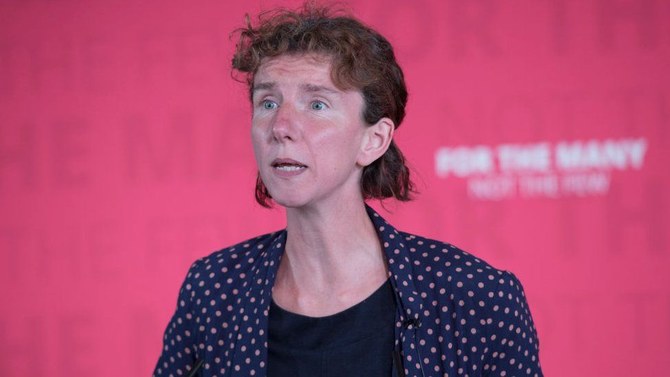
Labour chair Anneliese Dodds is calling for more action to tackle Islamophobia. (Getty Images)
Short Url
Updated 07 November 2022
Follow

UK Conservatives face fresh pressure over Islamophobia allegations

  • Labour chair pens letter to Conservative counterpart demanding answers over internal probe
  • Hate crimes targeting Muslims in Britain rose 28% in last year, accounting for 42% of all recorded religious hate crimes

LONDON: The UK’s governing Conservative Party has been accused of ignoring rising Islamophobia in Britain and within its ranks as new figures show a surge in anti-Muslim hate crimes nationwide, The Independent reported on Monday.

Government figures show that hate crimes targeting Muslims in the UK rose by 28 percent in the last year, accounting for 42 percent of all recorded religious hate crimes in 2021/22.

For the past five years, Muslims have accounted for the highest proportion of religious hate crime victims, figures show. 

Within the Conservative Party, questions remain over the result of a probe into MP Mark Spencer, who was accused of Islamophobia by a fellow MP.

Cabinet Secretary Simon Case last month said the investigation into Spencer’s actions remains “outstanding.”

In a letter to Conservative Party Chairman Nadhim Zahawi, Labour chair Anneliese Dodds questioned the government’s alleged inaction on Islamophobia.

“It is deeply concerning that I must again raise the issue of Islamophobia directly with the chair of the Conservative Party,” she said.

“As Islamophobic hate crime is on the rise, the Conservatives need to show they are serious about tackling this insidious hatred, both in society and within their party. Denial of the issue simply isn’t good enough.”

Zahawi previously rejected criticism that the Conservatives are suffering from an Islamophobia problem, saying he “did not recognize institutional racism in the party.”

Dodds, in her letter, raised the issue of definitional arguments over Islamophobia within the Conservative Party.

In 2018, a cross-party parliamentary group encouraged the use of the term Islamophobia within government communications, but the Conservatives rejected the findings.  

Dodds asked Zahawi whether his party would end the “bizarre practice of refusing to use the term.”

The Independent reported last week that the government had ended discussions over the use of the term more than three years after the findings of the cross-party group were released.

Imam Qari Asim, a senior British Muslim figure who took part in consultations with the parliamentary group, warned earlier this year that the government “had not engaged with him at all.”

He added that officials “completely failed to undertake any steps to facilitate the work of establishing a new definition in the last three years.”


Indonesia sets rules limiting use of AI for schoolchildren

Updated 4 sec ago
Follow

Indonesia sets rules limiting use of AI for schoolchildren

  • Indonesian children spend about 7.5 hours daily on tablets, smartphones
  • Gen Zs make up the majority of AI users in the country of 280m people

JAKARTA: The Indonesian government introduced on Thursday a new policy regulating the use of digital technology in education, limiting access to artificial intelligence for students.

Generation Alphas and Gen Zs make up almost half of Indonesia’s online population, which reached nearly 230 million people in 2025, according to a survey conducted by the Association of Indonesian Internet Service Providers.

As Indonesian children clock around 7.5 hours of daily screen time, the joint ministerial decree seeks to boost the benefits of digital technology and AI in formal and informal educational institutions, while also protecting the youth from risks in digital spaces.

“There are a lot of factors but the number of teenagers with mental health issues are high and continue to increase, and one of the suspected triggers — that have been proven academically — is the uncontrolled, unmitigated use of digital technology,” said Pratikno, Indonesia’s Coordinating Minister for Human Development and Cultural Affairs.

“The effects on education are also concerning, such as how it weakens brain activity due to dependence on digital technology tools and reduces critical thinking and cognitive and reflective abilities. This is what we have to regulate.”

Among Indonesia’s 280 million population, around a quarter of internet users are already using AI, with Gen Zs making up about 43 percent of that segment.

The joint decree, which Pratikno described as “comprehensive” and encompasses early childhood education to higher education, was signed in Jakarta by seven ministers, including Higher Education, Science and Technology Minister Brian Yuliarto and Primary and Secondary Education Minister Abdul Mu’ti.

“This decree seeks to ensure that our children are not controlled by technology but become the masters of technology for good, that is our goal. (It prioritizes) digital wellness, (for tech to be used) wisely and intelligently,” Pratikno said.

The policy is important to support young Indonesians, many of whom are internet users from adolescence, said Communication and Digital Affairs Minister Meutya Hafid, who also signed the ministerial decree.

“Indonesia has a significant number of children using the internet. Therefore, we must ensure that they are not only a target market for the technology industry, but also able to utilize technology according to their readiness,” she said.

“Every kind of technological advance has to consider the readiness of its users, especially children.”