

Where We Are Going Today: Elemental introduces Saudi fine dining

1 / 3
Photo/Elemental
2 / 3
Photo/Elemental
3 / 3
Photo/Elemental
Short Url
Updated 06 November 2022
Follow

Where We Are Going Today: Elemental introduces Saudi fine dining

  • Elemental’s menu offers various dishes, from light snacks to mains, most notably the zucchini fries served with light sour and cream dip, burrata salad with surprisingly sweet hints

Elemental officially opened up its doors on Thursday for a chance for visitors to engage in a sensuous experience involving the four elements: Earth, wind, fire and water, illustrating new and innovative food and beverage concepts.

The restaurant and modern bar concept is a high-end lounge, serving international cuisines and unique drinks — perfect for a night out with friends.

Entering the venue, visitors’ eyes go straight to the bar area, a newly introduced concept within the Saudi fine dining industry. Backdropped with locally made and internationally sourced non-alcoholic beverages, the bar serves a colorful array of smoky, sour and tangy cocktails. The decorative paintings and floor tiles all incorporate the elemental theme in clever but subtle ways.

Inspired by the fire element, the Alice in Wonderland cocktail gives a spicy kick through hints of raw red chili, demonstrating fine dining with a refreshing twist. Elemental aims to slowly introduce gastronomic concepts, such as emulsification, to the everyday Saudi diner.

A must-try is Elemental’s bartender special: Club clover, a drink inspired by a club in New York, made with homemade nonalcoholic gin. The drink includes a layer of raspberry foam made from the fruit’s natural juice, topped with a chip of pressed and dried raspberries and a spritz of edible glitter to finish.

“I love the food (in Riyadh), I love the ambience, but it’s not what I learned. To me, this isn’t high-end, it’s not fine dining,” Jihad El-Rassy, the restaurant’s founder, said.

“Fine dining food is gastronomic. It is art,” he added. With a considerable background in hospitality and a four-year degree from a Swiss institution, El-Rassy was determined to bring his passion and knowledge back to the place he grew up.

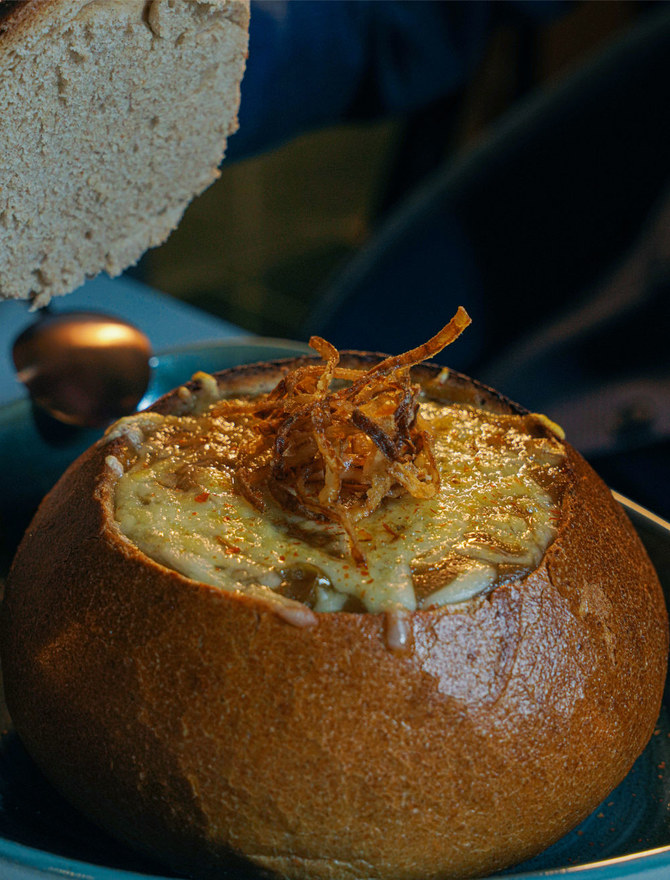
Elemental’s menu offers various dishes, from light snacks to mains, most notably the zucchini fries served with light sour and cream dip, burrata salad with surprisingly sweet hints, bresaola pizza, and autumn-infused almond-crusted chicken with a side of green apples, pumpkin and sauteed vegetable sauce.

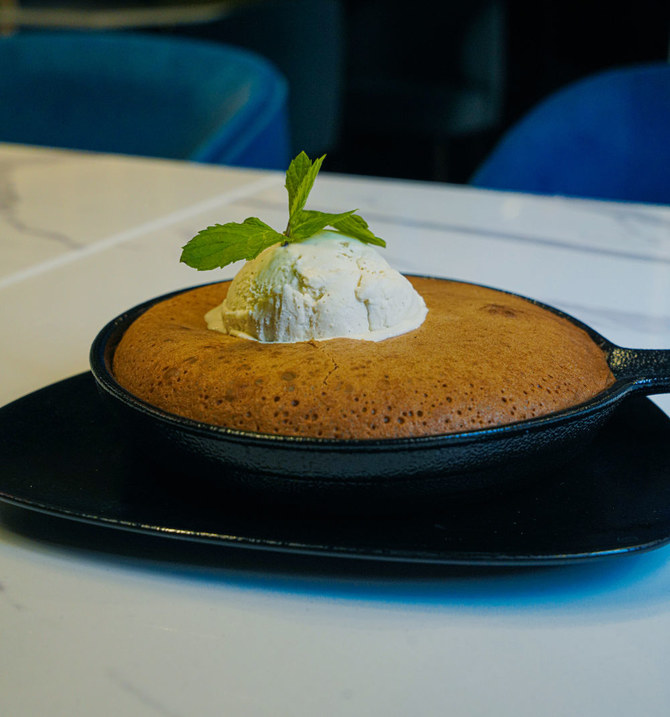
The array of desserts is truly a wonder, from tiramisu to pain perdu. A must-try is Edmond’s favorite, a dish similar to chocolate fondant made from various types of chocolate topped with vanilla ice cream. The dish is inspired by the owner’s late grandfather, Edmond, and has become a signature at the restaurant.

Menu items are moderately priced, the most expensive being the restaurant’s own spin on paella with chicken and beef bacon bits that feeds four. A diner can comfortably have a meal with appetizers, mains, dessert and a few drinks for about SR180 ($48).

The upstairs lounge area gives a sports bar vibe, and is fully equipped with numerous screens just in time for diners to enjoy the 2022 FIFA World Cup in a comfortable space, imported German draft beer in hand — alcohol extracted.

The restaurant’s ultimate goal is to give guests an accessible but elevated experience, unlike what Saudi has seen so far, by introducing unique table service, distinctive cooking methods and fascinating drink creations while also respecting the cultural norms of the region.


Book Review: ‘Padma’s All American’ Cookbook

Updated 19 December 2025
Follow

Book Review: ‘Padma’s All American’ Cookbook

  • For her, the true story of American food proves that immigration is not an outside influence but the foundation of the country’s culinary identity

Closing out 2025 is “Padma’s All American: Tales, Travels, and Recipes from Taste the Nation and Beyond: A Cookbook,” a reminder that in these polarizing times within a seemingly un-united US, breaking bread really might be our only human connection left. Each page serves as a heaping — and healing — helping of hope.

“The book you have before you is a personal one, a record of my last seven years of eating, traveling and exploring. Much of this time was spent in cities and towns all over America, eating my way through our country as I filmed the shows ‘Top Chef’ and ‘Taste the Nation’,” the introduction states.

“Top Chef,” the Emmy, James Beard and Critics Choice Award-winning series, which began in 2006, is what really got Padma Lakshmi on the food map.

“Taste the Nation,” of course, is “a show for immigrants to tell their own stories, as they saw fit, and its success owes everything to the people who invited us into their communities, their homes, and their lives,” she writes.

Working with producer David Shadrack Smith, she began developing a television series that explored American immigration through cuisine, revealing how deeply immigrant food traditions shaped what people considered American today.

She was the consistent face and voice of reason — curious and encouraging to those she encountered.

Lakshmi notes that Americans now buy more salsa and sriracha than ketchup, and dishes like pad Thai, sushi, bubble tea, burritos and bagels are as American as apple pie — which, ironically, contains no ingredients indigenous to North America. Even the apples in the apple pie came from immigrants.

For her, the true story of American food proves that immigration is not an outside influence but the foundation of the country’s culinary identity.

“If I think about what’s really American … it’s the Appalachian ramp salt that I now sprinkle on top of my Indian plum chaat,” she writes.

In this book Lakshmi tells the tale of how her mother arrived in the US as an immigrant from India in 1972 to seek “a better life.”

Her mother, a nurse in New York, worked for two years before Lakshmi was brought to the US from India. At 4 years old, Lakshmi journeyed alone on the 19-hour flight.

America became home.

Now, with visibility as a model and with a noticeable scar on her arm (following a horrific car accident), she is using her platform for good once again.

Lakshmi is merging her immigrant advocacy with her long career in food media.

The photo of her on the cover, joined by a large American flag, is loud, proud and intentional.

The book contains pages dedicated to ingredients and their uses, actual recipes and, most deliciously, the stories of how those cooks came to be.