

Where We Are Going Today: Deema’s Bakery in Alkhobar

1 / 4
Photo/Supplied
2 / 4
Photo/Supplied
3 / 4
Photo/Supplied
4 / 4
Photo/Supplied
Short Url
Updated 01 November 2022
Follow

Where We Are Going Today: Deema’s Bakery in Alkhobar

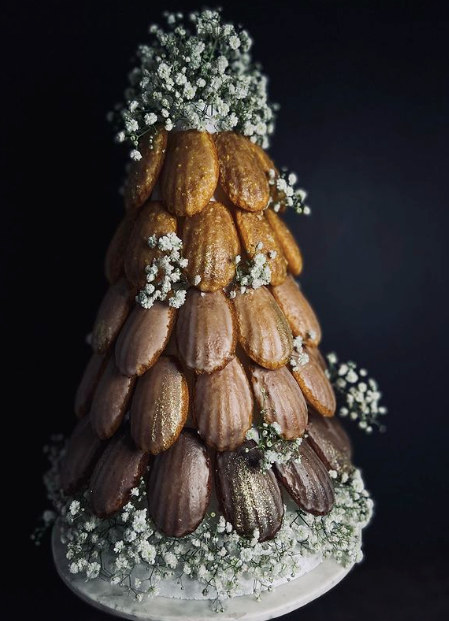
  • Deema’s Bakery offers another variation to the original recipe for madeleines, adding cinnamon and chocolate to some of the cakes, giving them a color that is darker than the original light golden tone

During my visit to Paris, I had the pleasure of tasting the classic French madeleine, a small, spongy lemony cake known for its distinct shell shape.

Food historians believe that madeleines are named after Madeleine Paulmier, a young servant girl who offered her recipe in 1755 to Stanislas Leczinski, the king of Poland, after the main chef became angry and left the kitchen in the middle of a feast.

Once I came back to Saudi Arabia, I was surprised to find that one of Alkhobar’s bakeries, Deema’s Bakery, specialized in offering madeleines with a Saudi twist.

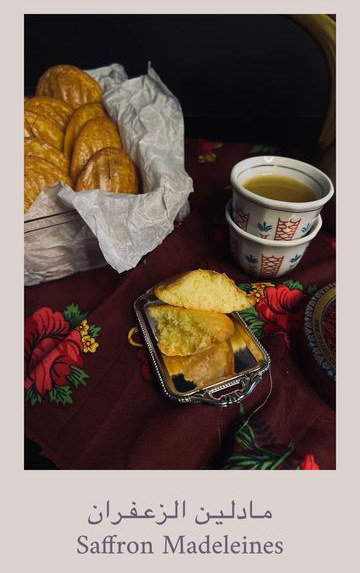
The bakery fuses bold Middle Eastern flavors with European desserts. Its madeleines come in seven flavors: lemon and cardamom, saffron, rahash (made with tahini), ginger honey, orange, coconut, and chocolate fudge.

Deema’s Bakery offers another variation to the original recipe for madeleines, adding cinnamon and chocolate to some of the cakes, giving them a color that is darker than the original light golden tone.

The bakery also has other offerings, such as brownies and chocolate fudge with peanut butter.

I was curious about all the flavors, so I picked the mixed box containing the bakery’s many madeleine varieties. The box is ideal for gatherings or as gifts.

Deema’s Bakery supplies over 20 coffee shops in the Eastern Province, and it also takes individual orders. For more details and information, visit the Instagram page @chef.deema.


Book Review: ‘Padma’s All American’ Cookbook

Updated 19 December 2025
Follow

Book Review: ‘Padma’s All American’ Cookbook

  • For her, the true story of American food proves that immigration is not an outside influence but the foundation of the country’s culinary identity

Closing out 2025 is “Padma’s All American: Tales, Travels, and Recipes from Taste the Nation and Beyond: A Cookbook,” a reminder that in these polarizing times within a seemingly un-united US, breaking bread really might be our only human connection left. Each page serves as a heaping — and healing — helping of hope.

“The book you have before you is a personal one, a record of my last seven years of eating, traveling and exploring. Much of this time was spent in cities and towns all over America, eating my way through our country as I filmed the shows ‘Top Chef’ and ‘Taste the Nation’,” the introduction states.

“Top Chef,” the Emmy, James Beard and Critics Choice Award-winning series, which began in 2006, is what really got Padma Lakshmi on the food map.

“Taste the Nation,” of course, is “a show for immigrants to tell their own stories, as they saw fit, and its success owes everything to the people who invited us into their communities, their homes, and their lives,” she writes.

Working with producer David Shadrack Smith, she began developing a television series that explored American immigration through cuisine, revealing how deeply immigrant food traditions shaped what people considered American today.

She was the consistent face and voice of reason — curious and encouraging to those she encountered.

Lakshmi notes that Americans now buy more salsa and sriracha than ketchup, and dishes like pad Thai, sushi, bubble tea, burritos and bagels are as American as apple pie — which, ironically, contains no ingredients indigenous to North America. Even the apples in the apple pie came from immigrants.

For her, the true story of American food proves that immigration is not an outside influence but the foundation of the country’s culinary identity.

“If I think about what’s really American … it’s the Appalachian ramp salt that I now sprinkle on top of my Indian plum chaat,” she writes.

In this book Lakshmi tells the tale of how her mother arrived in the US as an immigrant from India in 1972 to seek “a better life.”

Her mother, a nurse in New York, worked for two years before Lakshmi was brought to the US from India. At 4 years old, Lakshmi journeyed alone on the 19-hour flight.

America became home.

Now, with visibility as a model and with a noticeable scar on her arm (following a horrific car accident), she is using her platform for good once again.

Lakshmi is merging her immigrant advocacy with her long career in food media.

The photo of her on the cover, joined by a large American flag, is loud, proud and intentional.

The book contains pages dedicated to ingredients and their uses, actual recipes and, most deliciously, the stories of how those cooks came to be.