

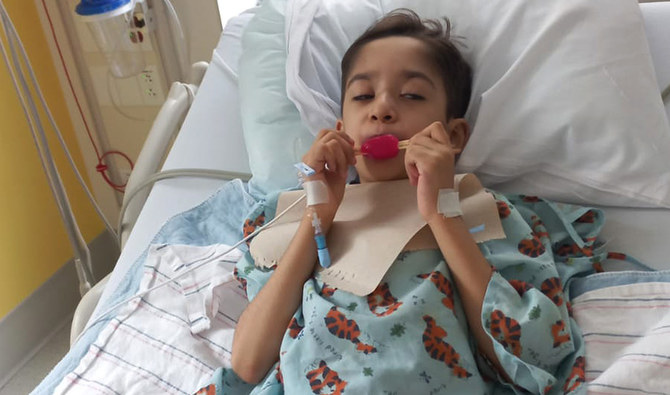

ISLAMABAD: Even as little Faiz Asad gathers his toys and gulps down sweets like any other six-year-old boy, inside him, his heart is failing by degrees.
Going by his frail constitution, pale complexion and stammer, it is clear all is not well with the excited child making whirring sounds to accompany the movement of the toy car he played with as his mother watched.
Two weeks before his birth in August 2016, doctors told Faiz’s parents Asad Butt and Sania Asad there was something gravely wrong with the boy, casting a pall of gloom over a family preparing to welcome their second child.
When Faiz was born, he was diagnosed with a complex congenital heart disease, his ventricles underdeveloped and unable to effectively pump blood to the body.
Biventricular repair surgery, which involves creating two functioning ventricles in a single procedure, is not available in Pakistan, where over 60,000 babies are born with congenital heart disease each year. The condition has more than 35 types, ranging from simple to complex.
“We were terrified for our baby when doctors told us that all four chambers of his heart are not fully formed. We just didn’t know if he would live from one day to the next,” Faiz’s mother told Arab News in Islamabad.
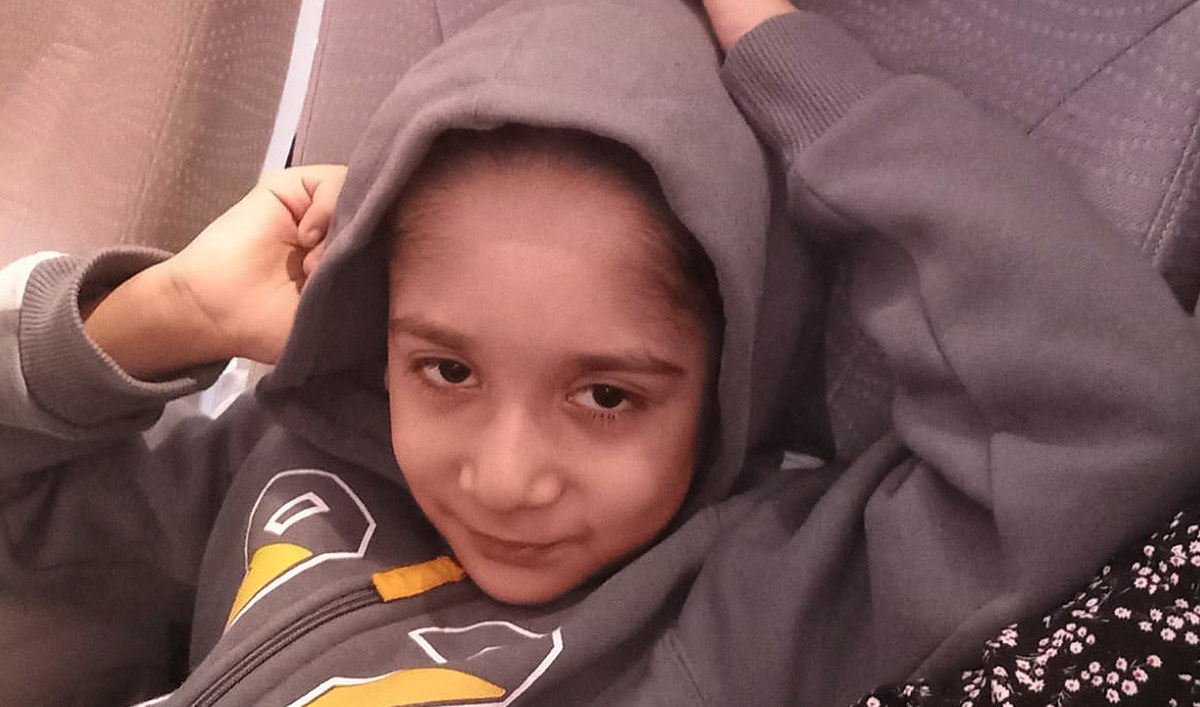
Six-year-old Faiz Asad is pictured inside an airplane at Lahore airport on October 25, 2022 moments before taking-off for US. (Photo courtesy: Sania Asad)
“Little did I know how this baby would change our lives for good.”
To save a child’s life, all babies born with Faiz’s condition require surgery shortly after birth. But the boy, born premature, was too weak for surgery. Meanwhile, his congested heart struggled to send blood to the lungs to keep them working, as a result exhausting itself.
“It was heart-wrenching when doctors refused the treatment and said he has to live with this disease,” Sania said.
For the last 6 years, his parents have been handling Faiz with baby gloves, literally. The child cannot engage in much physical activity. He cannot play or go to school. Doctors have strictly cautioned the parents to watch him so he does not fall or cry because that makes him run out of breath immediately, his lips and nails turning blue.
Recent studies suggest that babies who undergo heart surgery in their first year of life are at high risk for neurodevelopmental delays that affect behavioral and cognitive abilities. And by age six, children born with one of the most complex congenital heart conditions like Faiz’s have poorer behavioral, functional and quality of life outcomes than peers without heart disease.
Living with Faiz’s illness has been tough for the family.
“When you nurture a medical baby, your entire family gets affected. Your children suffer as well as your other family members. My daughter has had to suffer a lot with us,” Sania said.
The challenges only grew as hospital after Pakistani hospital declined treatment due to the severity of Faiz’s condition while his family continued to secure the health care their son needed to survive and never stopped looking for “that one ray of hope.”
And hope came in the form of a doctor at the Boston Children’s Hospital who said Faiz could receive life-saving treatment there.
“So, we saw just a tiny ray of hope and it was like … that we just leave this very moment [for treatment in the US],” Faiz’s father told Arab News. “You can’t imagine, it was a feeling like we were sitting and then we just started running after that hope.”
But the surgery was very expensive and short of a miracle, the middle class couple, Sania a housewife and Asad a mid-level developer at a construction firm, did not have the nearly $300,000 needed for the treatment.
The family reached out to hospitals, child support groups and NGOs to help with funding but nothing worked. They then turned to the people, launching a fundraising campaign on social media platforms including Instagram, Twitter and Facebook, and utilizing crowdfunding platforms like GoFundMe.
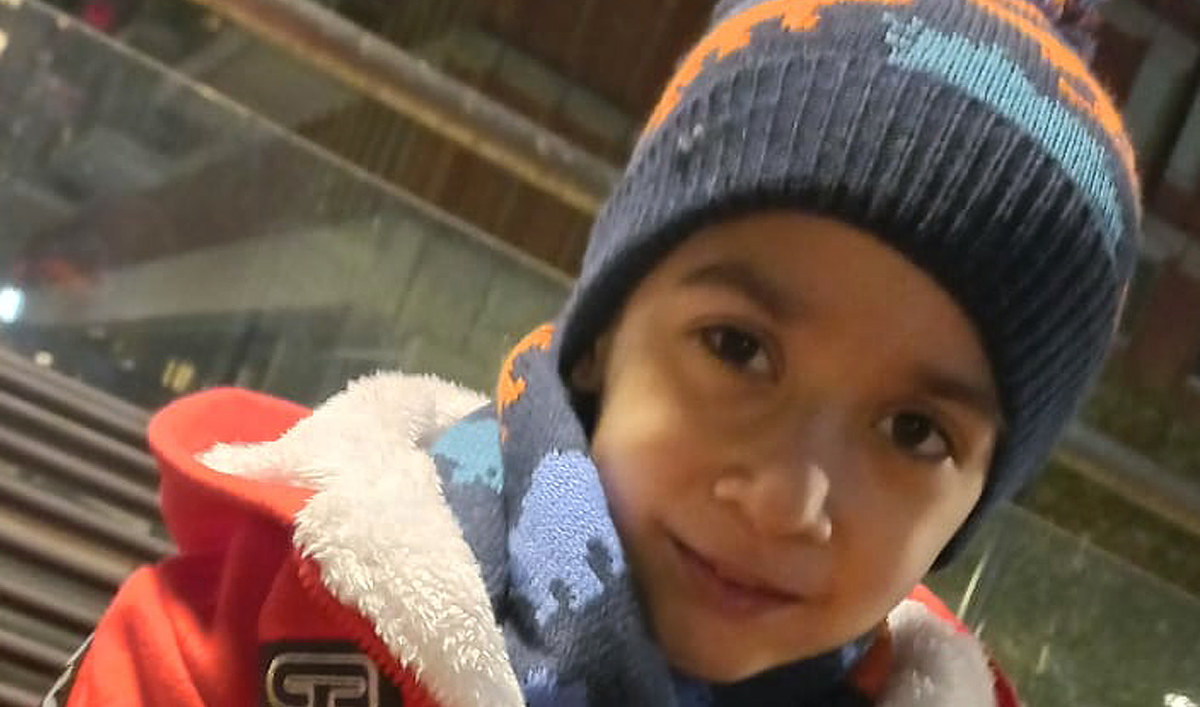
Six-year-old Faiz Asad is pictured inside an airplane at Karachi airport on October 25, 2022 moments before taking-off for US. (Photo courtesy: Sania Asad)
To their surprise, the response was “overwhelming”. Within weeks of launching the “Faiz – The Heart Fighter” campaign, the appeal went viral, with help pouring in from unexpected corners.
Nameless citizens, well-known celebrities and advocacy groups rallied around the appeal, offering financial help. The campaign was also taken up by a local TV network that helped it reach audiences beyond social media, and stories about the family’s struggle to save their son appeared on digital news platforms.
On October 26, after the family arrived at Boston Children Hospital, they thanked the generosity of those who came together from across the world to save Faiz, including businesswoman Amber Malik, Pakistani journalists Asma Shirazi and Ajmal Jami, and the US embassy which helped with the speedy processing of the family’s visas.
Faiz’s first surgery is scheduled for November 9 in Boston.
“From his birth to this defining moment, we have seen many angels in disguise helping us due to Faiz’s disease,” Sania said.
“Everyone tries their best. We did our best. We are taking him to the world’s best hospital. Now the doctor will do his best and the rest is up to god.”


