

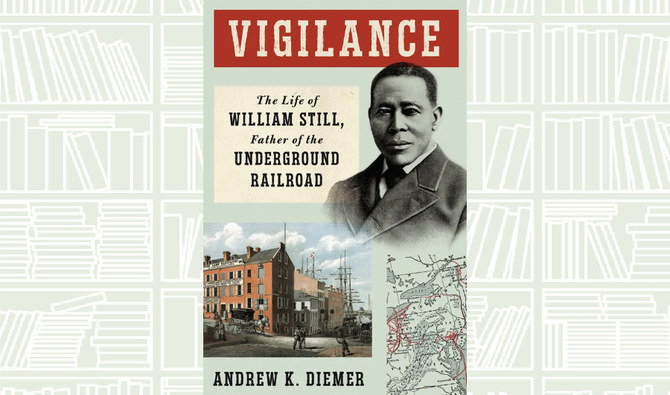
What We Are Reading Today: Vigilance

Short Url
Updated 04 November 2022
Follow

What We Are Reading Today: Vigilance

Author: Andrew K. Diemer

This is a fascinating, in-depth account of the life of William Still. 

Andrew Diemer does a magnificent job presenting Still’s life to the reader.

Through meticulous research and engaging writing, Vigilance establishes Still in his rightful place in American history as a major figure of the abolitionist movement.

Born free in 1821 to two parents who had been enslaved, Still was drawn to antislavery work from a young age. Hired as a clerk at the Anti-Slavery office in Philadelphia after teaching himself to read and write, he began directly assisting enslaved people who were crossing over from the South into freedom.

Andrew Diemer captures the full range and accomplishments of Still’s life, from his resistance to Fugitive Slave Laws and his relationship with John Brown before the war, to his long career fighting for citizenship rights and desegregation until the early twentieth century.

Despite Still’s disappearance from history books, during his lifetime he was known as “the Father of the Underground Railroad.” 

This is a great history read and also gives more insight into black culture and their own history, said a review on goodreads.com.


What We Are Reading Today: ‘The Bell Jar’

Photo/Supplied
Updated 20 December 2025
Follow

What We Are Reading Today: ‘The Bell Jar’

  • The bell jar — clear, enclosing, and distorting the air she breathes — becomes the perfect image of Greenwood’s entrapment. Just as telling is the fig tree she imagines, with each fig representing a possible future: writer, traveler, mother, lover

Author: Sylvia Plath

Sylvia Plath’s “The Bell Jar” (1963) is a raw and luminous portrait of a young woman standing at the edge of adulthood, grappling with ambition, doubt, and the suffocating weight of expectation. 

Through the eyes of the novel’s troubled protagonist Esther Greenwood, Plath reveals the loneliness that can lie hidden beneath achievement and the unease brought on by future expectations.  

The novel opens in New York, where Greenwood’s magazine internship seems the gateway to success. Yet the city’s glamor soon feels hollow, and the confidence around her thin and brittle. 

Her sense of direction begins to fade, and the life laid out before her starts to feel both too small and impossibly distant.  

The bell jar — clear, enclosing, and distorting the air she breathes — becomes the perfect image of Greenwood’s entrapment. Just as telling is the fig tree she imagines, with each fig representing a possible future: writer, traveler, mother, lover. 

Torn between these possibilities, she hesitates until the figs shrivel and drop. This image, perhaps more than any other, reveals how fear of choice can quietly undo a person.   

Plath’s writing is sharp and deeply humane. She exposes the subtle pressures shaping women’s lives at that time without sentiment or complaint. 

The narrative’s erratic rhythm mirrors the character’s disoriented state of mind, where thought and memory blur at the edges. 

“The Bell Jar” speaks to anyone who has felt caught between possibility and paralysis, between who they are and who they are expected to be. 

Plath writes with precision and compassion, turning confusion into clarity and despair into something almost inspiring.