KARACHI: For Pakistani men inclined toward fastidious grooming and fashionable attire, there is now an advocate, and he is out to tell you there is nothing wrong with a gelled-back coif, a scrubbed-skin sheen or, more controversially, wearing makeup.
Meet 32-year-old Adnan Zafar, part shop-window mannequin, part androgynous gent who evokes the “loving the alien” era David Bowie with his elfin looks and glamorous outfits. The Faisalabad born, Dubai-based lifestyle influencer describes himself as a “Human Ken doll,” after the male fashion doll introduced by the American toy company Mattel in 1961 as a counterpart to the female Barbie.
In a country where men are usually given to valiant notions of male toughness, a finicky pursuit of preening is to manliness what decaf is to coffee. But Zafar wants to be a change maker and is now among a growing list of globally recognized male vloggers and YouTube stars like James Charles, Patrick Starrr and Reuben de Maid who are emblematic of the changes informing the beauty world and fighting the stigma against makeup for men.
The struggle is achieving results as it has become commonplace in the last decade for men to appear in cosmetics ads. One example is Manny Gutierrez, known on social media platforms as Manny MUA, who became the first man to star in a Maybelline campaign in 2017.
“In the beginning, of course I received a lot of hate from the public because they were not really ready to digest what my message was: to do skincare, being a male,” Zafar told Arab News during a recent trip to Karachi.
“[But] something that I wanted to communicate, that everybody should be comfortable within what they are, that of course wearing makeup will not make you a woman.”
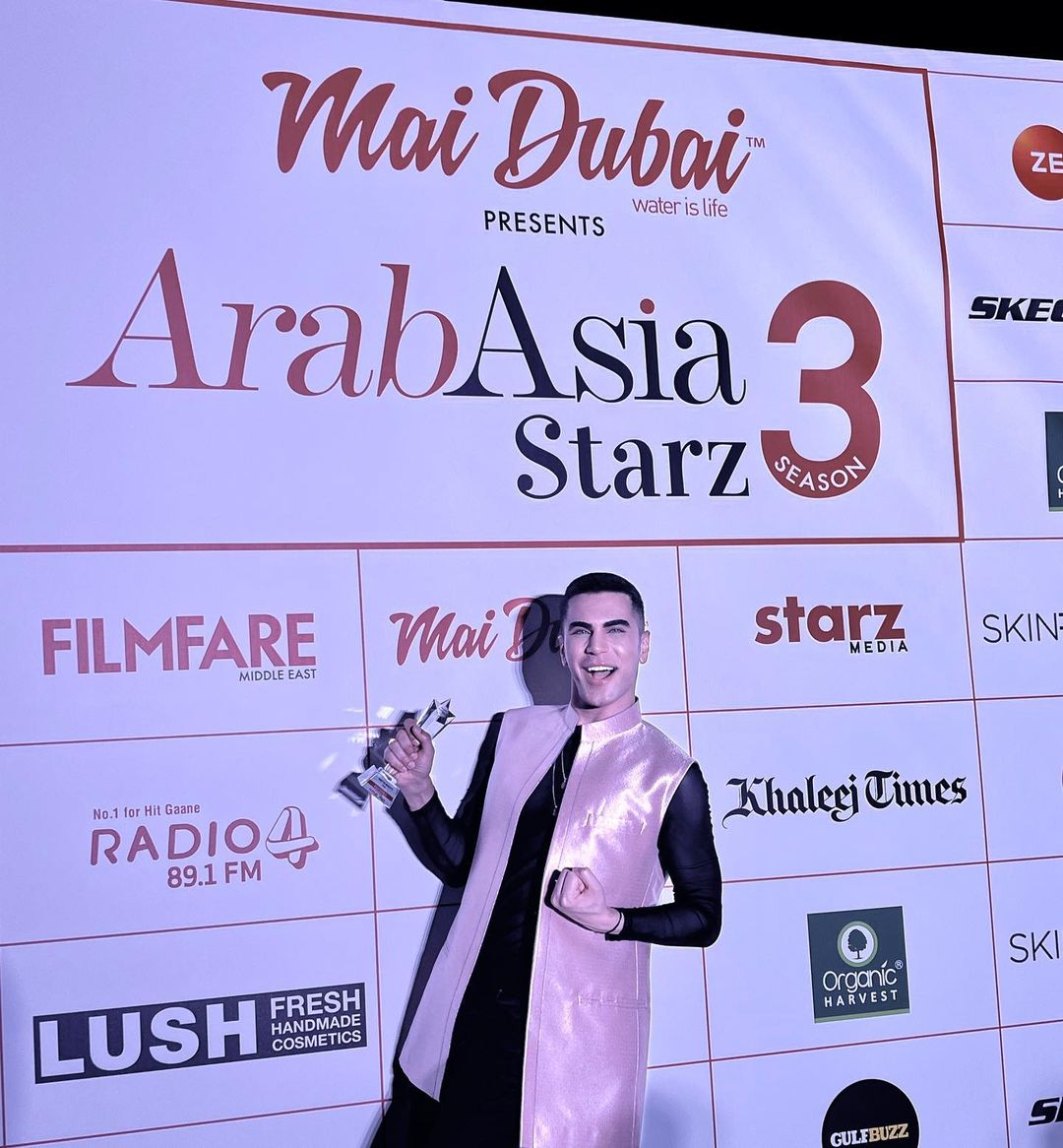
Adnan Zafar, Dubai-based lifestyle influencer who describes himself as a “Human Ken doll,” poses for a picture after winning FilmFare Arab Asia Award 2022 for the Beauty Category on May 28, 2022. (@ken_doll_dubaiii/Instagram)
Despite the initial difficulties, Zafar’s Ken-like looks and strict adherence to skincare have won him nearly half a million followers on Instagram and TikTok.
“I believe all boys can keep these two in their bag and it’s completely fine,” Zafar said, holding up two small tubes of skin concealer, shaking them with a camp flourish and then proceeding to apply shades of light and dark cream beneath his eyes. As he examined his skin with unblinking concentration, one almost expected him to ask of the large rectangular mirror before him: “Mirror, mirror on the wall...”
Zafar’s interest in skincare and makeup was sparked by his mother, a single-parent who owned a salon in Faisalabad where her son learnt about skincare products and taught himself to apply makeup.
“It was a trend in my home to really take care of your skin and take care of your appearance. So, it was always very acceptable by my family. My mum always gave me this confidence that I could do anything,” Zafar said.
Eleven years ago, Zafar moved to Dubai, and began to post on Instagram and other social media platforms about parties and fun places to visit in the UAE. Wherever he went, the model said, he was told he looked like “Barbie’s husband.” It was then, three years ago, that Zafar decided to professionally reinvent himself as a ‘Human Ken Doll.’
The new avatar has been a success, turning him into a social media celebrity and a popular lifestyle influencer.
And though he is modelled after a western cultural icon, Zafar is a desi at heart and takes pride in his “dark complexion and features.”
“I want to make sure that the beauty of Pakistan I have in me is preserved as it is. The dark features that we have, nice thick eyebrows and lashes, I don’t touch them at all. I will never make things appear unnatural.”
But there are some changes Zafar has indeed had to make to his looks and lifestyle to get into a shape consistent with his alter-ego. He insists, though, that he hasn’t “gone under the knife” as much as people would like to think — other than a nose job he got to fix a childhood injury:
Still, the assorted “aesthetic treatments” Zafar regularly receives would test the resolve of anyone with a Ken — or Barbie, for that matter — fixation:
“I do my NCTF (New Cellular Treatment Factor) that is like a cocktail of 60 minerals, getting them injected all over my face every month. From hyaluronic acid fillers every month to Botox every three months, I have lift fillers and from time to time facial threads, touch-ups and HIFU (Ulfit Ultrasound Therapy) to make sure my jawline has that chiseled look.”
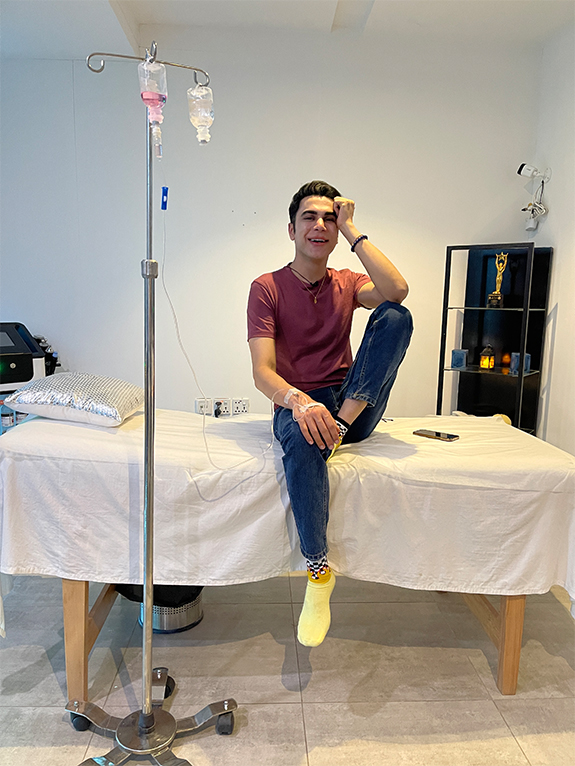
Adnan Zafar, Dubai-based lifestyle influencer who describes himself as a “Human Ken doll,” poses for a picture after a treatment in Karachi, Pakistan, on October 28, 2022. (AN Photo)
The transformation has worked wonders for Zafar, who has modelled for major skincare brands in the Middle East, including Nars, Dermalogica, Bioderma, Foreo, L’occitane and Vatika.
Dr. Shaista Lodhi, a former morning show host and aesthetic physician who treats Zafar, questioned why Pakistanis viewed personal grooming through a gendered lens.
“Why can’t a man have perfect skin?” she asked, adding that the aesthetic treatments she had prescribed to Adnan were meant to cleanse his skin, for example, rather than make him fairer.
“This cannot change your genes. These are antioxidants full of vitamins, particularly Vitamin C, and they detoxify your system. It is reflected in your glowing skin.”
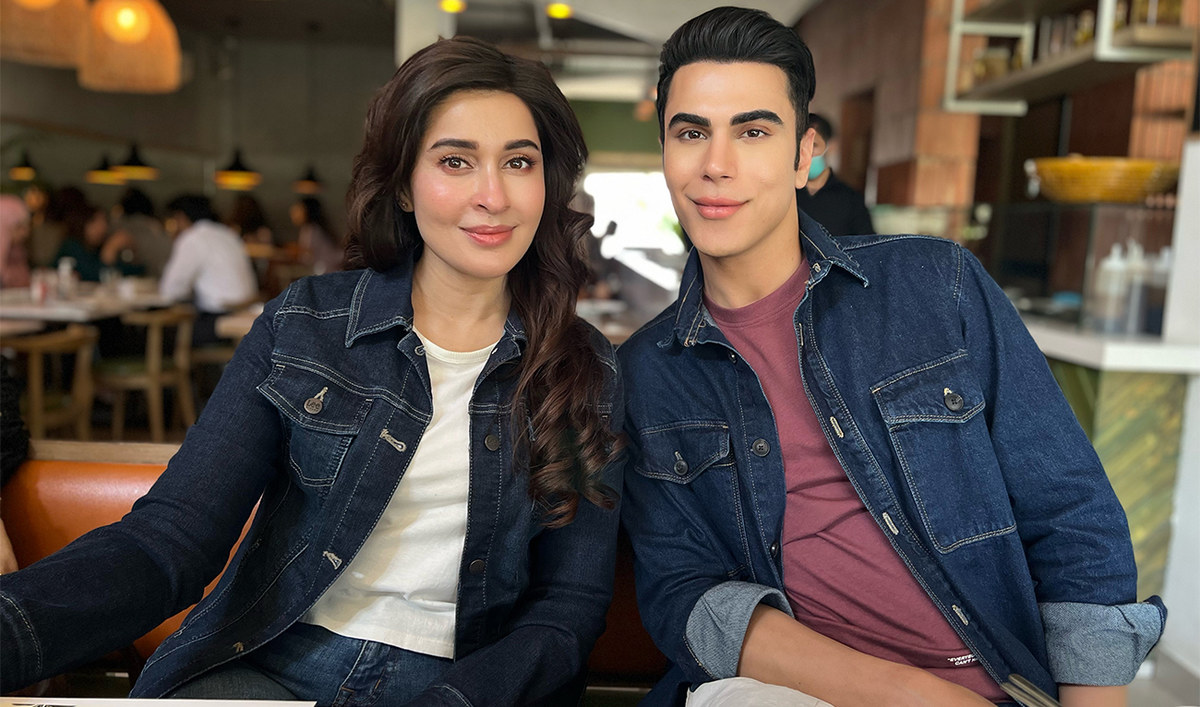
Dr. Shaista Lodhi (left), a former morning show host and aesthetic physician, and Adnan Zafar, Dubai-based lifestyle influencer who describes himself as a “Human Ken doll,” pose for a picture at a restaurant in Karachi, Pakistan, on October 28, 2022. (AN Photo)
While Zafar has had to tread a difficult path to celebrity and personal realization, and initially faced “hostile attitudes” to his transformation, he said he would continue to try to set an example and inspire men to take care of themselves.
“Criticism, hate, was always oxygen to me because I was doing something different,” the influencer said. “I got a lot of hate, a lot of questions on my gender, a lot of questions on my orientation ... But, then later on people, they got to understand that ... my message is very positive. My message is all about being happy, my message is all about taking care of yourself.”
Today, on his social media platforms, Zafar creates fashion and lifestyle content in English, Urdu, Punjabi and Arabic for more “dynamic and diverse audiences” both in Pakistan and the Middle East.
His message?
“Never be shy of taking care of yourself.”
“There used to be a concept, ‘Wash your face with soap, that’s enough’,” Zafar said in Punjabi. “We shouldn’t do that. The way we take care of our body, the same way our face and our skin deserve also to be treated well.”