

Saudi Arabia announces open call for Intermix Residency program

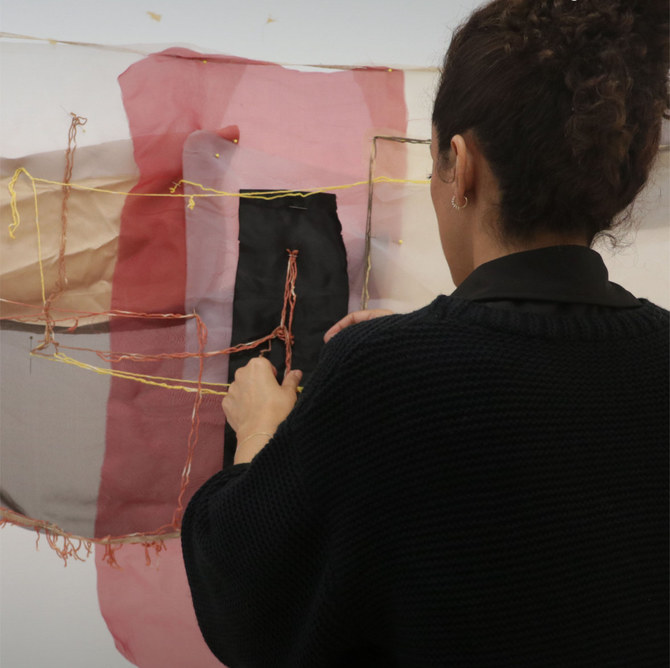
The Saudi Visual Arts Commission, in collaboration with the Saudi Fashion Commission, on Sunday announced the open call for the second Intermix Residency, set to run from Dec. 4 until Feb. 28. (Twitter/@MOCVisualArts)
Short Url
Updated 30 October 2022
Follow

Saudi Arabia announces open call for Intermix Residency program

RIYADH: The Saudi Visual Arts Commission, in collaboration with the Saudi Fashion Commission, on Sunday announced the open call for the second Intermix Residency, set to run from Dec. 4 until Feb. 28.

With the support of the Quality of Life Program, the residency will take place at Diriyah Biennale Foundation spaces in the thriving cultural hub of JAX District, located in the historical city of Diriyah on the outskirts of the capital, Riyadh, enabling close direct access to local artists.

The residency is a funded program that provides local, regional and international visual artists, fashion designers and creatives full access to their own private studios and accommodation and a platform to engage in discussions and exchange creative ideas.

Participants will have the opportunity to explore a range of themes, including innovation, transformation and sustainability, during their three-month residency that will conclude with open studios to a local audience.

Applicants will be evaluated and short-listed by a committee of visual arts and fashion experts before the final selection is made.

Members of the committee include: Dina Amin, CEO of the Visual Arts Commission; Burak Cakmak, CEO of the Fashion Commission; Dania Al-Saleh, visual artist; Emily Marant, functional art editor at French Cliché; Jean Pierre Blanc, founder of the Annual International Festival of Fashion and Photography in Hyères; and Jordan Nassar, visual artist.

Managed by ATHR and operated by Manifesto, the Intermix Residency is proud to have Saudi resident curator Tara Al-Dughaither on board to support residents as they navigate their practice.

Al-Dughaither’s curatorial practice centers around community-oriented modes of situated knowledge production, and her methods draw from a pedagogy she terms “folk futurism,” which is inspired by indigenous ways of knowing in relationship to a radically transforming culture for creatives across the globe.

“We look forward to welcoming the second cohort of artists and designers to the Intermix Residency program at JAX,” said Amin.

“The first cycle was comprised of an incredibly talented group of visual artists and fashion and textile designers whom we had the great pleasure of welcoming to Riyadh and to the program. We are thrilled to be able to support the residents with the opportunities provided through both the physical space and an environment of creative exchange amongst fellow artists. We are excited to explore their practice during their open studios.”

Applications are open until Nov. 10. Selected artists will be notified of their acceptance to the residency in late November. For more information on the residency and how to apply, please visit: https://engage.moc.gov.sa/moc-intermix-recidency/


Najran’s camels are embedded in local culture and traditions

Camels are not only a vital livestock resource in Najran, but also a cornerstone of local identity and tradition. (SPA)
Updated 25 December 2025
Follow

Najran’s camels are embedded in local culture and traditions

  • Several distinct camel breeds are found in the region
  • Animals permeate Arab consciousness, says expert

RIYADH: In Najran, camels are not only a vital livestock resource but also a cornerstone of local identity and tradition.

According to Hadi Benyan Al-Amer, head of Najran’s Camel Association, the region has several distinct camel breeds.

Principal among them is the Awarik, an ancient Arabian lineage linked to territories where arak trees flourish, the Saudi Press Agency reported on Thursday.

These light-colored, sparsely-haired camels possess remarkable resilience, and are prevalent across southern Arabia.

The Majahim are characterized by dark hues spanning black to brown, and excel in both milk yield and endurance.

The Asayil are prized for their sleek, lean physiques, and dominate in speed-based competitions.

Al-Amer said traditional water sources known as Odood, or traditional water wells and artesian wells, have sustained herders navigating the Empty Quarter’s grazing lands for generations.

These permanent water points, equipped with dedicated drinking basins for camels, showcase the animals’ extraordinary environmental resilience.

Among the principal wells accessible from Najran are Al-Minkhali, Abu Shadid, Hamra Nathil, Tamani, Umm Al-Wahat, and Khujaima.

Countless additional wells dot the Empty Quarter and adjacent territories, forming the backbone of camel owners’ far-reaching pastoral networks.

Dr. Hind bint Dawood Al-Shuqair of Najran University’s Arabic Language Department explained how camels have permeated Arab consciousness through legends and stories spanning thousands of years.

Representing endurance, power, and grace, they have become inseparable from Arab cultural identity.

Archaeological evidence at Al-Ukhdood, Mount Al-Tharwa and Hima, preserves through carvings and ancient artwork the deep bond between people and camels, Al-Shuqair said.

She drew attention to Saudi Arabia’s substantial investment in camel heritage, exemplified by proclaiming 2024 as the Year of the Camel.

This designation emphasizes their importance to national prosperity and cultural heritage while backing global initiatives to promote awareness of camels as valuable economic and cultural assets.

The Kingdom further demonstrates its commitment to protecting the animals through the annual King Abdulaziz Festival, the SPA reported.