RIYADH: An official Saudi delegation headed by the Minister of Industry and Mineral Resources, Bandar Al-Khorayef, is set to visit Australia next week to introduce investment opportunities in the Kingdom’s mining sector, under the umbrella of “Invest in Saudi Arabia,” Saudi Press Agency reported on Saturday.
The delegation includes a number of ministry leaders, led by Deputy Minister for Mining Khalid Al-Mudaifer, and representatives of the Ministry of Investment, the National Industrial Development and Logistics Program, the Saudi Geological Survey, the Saudi Industrial Development Fund, and the Industrial Center.
The delegation will visit four cities, including Canberra, Brisbane, Perth and Sydney, and will also participate in the International Mining and Resources Conference in Sydney from Nov. 2 to 4.
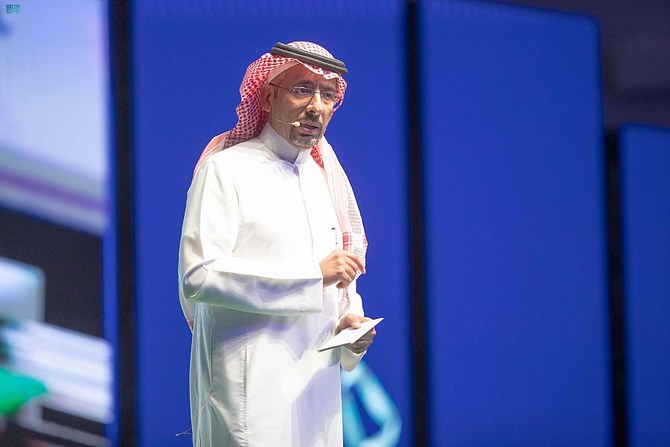
Al-Khorayef is expected to speak during the opening ceremony of the conference, which is a platform for mining leaders from around the world to discuss the future of mining and issues related to technology and finance.
He is also scheduled to open the Saudi pavilion at the conference, which will highlight the Kingdom’s continuous efforts to advance the mining sector by facilitating access to geological data, and updates made to regulations and legislation to create an attractive climate for investments, build foundations for sustainability, and develop a mining sector based on integrated value chains, in line with the Kingdom’s Vision 2030.
The Saudi delegation will also hold a number of meetings with mining and exploration companies, universities, research institutions, industrial bodies, geological societies and business councils in Australia, and will hold sessions to review investment opportunities in the Kingdom to establish a strategic relationship with stakeholders in Australia’s mining sector, across four main areas related to the development of the mining sector, including politics and governance, innovation and geology, investment, and education.
“The Kingdom affirms its keenness, through its participation in IMARC, to cooperate with mining and exploration companies to support growth across the various value chain processes from exploration to manufacturing, and hopes to achieve an integrated value chain capable of supporting the goals of the Kingdom’s Vision 2030 and the transformation of the energy sector,” SPA said.
The Kingdom’s participation is of importance as “it occupies a strategic location linking the Middle East, Asia, Africa and Europe, in addition to its advanced infrastructure and high domestic demand,” it added. “The Kingdom also possesses all the ingredients necessary to be a regional center for mining, in order to achieve the Kingdom’s 2030 goals and attract qualitative investments to the mining sector.”
Australia is home to a global investment environment in the mining sector and shares Saudi Arabia’s strategic vision for a resilient global mining value chain capable of meeting the demands of a clean energy-based future, and the Kingdom is keen to establish and strengthen strategic relationships with Australian counterparts to push research, innovation and growth to make mining the third pillar of the national industry.
The ministry said that non-oil exports between the two countries last year reached over SR6.22 billion ($1.6 billion).


![]()

Saudi delegation to boost mining investments and support innovation during visit to Australia
Short Url
https://arab.news/b32n9
Saudi delegation to boost mining investments and support innovation during visit to Australia
- The delegation will visit four cities, including Canberra, Brisbane, Perth and Sydney
- It will also participate in the International Mining and Resources Conference in Sydney from Nov. 2 to 4


Latest updates


Recommended



© 2026 SAUDI RESEARCH & PUBLISHING COMPANY, All Rights Reserved And subject to Terms of Use Agreement.