ISTANBUL: Hundreds of Syrian men and boys were detained, beaten and forcibly returned to their country by Turkish authorities over a six-month period, a leading human rights group said Monday.
The treatment of migrants living in Turkey under temporary protection is a breach of international law, New York-based Human Rights Watch said in a report.
The Turkish government has in the past rejected accusations of forcibly returning refugees to Syria.
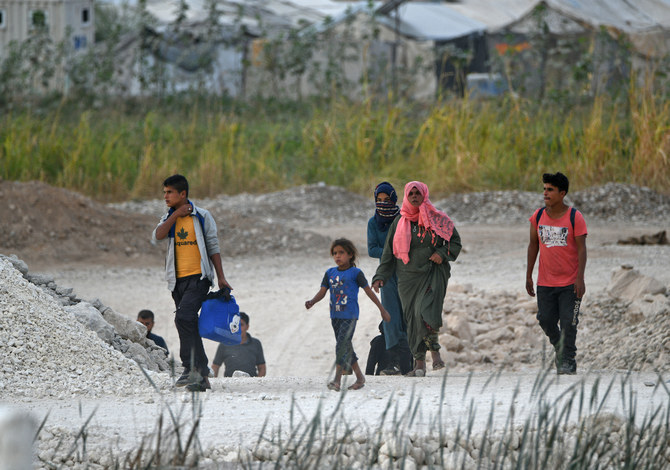
Turkey houses the world’s largest refugee population, mostly 3.6 million Syrians who fled the decade-long war in their country.
Human Rights Watch said deported Syrians told researchers that Turkish officials arrested them in their homes, workplaces and on the street. They were then detained in poor conditions, with most suffering beatings and abuse, and forced to sign documents agreeing to “voluntarily” return to Syria.
After being driven in handcuffs to the Syrian border — journeys sometimes lasting up to 21 hours — they were forced across at gunpoint, the Syrians said.
“In violation of international law Turkish authorities have rounded up hundreds of Syrian refugees, even unaccompanied children, and forced them back to northern Syria,” said Nadia Hardman, refugee and migrant rights researcher at Human Rights Watch.
The legal principle of nonrefoulement, which Ankara is bound to by international treaty, prohibits the return of anyone to a place where they would face a real risk of persecution, torture or a threat to life. The UN Commission of Inquiry on Syria last month restated that Syria is not safe for returnees.
Amid a dire economic crisis, sentiment toward refugees in Turkey has turned for the worse, with attacks on Syrian homes and businesses.
Facing approaching elections, the government now aims to return increasing numbers of people to areas of northern Syria under the control of the Turkish military.
Earlier this month a Turkish official said nearly 527,000 Syrians had returned voluntarily. Announcing a home-building project in Syria’s northwest Idlib region in May, President Recep Tayyip Erdogan said it would facilitate the return of 1 million refugees from Turkey.
Erdogan has recently signaled a change in policy toward Syria, suggesting the possibility of talks with Syrian President Bashar Assad. Ankara previously demanded Assad’s removal as it backed opposition groups. Many Syrians living in Turkey fear warming relations could led to greater pressure on them to return.
“Although Turkey provided temporary protection to 3.6 million Syrian refugees, it now looks like Turkey is trying to make northern Syria a refugee dumping ground,” Hardman said.
Human Rights Watch interviewed 37 Syrian men and two boys between February and August, as well as relatives of those deported to Syria.
They all said they were deported together with dozens or hundreds of others and were forced to sign forms they understood to be voluntary repatriation agreements. One 26-year-old from the north Syrian city of Aleppo said a Turkish official told him that anyone who tried to re-enter Turkey would be shot.
Hardman said the European Union should suspend its funding of migration detention and border controls until forced deportations end. Under a 2016 deal, the EU has provided 6 billion euros in aid to Turkey in return for reducing the flow of migrants to Europe.


![]()

Rights group: Turkey forces hundreds to return to Syria
Short Url
https://arab.news/pw7bk
Rights group: Turkey forces hundreds to return to Syria
- The treatment of migrants living in Turkey under temporary protection is a breach of international law
- The Turkish government has in the past rejected accusations of forcibly returning refugees to Syria


Latest updates


© 2026 SAUDI RESEARCH & PUBLISHING COMPANY, All Rights Reserved And subject to Terms of Use Agreement.