

Pakistan kicks off anti-polio campaign on World Polio Day

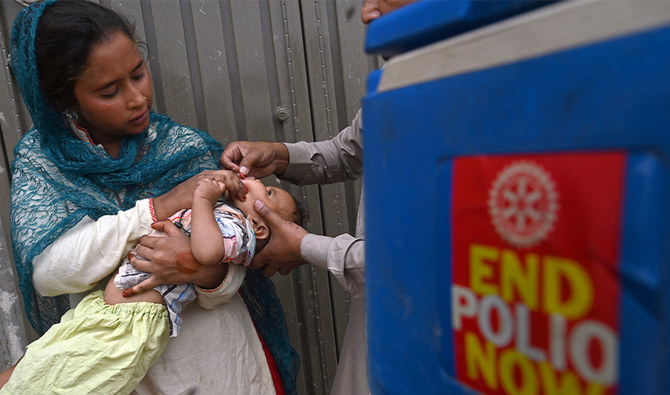
A health worker administers polio vaccine drops to a child during a door-to-door polio vaccination campaign at a slum area in Lahore on May 23, 2022. (AFP/FILE)
Short Url
Updated 24 October 2022
Follow

Pakistan kicks off anti-polio campaign on World Polio Day

  • The country has reported several polio cases in its tribal areas since the beginning of the year
  • Officials fear more cases may emerge in the country in the wake of the recent floods in Pakistan

ISLAMABAD: Pakistan on Monday launched a special immunization campaign to mark World Polio Day, which is annually observed on October 24, while asking parents to get their children vaccinated. 
At least 20 polio cases have been reported in the country since the beginning of the year which has led to international concern about the deteriorating situation of the disease in Pakistan. 
Officials have also expressed fear that more such cases may emerge in flood-affected areas where millions of people have been displaced and it is not easy to access all the families with young children. 
Pakistan and Afghanistan are the only two countries which are battling to prevent the spread of wild poliovirus despite spending millions of dollars on immunization campaigns. 
“Special anti-polio campaign started today,” Pakistan Polio Eradication Program announced in a Twitter post. “Polio workers will go door to door in certain districts to administer polio vaccine to children to protect them from the polio virus. Parents should do their duty and go ahead and secure the future of their children.” 


It said in another social media post that Pakistan was spending World Polio Day to protect “mothers and children from infectious diseases and provide them with a healthy future.” 
Polio is a disabling and life-threatening disease which spreads from person to person and infects spinal cord, causing paralysis. 
All polio cases in Pakistan this year have been reported from the country’s northwestern tribal areas where many parents refuse to allow health teams to administer polio drops to their children. 
Pakistan’s foreign minister Bilawal Bhutto-Zardari requested people to allow vaccination teams to do their work, pointing out that eradicating the disease had become a “challenge” to the whole nation. 


Pakistan urges pilgrims to complete Saudi biometrics as Hajj preparations gain pace

Updated 30 January 2026
Follow

Pakistan urges pilgrims to complete Saudi biometrics as Hajj preparations gain pace

  • Government warns pilgrims biometric verification is required for Hajj visas
  • Step follows tighter oversight after last year’s Hajj travel disruptions

ISLAMABAD: Pakistan’s government on Friday urged aspiring pilgrims to complete mandatory Saudi biometric verification for Hajj visas, as preparations for the 2026 pilgrimage gather pace following stricter oversight of the Hajj process.

The announcement comes only a day after Pakistan’s Religious Affairs Minister Sardar Muhammad Yousuf said regulations for private Hajj operators had been tightened, reducing their quota following widespread complaints last year, when tens of thousands of pilgrims were unable to travel under the private Hajj scheme.

“Saudi biometric verification is mandatory for the issuance of Hajj visas,” the Ministry of Religious Affairs said in a statement, urging pilgrims to complete the process promptly to avoid delays.

“Hajj pilgrims should complete their biometric verification at home using the ‘Saudi Visa Bio’ app as soon as possible,” it added.

The statement said the pilgrims who were unable to complete biometric verification through the mobile application should visit designated Saudi Tasheer centers before Feb. 8, adding that details of the centers were available on Pakistan’s official Hajj mobile application.

Pakistan has been steadily implementing digital and procedural requirements for pilgrims ahead of Hajj 2026, including mandatory training sessions, biometric checks and greater use of mobile applications, as part of efforts to reduce mismanagement.

Saudi Arabia has allocated Pakistan a quota of 179,210 pilgrims for Hajj 2026, with the majority of seats reserved under the government scheme and the remainder allocated to private tour operators.