

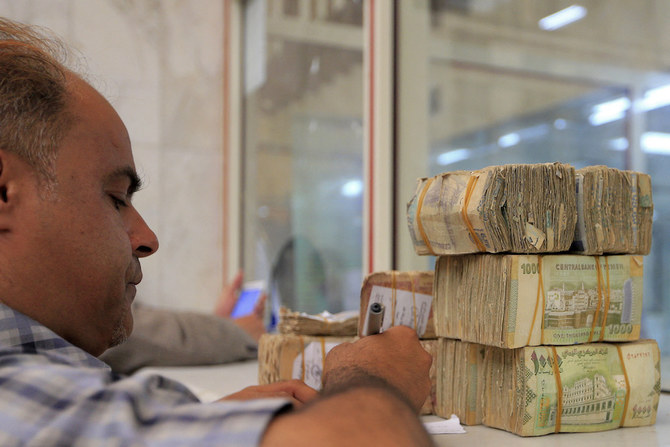

LONDON: The Iran-backed Houthi militia is trying to mislead Yemenis about payments of public servant retirees’ salaries, despite their decision to suspend them, starting with its coup against the state, looting public treasury reserves, and aborting all government initiatives to pay them regularly, Yemen’s Minister of Information, Culture and Tourism Moammar Al-Eryani said.
He added that the government prioritizes payment of salaries, especially in areas under Houthis control and strives to find practical solutions as it considers it a humanitarian priority and a public responsibility, and has exerted great efforts, which clashed with the Houthi militia in many instances.
“In 2019, in order to preserve public servants and regularity of work of vital services, the government paid salaries of more than 120,000 civil servants and retirees in Houthi-controlled areas, including the health sector, and 50 percent of higher education employees, universities in Hodeidah,” he said in a series of tweets.
Al-Eryani said the government also led negotiations with the international community to allocate part of the humanitarian aid to a fund that covers the gap, especially in the education sector.
“In January 2020, the Houthi militia imposed a monetary split by preventing circulation of currency issued by the head office of the Central Bank of Yemen in the interim capital, Aden, which disrupted payment of salaries by the government in militia controllled areas, after being circulated for a whole year,” he added.
“In return, the Houthi militia doubled taxes, customs and zakat on citizens and the private sector, profiting from the black market for oil derivatives, as an example, according to an expert group report, (while) value of tax and other revenues of the Houthis in 2019 amounted to more than $1.8 billion,” he also said.
As independent estimates indicate, the sums obtained by the Houthi militia during the year 2020 exceeded $4 billion, amounts equal to several times the bill for the salaries of state employees and retirees in areas under their control, Al-Eryani said.
“Since the truce in April 2022, a doubled number of oil derivatives ships arrived at Hodeidah port, with tax and customs revenues exceeding 213 billion Yemeni riyals ($851 million), looted by the Houthis and hindered discussions to establish disbursing them to cover part of civil servants salaries and retirees in its areas,” he said.
The UN envoy to Yemen Hans Grundberg proposed paying salaries of civil servants in areas controlled by the Houthis, but the militia rejected the proposal, and demanded payment of the 2014 budget, which included salaries of military and security militia members who replaced state staff, he noted.
“The Houthi militia claims that before the war, oil revenues represented 70 percent of the budget, ignoring that these revenues declined by 75 percent due to the war it imposed, and caused the departure of companies and foreign investments, and halted oil production, exploration, and exporting liquefied natural gas.”
While the state’s oil revenues in 2014 exceeded $5 billion, these revenues declined to nearly $1 billion, he said, adding that the government is keen to address this issue according to controls that ensure sustainable salaries and the treatment of revenues, including Hodiedah ports and tax revenues in Houthi areas, and ensuring a clear role for the international community to fund salary deficits and address the monetary split imposed by the Houthis.


