

In Pakistan’s northern region, a museum to preserve Baltistan’s forgotten cultural history

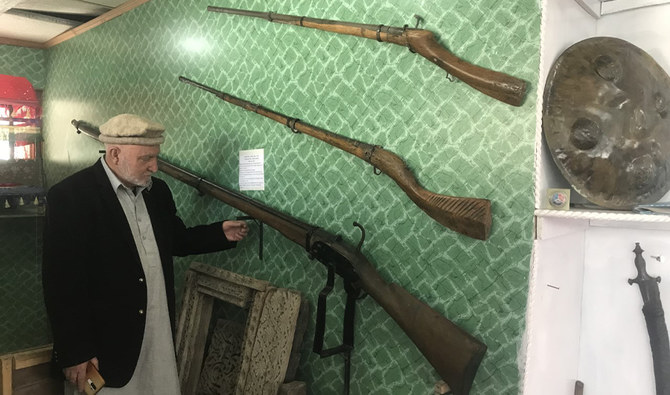
Dr. Hassan Khan Amacha poses for a photo in front of a 10-foot-long antique firearm at his museum in Shigar, Pakistan, on October 10, 2022. (AN Photo)
Short Url
Updated 17 October 2022
Follow

In Pakistan’s northern region, a museum to preserve Baltistan’s forgotten cultural history

  • Muhammad Hassan Khan Amacha took the initiative to set up the facility in Shigar, once ruled by his family
  • The 78-year-old retired doctor says he embarked on the project to keep the history of his forefathers alive

SHIGAR: A man belonging to a royal family that once ruled what is now a scenic district of Pakistan’s northern Gilgit-Baltistan region said in a recent interview with Arab News that he decided to turn a portion of his residence into a museum to preserve his area’s culture by collecting its historic artefacts. 

A medical doctor by profession, Muhammad Hassan Khan Amacha continues to live in Shigar which used to be governed by his family in the past. The district is internationally known to backpackers and high-altitude climbers since it is a major tourist destination and the main gateway to the world’s second tallest K2 mountain. 

“There is no connection between my profession and the museum since I am a doctor,” said the 78-year-old owner of the facility. “However, I belong to the royal family and over 50 items and a few books displayed here come from my own house.” 

Asked about his motivation to undertake the project, Amacha said that he wanted to keep the history of his forefathers alive. 

“I am also writing a book on Shigar,” he continued. “Its content is almost ready and tells the story of this place and its rulers.” 
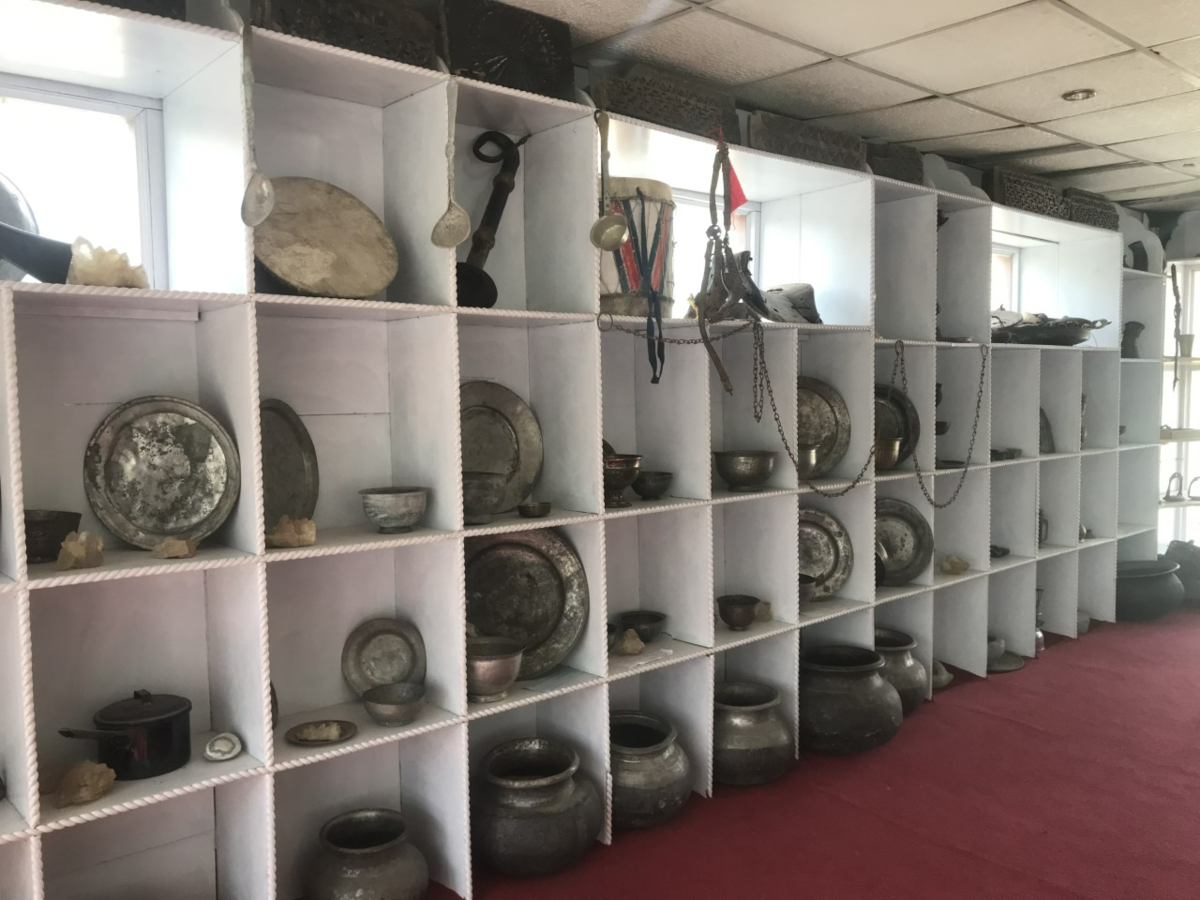


Historical and cultural items of Baltistan region are on the display at a museum in Shigar, Pakistan, on October 10, 2022.  (AN Photo)

He said that his decision to build the museum elicited an enthusiastic response from the residents of the area. 

“Many people decided to present rare and valuable items belonging to their forefathers to me,” Amacha added. “Some also sold interesting artefacts in their possession. Now there are over 200 items in the museum.” 

Among the museum assets is a 10-foot-long antique firearm which is thought to be over 400 years old. 

“There are 18 rifles in the museum,” he said. “The length of one of them is 10 feet and I have not seen such a weapon in any other part of the country.” 

Amacha said the rifle had been used in a war fought in 1634 when the Mughal army, under Shah Jahan’s rule, tried to invade Baltistan. 


Kettles used by the residents of Baltistan region in the past are on the display at a museum in Shigar, Pakistan, on October 10, 2022. (AN Photo)

He maintained it was specifically designed for the war which had to be fought in the mountainous region. 

Other museum items include local kettles, stone pots and hookahs which were preferred by smokers in olden days. 

“The long rifles, pitchers, samovars and stone pots are my favorite,” he said while curating the facility with pride. “One of the pitchers was found a few years ago when a resident of Shigar was digging the land to build a house. It is also the oldest thing here.” 


After mosque bombing, Islamabad intensifies patrols, surveillance during Ramadan prayers, iftar

Updated 7 sec ago
Follow

After mosque bombing, Islamabad intensifies patrols, surveillance during Ramadan prayers, iftar

  • Police chief orders enhanced screening at capital city’s entry and exit points after Feb. 6 blast
  • Safe City cameras to monitor Islamabad round the clock as special pre-iftar traffic plan enforced

ISLAMABAD: Police in the federal capital have been instructed to step up patrols, surveillance and checkpoint inspections during Ramadan prayers and iftar hours, an official statement said on Wednesday, as the city’s police chief chaired a security meeting following a deadly mosque bombing earlier this month.

Inspector General of Police Syed Ali Nasir Rizvi directed senior officers to ensure “foolproof security” across the city, with special focus on mosques during peak congregational times.

The meeting comes after a suicide bombing at a mosque on the outskirts of Islamabad on Feb. 6 that killed at least 32 people. The blast targeted the Qasr-e-Khadijatul Kubra mosque and imambargah during Friday prayers and was claimed by Daesh that said one of its militants detonated an explosive vest inside the congregation.

“All officers must ensure their presence in the field and properly brief personnel about their duties,” Rizvi said, according to a statement issued by the police.

“Strict security arrangements should be ensured at mosques, imambargahs and Ramadan bazaars,” he continued. “Special patrols should be conducted during Fajr, iftar and Taraweeh hours.”

The police chief said Safe City cameras would be used for round-the-clock effective monitoring across the capital.

In addition to security measures, he reviewed traffic arrangements and directed strict implementation of a special traffic plan during pre-iftar rush hours, calling for additional deployment on major roads and at commercial centers.

Islamabad, which has generally seen fewer large-scale militant attacks than some other parts of Pakistan, has faced sporadic security incidents in the past, prompting authorities to tighten monitoring during religious gatherings and other high-risk events.