Medical experts say one in eight women in Pakistan suffers from breast cancer

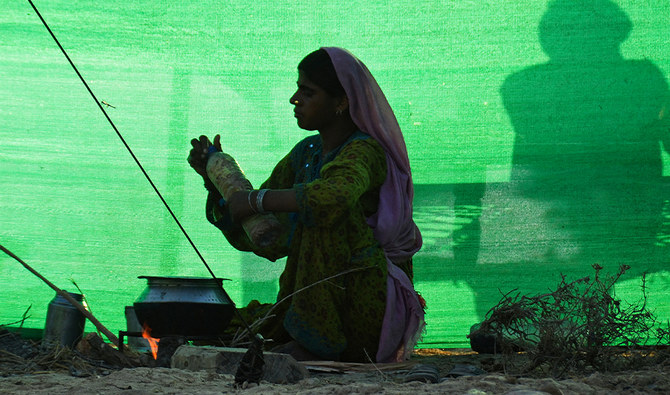
A woman cooks food for her family in a temporary tent at a makeshift camp at Sohbatpur in Jaffarabad district of Balochistan province on October 4, 2022. (AFP)
Short Url
Updated 09 October 2022
Follow

Medical experts say one in eight women in Pakistan suffers from breast cancer

  • Doctors emphasize regular self-examination to ensure early diagnosis of the disease
  • Medical practitioners urge people to change their sedentary lifestyle, bad eating habits

ISLAMABAD: Medical experts in Pakistan have raised concern over growing number of breast cancer cases in the country, reported the local media on Sunday, while seeking lifestyle changes and greater public awareness about the disease.
Every year, thousands of women in Pakistan lose their lives to the disease which can be cured if it is diagnosed at an early stage.
Medical experts in the country addressed an awareness program organized by Himmel Pharmaceuticals in collaboration with the Karachi Press Club on Saturday in which they described the disease as the most common form of cancer among women across the world.
“One out of eight Pakistani women develops breast cancer at some stage of her life while thousands of lives are lost to the disease every year,” Professor Naila Zahid, head of the oncology department at the Liaquat National Hospital, was quoted as saying by Pakistan’s Dawn newspaper.
“One of the major barriers to early diagnosis is lack of awareness and women’s shyness in discussing their health issues and going for any kind of breast examination,” she added.
Zahid maintained it was important for women to carry out regular self-examination to make it easier for doctors to diagnose the disease early.
“Women below age 40 should perform regular self-examinations and women above 40 should undergo regular mammography screening,” she said.
Other experts emphasized lifestyle changes while addressing the ceremony.
“We need to change our lifestyle,” Dr. Adnan Abdul Jabbar, head of Ziauddin Hospital’s oncology department, said. “Today, we have a sedentary lifestyle, eating a lot of junk food, frozen and processed products. People need to have a healthy diet and lifestyle, which would help protect the body.”
He also pointed out that breast cancer could be found among men, though he added their number was far less than women.


Pakistan updates export control lists to align with global non-proliferation rules

Updated 5 sec ago
Follow

Pakistan updates export control lists to align with global non-proliferation rules

  • Revised controls require licenses for dual-use items linked to nuclear and biological technologies
  • Update aligns Pakistan’s export rules with global regimes and follows periodic revisions since 2005

ISLAMABAD: Pakistan’s foreign office announced on Friday the country has updated its national export control lists governing sensitive and dual-use technologies, requiring exporters to seek government licenses for items linked to nuclear, biological and missile-related applications.

The revised lists, notified under the Export Control Act, 2004, specify goods, materials, equipment and technologies that cannot be exported without prior approval from the Strategic Export Control Division (SECDIV), a specialized unit operating under the Ministry of Foreign Affairs.

“This revision was part of SECDIV’s regular review process, conducted in consultation with relevant ministries and departments, to ensure that Pakistan’s national controls remain up to date, effective and aligned with international standards,” the foreign office said in a notification.

Export control lists are used by governments worldwide to regulate trade in dual-use items — products and technologies that have legitimate civilian applications but could also be used for military or weapons-related purposes.

Such controls are designed to prevent proliferation while allowing lawful trade under licensing systems.
Pakistan’s updated lists were published in the official Gazette through a statutory regulatory order dated October 13, 2025, and take immediate effect, the notification said.

“This notification underscores Pakistan’s resolve to further strengthen its export control regime and reaffirms its role as a responsible technology-holder state, firmly committed to the objectives of non-proliferation and the fulfilment of its international obligations,” the foreign office added.

The control lists were first issued in 2005 and have since been revised in 2011, 2015, 2016, 2018 and 2022, reflecting changes in technology, international rules and compliance requirements.

The latest revision brings Pakistan’s export rules into closer alignment with international non-proliferation regimes, including the Nuclear Suppliers Group, the Missile Technology Control Regime, and the Australia Group, all of which coordinate export controls among participating countries to limit the spread of weapons-related technologies.