

Arabs view access to water as most pressing environmental issue, survey finds

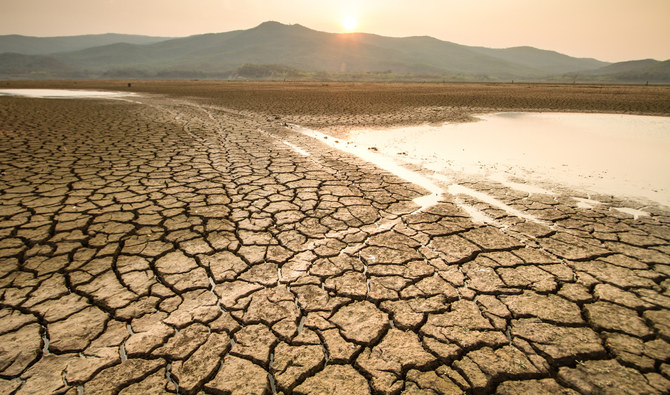
The Arab Barometer is a research network that gathers opinion and offers insights into the social, political and economic attitudes of citizens across the region. (Shutterstock)
Short Url
Updated 07 October 2022
Follow

Arabs view access to water as most pressing environmental issue, survey finds

  • The Arab Barometer interviewed 26,000 citizens between October 2021 and July 2022 in 12 countries that represent about 80 percent of the Arab world
  • Despite broad concerns about climate change and the environment, the survey found many in the region consider other issues to be higher priority

WASHINGTON: Arabs believe the climate change-related threat to water resources is the biggest environmental issue facing the region and its people.

This was a key finding of the latest Arab Barometer Report on the attitudes in 12 Arab countries about the environment, which was published on Thursday.

The Arab Barometer is a research network that gathers opinion and offers insights into the social, political and economic attitudes of citizens across the region.

Its latest survey on the environment found that the majority of the people it polled were concerned about the availability of drinking water, the pollution of water sources, and the quality of the air in their communities.

Tunisia had the highest proportion of people who considered availability and quality of water the biggest environmental challenge facing their country, at 60 percent, followed by Algeria with 50 percent, and Iraq, Palestine and Libya with 47 percent.

The findings are part of the seventh round of polling by Arab Barometer, which has been tracking the views of people in the Middle East and North Africa since 2006. It describes itself as the largest publicly available survey of the opinions and attitudes of citizens across the region.

For its latest report, it interviewed 26,000 citizens between October 2021 and July 2022 in 12 countries that represent about 80 percent of the Arab world: Algeria, Tunisia, Libya, Morocco, Mauritania, Jordan, Lebanon, Palestine, Iraq, Egypt, Sudan and Kuwait. In addition to the environment, other parts of the survey covered political, social and economic issues.

Issues related to waste management ranked second among the key environmental issues people in region are most concerned about. Recycling is already an important environmental-protection activity in many countries and the survey found that many people in the region already recycle their waste, but that they do so mostly for “cost-saving” benefits or “convenience, rather than to protect the environment.”

Educational background tended to affect people’s views on environmental issues such as climate change, air quality, pollution and trash, with those who were better-educated expressing greater concern about them.

In addition, issues related to climate change were more of a concern among people living in rural location than those in urban areas.

Aside from the availability and quality of water and its quality, other attitudes toward the environment varied.

A previous survey, in October 2020, found that less than than seven percent of citizens in Arab countries believed that reducing pollution should be the top priority of government spending in the coming year. In research carried out in the spring of 2021, less than nine percent said that foreign aid should be used to address environmental concerns.

In the latest poll, less than five percent of people surveyed in the majority of Arab countries said foreign aid donated to their nations should be used to tackle climate change and environmental challenges. In Egypt, Jordan and Palestine, the figure was as low as 1 percent.

Yet the research also found that citizens of the region blame themselves for not being proactive enough on environmental issues, and their governments for failing to take action to properly address climate change and environmental challenges in their communities.

They expressed high levels of support for their governments to take action to tackle environmental issues. But despite broad concerns about climate change and the environment, the study found most people in the region view other issues as being more urgent and of higher priority.



Gaza’s Rafah border crossing has reopened but few people get through

Updated 11 sec ago
Follow

Gaza’s Rafah border crossing has reopened but few people get through

  • Restrictions negotiated by Israeli, Egyptian, Palestinian and international officials meant that only 50 people would be allowed to return to Gaza each day
  • Amid confusion around the reopening, the Rafah crossing was closed Friday and Saturday

KHAN YOUNIS, Gaza Strip: When the Rafah border crossing between Gaza and Egypt finally reopened this week, Palestinian officials heralded it as a “window of hope” after two years of war as a fragile ceasefire deal moves forward.
But that hope has been sidetracked by disagreements over who should be allowed through, hourslong delays and Palestinian travelers’ reports of being handcuffed and interrogated by Israeli soldiers.
Far fewer people than expected have crossed in both directions. Restrictions negotiated by Israeli, Egyptian, Palestinian and international officials meant that only 50 people would be allowed to return to Gaza each day and 50 medical patients — along with two companions for each — would be allowed to leave.
But over the first four days of operations, just 36 Palestinians requiring medical care were allowed to leave for Egypt, plus 62 companions, according to United Nations data. Palestinian officials say nearly 20,000 people in Gaza are seeking to leave for medical care that they say is not available in the war-shattered territory.
Amid confusion around the reopening, the Rafah crossing was closed Friday and Saturday.
Hours of questioning
The Rafah crossing is a lifeline for Gaza, providing the only link to the outside world not controlled by Israel. Israel seized it in May 2024, though traffic through the crossing was heavily restricted even before that.
Several women who managed to return to Gaza after its reopening recounted to The Associated Press harsh treatment by Israeli authorities and an Israeli-backed Palestinian armed group, Abu Shabab. A European Union mission and Palestinian officials run the border crossing, and Israel has its screening facility some distance away.
Rana Al-Louh, anxious to return two years after fleeing to Egypt with her wounded sister, said Israeli screeners asked multiple times why she wanted to go back to Gaza during questioning that lasted more than six hours. She said she was blindfolded and handcuffed, an allegation made by others.
“I told them I returned to Palestine because my husband and kids are there,” Al-Louh said. Interrogators told her Gaza belonged to Israel and that “the war would return, that Hamas won’t give up its weapons. I told him I didn’t care, I wanted to return.”
Asked about such reports, Israel’s military replied that “no incidents of inappropriate conduct, mistreatment, apprehensions or confiscation of property by the Israeli security establishment are known.”
The Shin Bet intelligence agency and COGAT, the Israeli military body that handles Palestinian civilian affairs and coordinates the crossings, did not respond to questions about the allegations.
The long questioning Wednesday delayed the return to Gaza of Al-Louh and others until nearly 2 a.m. Thursday.
Later that day, UN human rights officials noted a “consistent pattern of ill-treatment, abuse and humiliation by Israeli military forces.”
“After two years of utter devastation, being able to return to their families and what remains of their homes in safety and dignity is the bare minimum,” Ajith Sunghay, the agency’s human rights chief for the occupied Palestinian territories, said in a statement.
Numbers below targets

Officials who negotiated the Rafah reopening were clear that the early days of operation would be a pilot. If successful, the number of people crossing could increase.
Challenges quickly emerged. On the first day, Monday, Israeli officials said 71 patients and companions were approved to leave Gaza, with 46 Palestinians approved to enter. Inside Gaza, however, organizers with the World Health Organization were able to arrange transportation for only 12 people that day, so other patients stayed behind, according to a person briefed on the operations who spoke on condition of anonymity because they were not authorized to speak to the media.
Israeli officials insisted that no Palestinians would be allowed to enter Gaza until all the departures were complete. Then they said that since only 12 people had left Gaza, only 12 could enter, leaving the rest to wait on the Egyptian side of the border overnight, according to the person briefed on the operations.
Crossings picked up on the second day, when 40 people were allowed to leave Gaza and 40 to enter. But delays mounted as many returning travelers had more luggage than set out in the agreement reached by negotiators and items that were forbidden, including cigarettes and water and other liquids like perfume. Each traveler is allowed to carry one mobile phone and a small amount of money if they submit a declaration 24 hours ahead of travel.
Each time a Palestinian was admitted to Egypt, Israeli authorities allowed one more into Gaza, drawing out the process.
The problems continued Wednesday and Thursday, with the numbers allowed to cross declining. The bus carrying Wednesday’s returnees from the crossing did not reach its drop-off location in Gaza until 1:40 a.m. Thursday.
Still, some Palestinians said they were grateful to have made the journey.
As Siham Omran’s return to Gaza stretched into early Thursday, she steadied herself with thoughts of her children and husband, whom she had not seen for 20 months. She said she was exhausted, and stunned by Gaza’s devastation.
“This is a journey of suffering. Being away from home is difficult,” she said. “Thank God we have returned to our country, our homes, and our homeland.”
Now she shares a tent with 15 family members, using her blouse for a pillow.