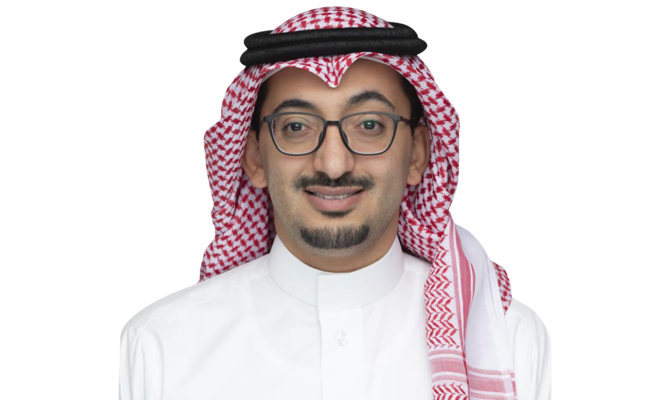
Who’s Who: Abdullah Al-Assaf, co-founder and chairman, OCEANX Consulting Firm

Abdullah Al-Assaf
Short Url
Updated 04 October 2022
Follow

Who’s Who: Abdullah Al-Assaf, co-founder and chairman, OCEANX Consulting Firm

Abdullah Al-Assaf is the co-founder and chairman of OCEANX, a Saudi consulting firm that provides consultative services to the government and private sectors through a selection of experts and competencies.

With over 14 years of experience, Al-Assaf has significantly contributed to the entrepreneurship sector. His specialties include financial engineering, developing financial models, redesigning financial plans and creating governance systems for various government and private entities.

He is also an approved valuer of economic facilities by the Saudi Authority for Accredited Valuers, also known as Taqeem.

During his early years, he established small manufacturing plants and cafes in 2005. While completing his university studies, he began working part-time as a business developer for a real estate company in 2006.

He worked as a financial business developer for the Badir Program for Technology Incubators from 2011 to 2012, following his bachelor’s and master’s programs.

In 2012, Al-Assaf was a vice president of finance at Gulf Furnishing Group. Subsequently, he co-founded OCEANX, and established the International Senbar Group, where he is currently a Chairman.

In 2014, Al-Assaf established Aram Investment Holding, affiliated with several manufacturing, wholesale and retail companies. Additionally, he co-founded VEST Investment Co., VoM Cloud Accounting Platform, and Fuel for Funding.

Moreover, Al-Assaf gave workshops on topics related to entrepreneurship and financial management in collaboration with public universities, including King Saud University, Taibah University, King Saud bin Abdulaziz University for Health Sciences, and chambers of commerce, such as the Riyadh, Al-Ahsa, and Abha chambers.

He holds a master’s degree in international business and finance from De Montfort University, UK, a bachelor’s degree in finance from Qassim University, and diplomas in investment and management, finance and business strategy.


Rare sighting of critically endangered leatherback turtle in Red Sea

Updated 05 February 2026
Follow

Rare sighting of critically endangered leatherback turtle in Red Sea

  • Turtles travel thousands of kilometers to Red Sea
  • Nesting 6,500km away in India’s Andaman Islands

RIYADH: Saudi Arabia’s National Center for Wildlife has documented a rare sighting of a leatherback sea turtle in the Red Sea, marking a significant biological record for one of the planet’s most critically endangered marine species.

The sighting occurred approximately 30 km off the coast of Al-Qunfudhah within the Blue Holes Protected Area, a newly established marine reserve, according to a recent report from the Saudi Press Agency.

The NCW said the presence of a leatherback in these waters was an exceptional event.

Recognized as the largest turtle species on Earth, the leatherback can weigh up to 900 kilograms. It has a unique leathery, black carapace — distinguished by five longitudinal ridges rather than a hard bony shell — and able to dive to depths exceeding 1,000 meters.

Shutterstock image

Noting the species’ migratory nature, the center explained that leatherbacks travel thousands of kilometers foraging for jellyfish. The specimen likely navigated through the Bab Al-Mandeb Strait in search of food.

This is considered a remarkable journey, the NCW said, noting that the nearest known populations reside in the Indian Ocean, spanning waters from South Africa to Sri Lanka (roughly 7,000 to 8,000 km away).

The closest known nesting grounds are located in India’s Andaman Islands, approximately 6,500 kilometers away. No nesting activity has been recorded in the Red Sea.

According to the Red List of the International Union for Conservation of Nature, the leatherback is Critically Endangered in the Indian Ocean.

While data for the Red Sea and Arabian Gulf is scarce, recent isolated sightings include a juvenile recorded in Jordan in December 2025 and another off Djibouti in 2019.

The NCW emphasized that these rare appearances highlight the ecological importance of the Kingdom's marine conservation efforts in the Red Sea.

The center pointed to the Farasan Islands Marine Protected Area, along with the new Blue Holes and Ras Hatiba reserves, as critical sanctuaries that could support the expansion in range of such endangered species.