

Gunmen kill Pakistani UN peacekeeper in east Congo — military 

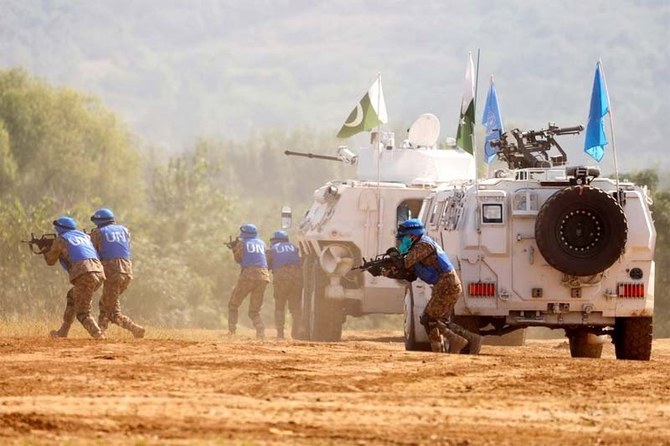
Pakistan soldiers take part in the multinational UN peacekeeping military exercise on the outskirts of Zhumadian, Henan province, China on September 15, 2021. (REUTERS/File)
Short Url
Updated 02 October 2022
Follow

Gunmen kill Pakistani UN peacekeeper in east Congo — military 

  • A group of six militants reached a UN base to surrender, but the group’s leader started firing 
  • The Pakistani soldier serving as a guard at the weapons surrender point was shot in the head 

ISLAMABAD: A Pakistani soldier serving as a UN peacekeeper in the Democratic Republic of Congo was killed in a militant attack in the country’s volatile east, the military said. 

A group of six militants reached the United Nations’ permanent operation base in the district of Minembwe, ostensibly to surrender their weapons as part of a UN initiative. But the group’s leader started firing indiscriminately, Pakistan’s military said in a statement late Saturday. 

A Pakistani soldier serving as a guard at the weapons surrender point was shot in the head, the statement said. Pakistani peacekeepers responded to the fire immediately, it said, without offering details. 

The badly wounded soldier, identified only as 35-year-old Babar, was rushed to the nearest Pakistani army medical unit but he later died. 
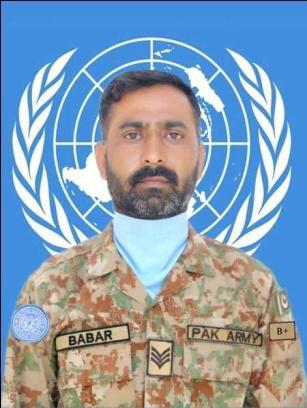


This photo shows Pakistani soldier Babar, who lost his life in the Democratic Republic of Congo. (Photo courtesy: ISPR)

The UN identified the gunmen in Friday’s attack as suspected Twirwaneho combatants. The Pakistani military said they were linked to the Banyamulenge, a Tutsi community in the eastern province of South Kivu. 

Pakistan is part of a UN peacekeeping force of more than 16,000 troops and police called the United Nations Organization Stabilization Mission in The Democratic Republic of Congo (MONUSCO). It began in July 2010 and is aimed at protecting civilians, deterring armed groups and helping build state institutions and services. 


Pakistan assembly speaker warns opposition against anti-state remarks in parliament

Updated 17 January 2026
Follow

Pakistan assembly speaker warns opposition against anti-state remarks in parliament

  • Ayaz Sadiq says criticism of judiciary and armed forces will not be allowed on assembly floor
  • He calls violence during protests unacceptable, vows neutrality as National Assembly speaker

ISLAMABAD: Pakistan’s National Assembly Speaker Sardar Ayaz Sadiq said on Saturday that opposition lawmakers would not be allowed to speak against Pakistan, the judiciary or the armed forces on the floor of parliament, calling such remarks unacceptable.

Speaking to reporters during a visit to the eastern city of Lahore, Sadiq said parliamentary debate must remain within constitutional and legal limits, while reiterating his commitment to act impartially as speaker.

“No one will be allowed to speak against Pakistan, the judiciary or the armed forces on the floor of the National Assembly,” Sadiq said. “Negative or controversial remarks about judges or the armed forces are unacceptable.”

His comments come amid heightened political tensions after opposition groups held protests in the past, criticizing state institutions and targeting government and military properties.

The speaker said peaceful protest was a democratic right but drew a sharp line at violence and vandalism.

“Protest is the right of every citizen in a democratic society, but it must remain peaceful and within the bounds of the constitution and the law,” he continued, adding that arson, damage to property and the use of sticks or weapons in the name of protest were “unacceptable” and posed a threat to the rule of law.

“No opposition lawmaker will be allowed to speak on the National Assembly floor if they speak against Pakistan,” Sadiq said.

The speaker also noted the country’s economic indicators were gradually improving, citing an increase in foreign exchange reserves, and said Pakistan had further strengthened relations with countries including the United States, China, Russia, Türkiye and Saudi Arabia.