Saudi budget surplus calculated at $76 a barrel brent price: Al-Rajhi Capital

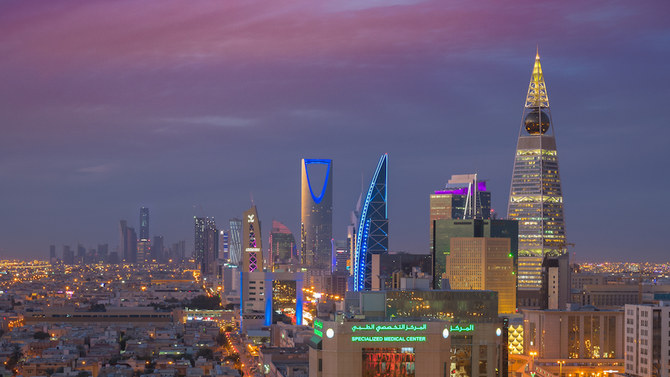
Al-Rajhi Capital assessed the government's 2023 budgeted revenues to likely be based on Brent at $76 per barrel. (Wikicommons)
Short Url
Updated 02 October 2022
Follow

Saudi budget surplus calculated at $76 a barrel brent price: Al-Rajhi Capital

  • Real GDP growth is forecasted to increase by nearly 8 percent year-on-year in 2022 and 3.1 percent year-on-year in 2023

RIYADH: Saudi Arabia's budgeted revenues for 2023 are likely to be based on the brent price at $76 per barrel, said Al-Rajhi Capital in its assessment of the Kingdom's budget figures.  

“For 2023, we believe oil revenues could reach SR754 billion and non-oil revenue at SR417 billion,” said the head of research at Al Rajhi Capital Mazen Al Sudairi.

“Based on our assessment, the government’s 2023 budgeted revenues are likely based on an assumption of brent at around $76 a barrel.” 

Real gross domestic product growth is forecasted to increase by nearly 8 percent year-on-year in 2022 and 3.1 percent year-on-year in 2023, according to Al-Rajhi Capital.

Inflation is expected to be 2.6 percent and 2.1 percent in 2022 and 2023 respectively, Al-Rajhi said.

Revised 2022 revenues are mostly in line with estimates, however, the expenditure budget is much higher than from an earlier announcement, it said.

The Kingdom’s finance ministry’s preliminary budget statement projected spending to reach SR1.11 trillion next year, with revenue of SR1.12 trillion. 

The 2023 spending budget was raised by 18 percent, with a slight fiscal surplus of SR9 billion expected for 2023.

The world’s largest oil exporter is expected to balance the books in the coming year, having emerged with a quickly developing balance sheet due to the rebound in crude. 

Saudi officials showed intention to change the heavy reliance on petrodollars and ‘decouple’ the Kingdom’s spending from oil volatility as it puts the country’s economy at the mercy of uncertainty in the oil market. 

Its budget surplus was recorded at SR78 billion in the second quarter of 2022, an almost 50 percent rise from the same time last year. 

Its revenue reached SR370.4 billion whereas expenditure totaled SR292.5 billion in the second quarter of this year, according to the ministry. 

The ministry's estimates showed that oil revenue stood at SR250.4 billion, signaling an 89 percent year-on-year rise in the second quarter. 

However, the Kingdom’s non-oil revenues only rose by 3 percent to SR120 billion in the second quarter. 

Domestic debt reached SR604.8 billion at the end of June, up from SR558.8 billion in the previous half, showed the ministry data. 

The finance ministry's data showed that the Kingdom's external debt fell from SR379.3 billion to SR361.8 billion in the same period. 


Saudi Arabia, Japan trade rises 38% between 2016 and 2024, minister says

Updated 11 January 2026
Follow

Saudi Arabia, Japan trade rises 38% between 2016 and 2024, minister says

RIYADH: Trade between Saudi Arabia and Japan has increased by 38 percent between 2016 and 2024 to reach SR138 billion ($36 billion), the Kingdom’s investment minister revealed.

Speaking at the Saudi-Japanese Ministerial Investment Forum 2026, Khalid Al-Falih explained that this makes the Asian country the Kingdom’s third-largest trading partner, according to Asharq Bloomberg.

This falls in line with the fact that Saudi Arabia has been a very important country for Japan from the viewpoint of its energy security, having been a stable supplier of crude oil for many years.

It also aligns well with how Japan is fully committed to supporting Vision 2030 by sharing its knowledge and advanced technologies.

“This trade is dominated by the Kingdom's exports of energy products, specifically oil, gas, and their derivatives. We certainly look forward to the Saudi private sector increasing trade with Japan, particularly in high-tech Japanese products,” Al-Falih said.

He added: “As for investment, Japanese investment in the Kingdom is good and strong, but we look forward to raising the level of Japanese investments in the Kingdom. Today, the Kingdom offers promising opportunities for Japanese companies in several fields, including the traditional sector that links the two economies: energy.”

The minister went on to note that additional sectors that both countries can also collaborate in include green and blue hydrogen, investments in advanced industries, health, food security, innovation, entrepreneurship, among others.

During his speech, Al-Falih shed light on how the Kingdom’s pavilion at Expo 2025 in Osaka achieved remarkable success, with the exhibition receiving more than 3 million visitors, reflecting the Japanese public’s interest in Saudi Arabia.

“The pavilion also organized approximately 700 new business events, several each day, including 88 major investment events led by the Ministry of Investment. Today, as we prepare for the upcoming Expo 2030, we look forward to building upon Japan’s achievements,” he said.

The minister added: “During our visit to Japan, we agreed to establish a partnership to transfer the remarkable Japanese experience from Expo Osaka 2025 to Expo Riyadh 2030. I am certain that the Japanese pavilion at Expo Riyadh will rival the Saudi pavilion at Expo Osaka in terms of organization, innovation, and visitor turnout.”

Al-Falih also shed light on how Saudi-Japanese relations celebrated their 70th anniversary last year, and today marks the 71st year of these relations as well as how they have flourished over the decades, moving from one strategic level to an even higher one.