

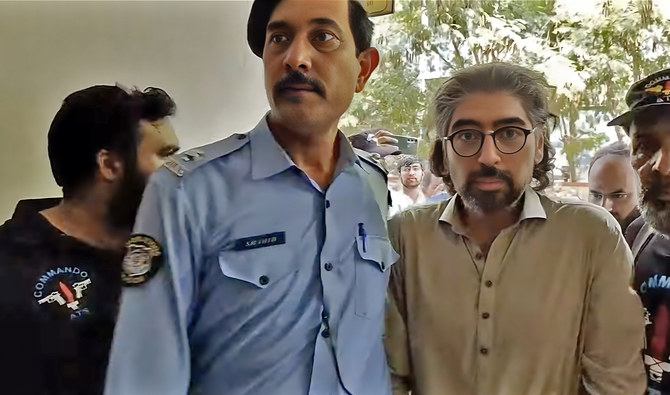

ISLAMABAD: A police official who is leading an investigation into the beating death of a Pakistani-Canadian woman allegedly by her husband last week has said investigators had sought the court’s permission to obtain bank records of the suspect to prove accusations he had been extorting his wife.
Sarah Inam, a 37-year-old economist who worked in Abu Dhabi, was murdered with dumbbells, according to police, by her husband Shahnawaz Amir at a suburban Islamabad home last week. Inam got married to Amir of her own choice on July 18 in his hometown of Chakwal. The parents of the couple were not present at the event.
Amir is currently under arrest and being investigated by police.
At Inam’s funeral on Wednesday, her father Inam Rahim said his daughter had been “trapped” into marriage by Amir to fleece her out of money.
“We know the relevant bank account of the suspect in which he was receiving money from her wife Sarah Inam,” Habib-ur-Rehman, who is leading the investigation, told Arab News on Thursday. “The suspect has confessed during the investigation that he received around one million rupees from her wife, but we have yet to corroborate it with the banking transactions.”
Under Pakistani law, police cannot directly access the bank accounts of suspects but need to seek permission from a relevant court.
“We have filed an application in the Islamabad High Court for this,” the inspector said.
Investigators have also seized the mobile phones of both the suspect and the victim and dispatched them to the Federal Investigation Agency (FIA) for forensics analysis.
“The suspect has shared his mobile phone’s password with the police, while experts will open the victim’s phone with the help of certain softwares to look for the relevant information,” Rehman said.
A 1996 model Mercedes car was seized from the home where Inam died, the inspector said, which the victim had paid for but whose ownership was transferred fraudulently to the suspect. Police were also investigating the incident, he added.
Rehman said the suspect had torn up Inam’s Canadian passport also, which investigators needed for their probe.
“Her passport was torn into pieces, and we have yet to put it together,” he said. “The police would know from Sarah’s passport how many times she traveled to Pakistan after her marriage.”
Rehman said a police team had also visited Chakwal, Amir’s hometown, to verify the couple’s nikah and question witnesses and others who participated in the ceremony.
“The nikah of the couple is verified,” the investigator said. “It was done at the residence of one of Shahnawaz Amir’s friends in Chakwal city.”
Meanwhile, a district court in Islamabad on Thursday extended the custody of Amir for another four days to allow police to complete the investigation.
No member of Inam’s family or lawyers representing them appeared in the court to plead the case.


