

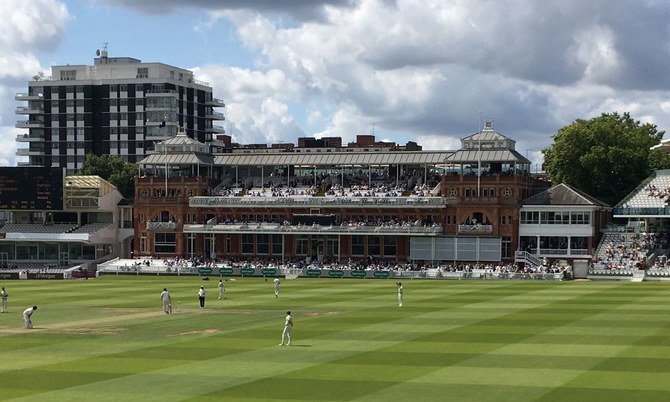

On Oct. 1, 2022, nine revisions to the Laws of Cricket will become effective. These constitute the third edition of the 2017 re-coding, the seventh set since the Laws were first drafted in 1744.
Although it ceased being the game’s governing body in 1993, the Laws’ copyright remains with the Marylebone Cricket Club, based at Lord’s in London.
The MCC’s Laws sub-committee is responsible for debating and drafting, in close consultation with the Cricket Committee of the International Cricket Council, the game’s governing body. It may appear curious that the game’s governing body is neither the owner nor the drafter of its rules, but recognisable benefits of the MCC’s continuing responsibility is its neutrality. The Laws of Cricket apply to all levels of the game, from Test matches down to village greens and city parks.
As such, they should be applied evenly. In my experience, at club level, the changes that have been made since 2000 have not been.
This may reflect an ignorance of the changes by those who stand as umpires; at the top levels of club cricket, umpires are qualified and au fait with the most recent Laws. At lower levels, though, players take turns to umpire, making judgements about the fate of their own teammates. This is a situation which can, and does, cause friction and bias, especially if the individual concerned is not aware of the latest amendments.
Seven of nine of the 2022 revisions are straightforward, but two contain potential pitfalls. Law 41.16, classed under Unfair Play, has always carried the potential to be controversial. It addresses the issue of the non-striker leaving his or her ground early, determined as the time between when the bowler starts to run up and the instant when the ball would normally be expected to be delivered — a grey definition. If the bowler sees that the non-striker is out of ground, then he or she has the option to break the wicket and for the non-striker to be given out on appeal. There have been only 53 recorded instances in first class and professional cricket.
It has been customary for the bowler to warn the non-striker rather than break the wicket, but there has been a small rise in cases of bowlers not observing this tradition. In an attempt to normalize this means of dismissal, clause 41.16 has been moved to Law 38: Run Out. It is unlikely to dampen the controversy which it generates. On Sept. 24, only days before the re-classification became effective, a women’s One Day International between England and India was finely poised, England needing 17 runs to win with one wicket remaining. The match ended when an Indian bowler, in her delivery stride, turned to break the wicket, with the non-striker out of her crease. It is ironic that the match was played at Lords, where the change was incubated, opening the issue up again.
The second amendment, which may be the cause of future controversy, relates to the definition of a wide delivery. Law 22.1.2 states that “the ball will be considered as passing wide of the striker unless it is sufficiently within reach for him/her to be able to hit it with the bat by means of a normal cricket stroke.” At club level, there can be a tendency for subjectivity to be applied to the assessment of what constitutes a wide. In some competitions and in all professional one-day and T20 cricket, any ball bowled down the leg-side is deemed a wide. However, particularly in T20, there has been increasing tendency for batters to move laterally across the crease before the bowler delivers the ball. The MCC felt it unfair that a delivery might be called wide if it passes where the batter had stood as the bowler entered his/her delivery stride.
In order to address this possibility, Law 22.1.1. now states that “If the bowler bowls a ball … the umpire shall adjudge it a Wide if, according to the definition in 22.1.2, the ball passes wide of where the striker is standing or has stood at any point after the ball came into play for that delivery, and which also would have passed wide of the striker standing in a normal batting position.”
This is rather a lot to take in for any umpire, and certainly for ad-hoc ones in club cricket, even if they read and understand it. There is scope for misunderstanding.
It is also a taxing matter for the bowler. One example is when the striker steps away outside of the leg stump and then steps back in when the ball is bowled. Observing this activity, the bowler may have adjusted the line of delivery towards where the striker had temporarily moved, only to see the ball pass down the leg side, from where the striker had moved at the last second. If the umpire deems that delivery a wide, the bowler will have every right to feel aggrieved. It is difficult enough for many club cricketers to deliver the ball accurately and consistently to where they intend, let alone adjust that line in an instant.
Lateral movement across the crease has not yet infiltrated too much at lower levels. It is not known if cricket’s lawmakers have considered an alternative solution, that of disallowing excessive lateral movement across the crease and insisting that the striker stands still awaiting delivery of the ball. This may need consideration if the amendment causes too much controversy. It is too early to know how these two revisions will affect the playing and umpiring of the game or their potential to generate ill-feeling.
It ought not to be difficult for a non-striker to stay within ground, in the knowledge that failure to do so can lead to being legitimately run out. Equally, it should not be difficult to legislate that a striker stands still until the ball is being delivered.


