Musk says Starlink will seek exemption from Iranian sanctions

(Shutterstock)
Short Url
Updated 20 September 2022
Follow

Musk says Starlink will seek exemption from Iranian sanctions

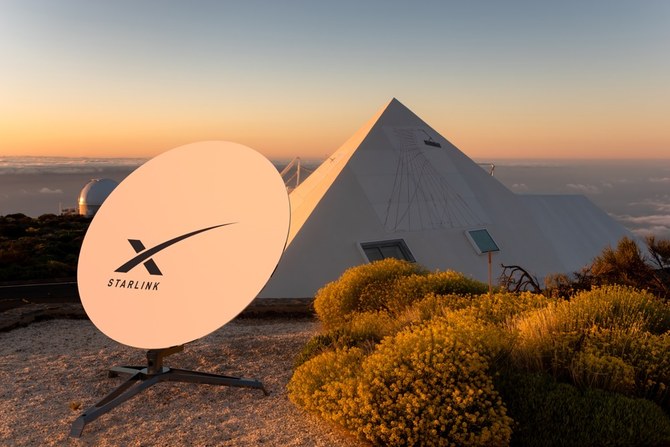
SpaceX CEO Elon Musk said on Monday that the company will ask for an exemption from sanctions against Iran to provide the firm’s Starlink satellite broadband service in the country.
Musk made the statement on Twitter at a time of widespread protests in Iran over the death of a woman in police custody. Some people on Twitter asked Musk to provide the satellite-based Internet stations.
Access to social media and some content is tightly restricted in Iran and Internet monitoring group NetBlocks reported “near-total” disruption to Internet connectivity in the capital of the Kurdish region on Monday, linking it to the protests.
Iran’s Ministry of Communications and Information Technology could not be immediately reached for comment. The foreign ministry, Iran’s mission to the United Nations and the United States Bureau of Industry and Security did not immediately respond to Reuters requests for comment.
Musk did not specify from which country Starlink would seek exemptions, but Iran faces broad based sanctions.
SpaceX is aiming to rapidly expand Starlink, and it is racing rival satellite communications companies including OneWeb and Amazon.com Inc’s yet to launch Project Kuiper. 


Iraq welcomes the appointment of Iran’s new supreme leader

Updated 5 sec ago
Follow

Iraq welcomes the appointment of Iran’s new supreme leader

  • Armed faction Kataeb Hezbollah said it reflects a profound understanding “of the existential challenges confronting the nation”

BAGHDAD: Iraq’s Prime Minister Mohammed Shia Al-Sudani welcomed on Monday the appointment of Mojtaba Khamenei as Iran’s new supreme leader after his predecessor and father was killed in US and Israeli strikes.
“We express our confidence in the ability of the new leadership in the Islamic Republic of Iran to manage this critical stage,” and to further strengthen “the unity of the Iranian people” amid the current challenges, Sudani said in a statement.
He stressed that Iraq stands in solidarity with Iran and supports “all steps aimed at ending the conflict.”
Iran wields significant influence in Iraqi politics, and also backs armed groups whose power has grown both politically and financially.
Iraq has for decades been a proxy battleground between the US and Iran.
Pro-Tehran Iraqi groups were among the first to welcome the new supreme leader.
The powerful Badr organization said the new leadership represents a “blessed continuity of the path of the Islamic revolution.”
The Asaib Ahl Al-Haq faction said choosing Mojtaba Khamenei shows continuity and “reinforcement of the Islamic republic’s role as a central pillar in the axis of resistance.”
Armed faction Kataeb Hezbollah said it reflects a profound understanding “of the existential challenges confronting the nation.”
“The best successor to the best predecessor,” said Kataeb Hezbollah, which is part of the Islamic Resistance of Iraq — a pro-Iran alliance that has been claiming attacks on US bases since the start of the war in the Middle East.
Senior Iraqi politician and moderate cleric Ammar Al-Hakim wished the new supreme leader “success in following the path of his martyred father... in upholding the word of truth.”