

Saudi Arabia’s KSrelief ramps up aid efforts worldwide

1 / 7
KSrelief distributed 300 digital headphones to students with hearing impairments in Aden, Yemen. (SPA)
2 / 7
KSRelief handed over on Saturday the Kingdom's gift to Bulgaria, which included 25 tons of dates, to the president of the Bulgarian Red Cross, Hristo Grigorov. (SPA)
3 / 7
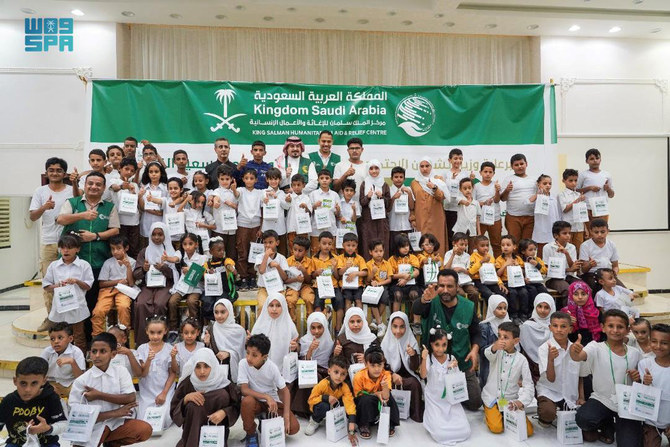
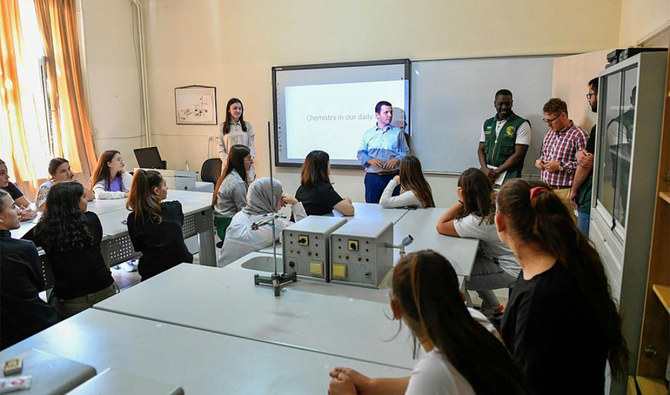
A team from KSrelief paid an inspection visit to a project to support orphaned and needy students in the Islamic Sheikhdom Schools in Albania. (SPA)
4 / 7
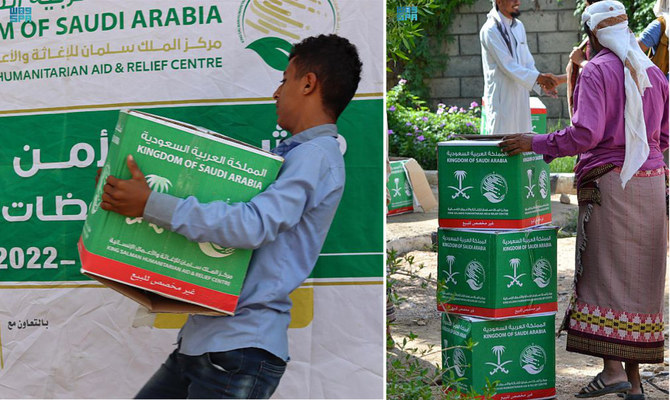
KSrelief on Saturday distributed 86 tons and 135 kilograms of food baskets to the most needy families in the Mudhaffar district of Taiz, Yemen, benefiting 4,830 individuals. (SPA)
5 / 7
KSrelief continues to provide medical services to Syrian refugees in the Zaatari camp in Jordan. (SPA)
6 / 7
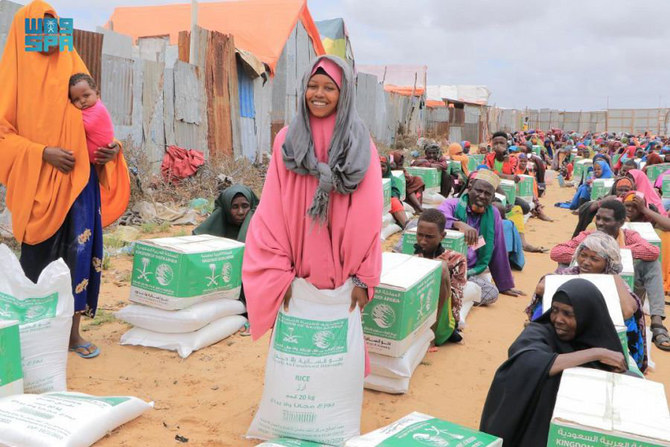
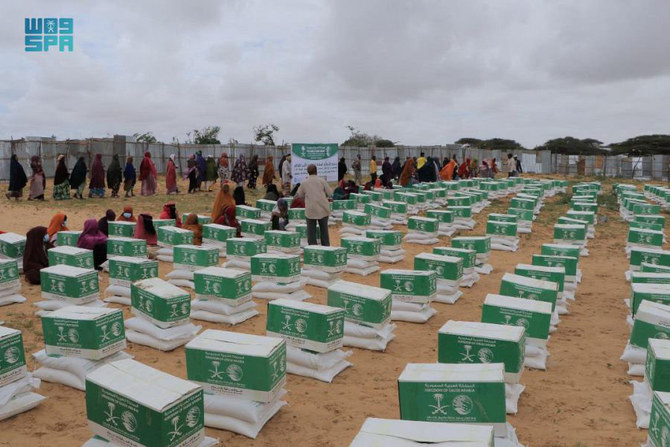
Displaced and drought-affected residents of Daynili district in Banadir region of Mogadishu, Somalia received relief assistance from KSrelief on Saturday. (SPA)
7 / 7
Displaced and drought-affected residents of Daynili district in Banadir region of Mogadishu, Somalia received relief assistance from KSrelief on Saturday. (SPA)
Short Url
Updated 19 September 2022
Follow

Saudi Arabia’s KSrelief ramps up aid efforts worldwide

  • Among the latest beneficiaries were some 6,000 Somalians affected by drought in Mogadishu
  • KSrelief’s team also inspected a project to support students, orphans and needy people in Albanian Islamic sheikhdom schools

RIYADH: The King Salman Humanitarian Aid and Relief Center has stepped up assistance programs in Somalia, Albania and Yemen with food aid, health and educational projects.
KSrelief recently distributed 70 tons of food aid to the displaced and drought-affected people in the Daynile district of Banaadir region in the Somali capital Mogadishu, benefiting 6,000 people.


Displaced and drought-affected residents of Daynili district in Banadir region of Mogadishu, Somalia received relief assistance from KSrelief on Saturday. (SPA)

The aid comes within the second phase of Saudi Arabia’s urgent intervention to contribute to covering the humanitarian needs of people affected by drought in Somalia, to support food and nutrition programs for children and provide water and shelter for the displaced, as well as lifesaving emergency programs.
Meanwhile, KSrelief’s team inspected a project to support students, orphans and needy people in Albanian Islamic sheikhdom schools. The team was briefed on the progress of the project aiming to support 154 children in the cities of Tirana and Elbasan by providing tuition fees and educational supplies for them.


A team from KSrelief pays an inspection visit to a project to support orphaned and needy students in the Islamic sheikhdom schools in Albania. (SPA)

In Yemen, KSrelief distributed more than 219 tons of food baskets to needy families in Aden governorate, benefiting 12,300 individuals. The project aims to distribute more than 192,000 food baskets to needy families in 15 Yemeni governorates.
Al-Jada Health Center outlets in Hajjah governorate also provided treatment to 5,852 people in one week through the support of KSrelief. The services are part of the Kingdom’s efforts, represented by KSrelief, to improve the capacities of the health sector in Yemen. 


KSrelief provided support to Al Jadah Health Center in the Midi district of Hajjah, Yemen, which provided treatment services to 5,852 beneficiaries during the last week of August 2022. (SPA)

In a lecture in Madinah last May, Dr. Abdullah Al-Rabeeah, KSrelief’s Chief Supervisor, said the agency maintains 1,997 humanitarian and relief projects in 84 countries so far, in cooperation with 175 international, regional and local partners, for a total value of more than $5.7 billion.

KSrelief was established under the guidance of King Salman in 2015 as a vehicle for relief and humanitarian work, and to convey Saudi values to the world.

Saudi Arabia history of charity and supporting impoverished people abroad, however, began as early as the 1950s when the government sent relief to victims of the Punjab floods, despite the limited income of the Kingdom at the time. 

Dr. Al-Rabeeah noted that in 1974 the Kingdom established the Saudi Fund for Development with the aim of stimulating economic growth in developing countries, benefiting 55 countries within four years.

He said the volume of Saudi aid between 1996 and 2021, alone, amounted to $94.6 billion delivered to 165 countries around the world.


Saudi Reef has played key role in empowering rural communities, says spokesperson

Updated 8 sec ago
Follow

Saudi Reef has played key role in empowering rural communities, says spokesperson

  • Program has benefited more than 90,000 rural families, enabled productive projects
  • Majed Al-Buraikan: The eight sectors supported by the Saudi Reef program help diversify agricultural production, support sustainable use of resources and improve supply chains

JEDDAH: The Saudi Reef program has played a key role in strengthening food security and empowering farmers and rural families across the Kingdom since its launch in 2019.

The program forms part of Saudi Arabia’s broader efforts under Vision 2030 to support sustainable agricultural development, diversify the economy, and enhance the contribution of rural communities to national growth.

Majed Al-Buraikan, the official spokesperson for Saudi Reef and its director of corporate communications and media, told Arab News that the program had made a positive impact in rural communities.

He said: “It has empowered small farmers and rural families to develop their agricultural projects and increase productivity.

“This support has helped strengthen food security, improve the use of resources, and support the long-term sustainability of the agricultural sector, in line with Vision 2030 goals to diversify the economy and develop rural areas.”

Through targeted support across eight priority agricultural sectors — including Saudi coffee, value-added development, livestock, rainfed crops, beekeeping and honey production, aromatic plants, fisheries, and fruit — the program focuses on enhancing the sustainability of these sectors to achieve empowerment and stability for rural families.

Al-Buraikan added: “The eight sectors supported by the Saudi Reef program help diversify agricultural production, support sustainable use of resources and improve supply chains.

“This diversity supports economic stability in rural areas, encourages balanced growth, and helps build a flexible rural production system that can expand over time.”

By benefiting more than 90,000 rural families and enabling productive projects rooted in local communities, the program has also opened up new economic opportunities for women and youngsters, supported entrepreneurship, and improved productivity across the rural sector.

Al-Buraikan said: “This shows the wide developmental impact of the Saudi Reef program and its strong geographic and social reach.

“It demonstrates the ability of rural areas to become productive economic spaces.

“This expansion has improved income levels, strengthened social stability in rural areas, and increased the contribution of agriculture to the national economy.”

The program has helped make rural work a competitive economic option by improving agricultural productivity, supporting a wide range of sectors, and enabling beneficiaries to access local and global markets.

The program announced in 2025 that the market value of production across its sectors had exceeded SR5.6 billion ($1.49 billion) since its launch.

Al-Buraikan said: “This reflects the strong economic potential of rural investment and its role in supporting the national economy, food security, and sustainability goals under Vision 2030.”

The Sustainable Reef initiative was launched in September 2025 to highlight the significant impact the program had made in supporting rural communities and enhancing agricultural and economic sustainability across various regions of the Kingdom.

Al-Buraikan said the initiative was a development-focused media extension of the Saudi Reef program.

“It highlights the real impact of government support through inspiring success stories that show how rural projects have become sustainable, productive businesses,” he said.

“What makes it different is that it goes beyond traditional support by building public awareness of the value of rural areas as promising economic and investment contributors.”

Saudi Reef has helped position rural work as a competitive and sustainable economic option, reinforcing its role in driving long-term development across the Kingdom.

The program has also empowered women in rural areas by opening new opportunities in agricultural activities while providing sustainable sources of income.

Al-Buraikan said: “It has also supported young people through an integrated entrepreneurship system that includes incubators, accelerators, and training programs, helping to turn rural ideas into productive projects led by and benefiting rural communities.”

In addition, the program supports Vision 2030 by empowering farmers, increasing local production, and building a sustainable agricultural sector that contributes to food security and economic development.

Demonstration farms serve as practical platforms where farmers can observe modern agricultural practices, learn improved production methods, and adopt modern technologies, thereby increasing efficiency and improving crop quality.

Al-Buraikan said: “The program balances agricultural production with environmental protection by promoting smart agriculture, improving resource use, and linking production to modern technologies. The program ensures agricultural growth while protecting the environment.”