

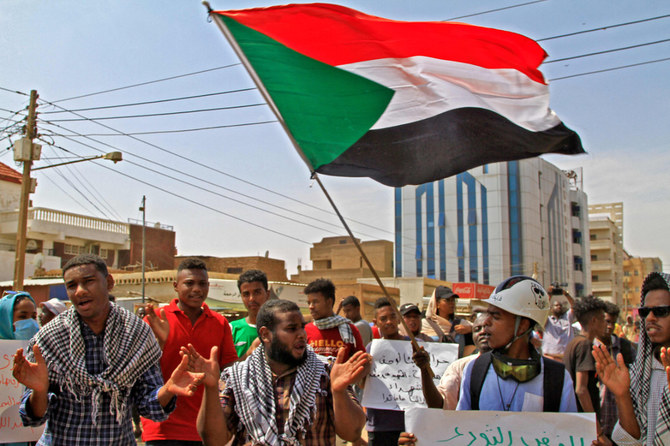

LONDON: Sudan’s permanent representative to the UN Security Council has urged the lifting of a 17-year sanctions regime amid a rapidly deteriorating socioeconomic situation in the country.
Hassan Hamid Hassan told the UNSC that his government is ready to work with the UN on finding a path to review and lift the sanctions, but said it is “disappointing” that they have persisted for nearly two decades without reappraisal.
“The international community hasn’t followed its commitments. Sanctions can’t go on for 17 years without an objective assessment and comprehensive review. It leads to a deviation of the declared goals, and leaves us wondering what the undeclared goals are,” he added.
“Lifting the sanctions will allow the Sudanese to achieve and consolidate peace and address the transnational crimes occurring along our long borders. We believe it’s important to lift these sanctions immediately.”
Chair of the 1591 Sudan Sanctions Committee, Ambassador Harold Adlai Agyeman of Ghana reiterated that the goal of the sanctions regime was not to “punish Sudan” but bring peace to the region, particularly Darfur, which has experienced decades of continued violence.
Addressing the UNSC, Volker Perthes, special representative and head of the UN Integrated Transition Assistance Mission in Sudan, said the military’s decision in July to withdraw from politics following last October’s coup offered a route to peace.
However, Perthes warned that while political developments in recent months had pointed toward a potential lasting peace, “time is of the essence” amid a continuing “deterioration of the socioeconomic condition.
“I’m actually encouraged by the degree of communality in the dialogue in Sudan, as we’ve seen the gaps narrow and a wide-ranging consensus on the need for the state to be led by technocrats rather than party leaders.”
He added: “Furthermore, last Saturday the Bar Association published a draft constitutional framework that has gathered a broad range of civilian groups around its framework and seen stakeholders including the military express support for it.”
Even so, Perthes questioned the military’s commitment to its pledge, and stressed that the sustainability of any long-term agreements remain “uncertain” in the absence of state authority, with humanitarian needs “now at record levels.”
Mudawi Ibrahim Adam, chair of the Sudan Social Development Organization, warned that the economic situation is deteriorating across almost the entirety of society, noting that pay for civil servants covered just 12 days of living expenses.
“The minister of finance himself has acknowledged this, which means civil servants are having to find alternative means of living for 18 days a month. This isn’t sustainable. The priorities must be stabilizing the economy and reforming the civil service,” he said.
“We need a civilian government, and the army has to go to the barracks. There must be reforms for the civil service, and we must address the problems of the civil service that were inherited from the previous regimes to get qualified servants in and the non-qualified out.”
Alongside ongoing political instability, Sudan has been hit by flooding and poor harvests that have left more than 11 million facing acute hunger, with the number growing.
Meanwhile, UN funding commitments have reached just over 30 percent of the amount pledged last year.
Ameira Obaid Mohamed Obaid Alhefeiti, deputy permanent representative of the UAE to the UN, urged international donors to revise recent decisions on funding for Sudan in response to the recent floods and the associated food crises.
She said: “We affirm the UAE’s continued commitment to provide relief assistance through its recently launched air bridge, but the international community must supply further support.
“A clear path out of the political impasse has yet to emerge, but the UAE believes it’s possible with continuing engagement between the international community and Sudan. The UAE reaffirms support for Sudanese aspirations.”


