TUNIS: The number of Tunisian migrants landing on Italian shores jumped 23 percent to 13,500 in the first eight months of 2022 from the same period last year, a rights group said on Tuesday, adding Tunisia’s political and economic crisis lay behind the exodus.
Videos posted on social media showed entire families embarking on boats this summer amid a sharp rise in the number of sailings from Tunisian coasts as the country’s economic crisis deepened.
Ramadan Ben Omar, an official in the Tunisian Forum of Economic and Social Rights, said that 2,600 minors, 640 women and 500 Tunisian families arrived on the Italian coasts in boats this year.
He added that the number of people drowned off the Tunisian coast this year was about 570.
Tunisia is in the throes of an economic and social crisis which threatens to bankrupt public finances, while inflation has reached 8.6 percent, its highest in three decades.
“The bad economic situation is no longer a sole reason for rise of illegal journey toward Italy... There is also a stifling political crisis and a decline in freedoms, in addition to social tension and loss of hope among Tunisians,” Ben Omar told Reuters.
Efforts to rescue the economy have been complicated by Tunisia’s political upheavals since President Kais Saied seized most powers a year ago, shutting down parliament and moving to rule by decree, a move described by the opposition as a coup.
Saied has said the moves were needed to end political paralysis, and he enshrined his expanded role in a new constitution that was passed in a referendum in July on a low turnout of 30.5 percent.
The Tunisian authorities prevented more than 23,500 Tunisians from reaching the Italian coasts by thwarting about 1,800 crossings, Ben Omar said.
The interior ministry was not immediately available to comment on the assertion that the increase in migration was fueled by the country’s political and economic situation.
Human traffickers increasingly use the Tunisian Mediterranean towns of Sfax, Zarzis and Mahdia as launch pads for migrants heading by boat to Europe.


![]()
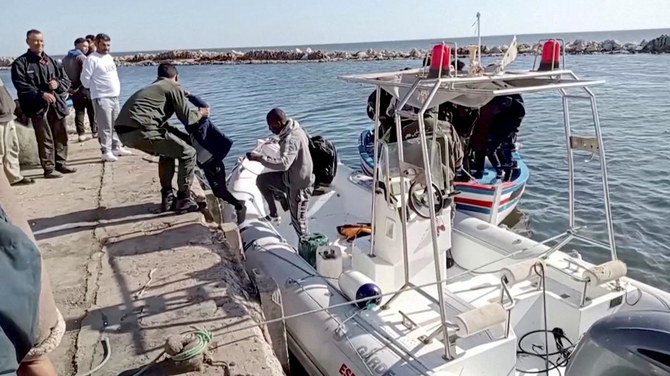
More Tunisian migrants head to Italy amid political and economic crisis

Short Url
https://arab.news/bh6yh
More Tunisian migrants head to Italy amid political and economic crisis
- Videos posted on social media showed entire families embarking on boats this summer
- The bad economic situation is no longer a sole reason for rise of illegal journey toward Italy


Latest updates


© 2026 SAUDI RESEARCH & PUBLISHING COMPANY, All Rights Reserved And subject to Terms of Use Agreement.