

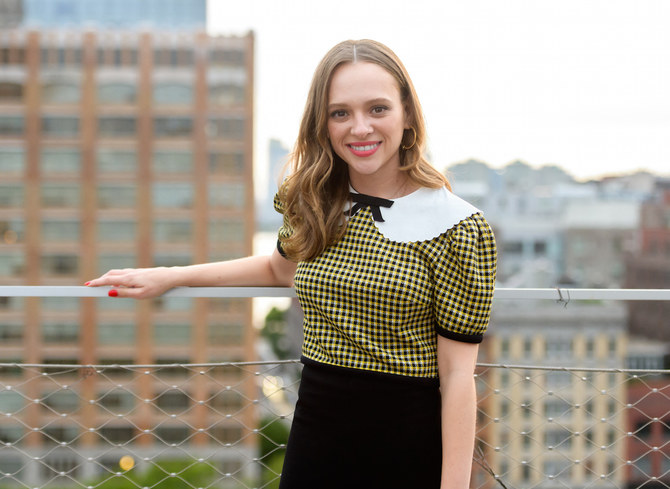

DUBAI: Over the weekend, it was announced at the D23 Expo that the upcoming Marvel film “Captain America: New World Order” will feature the Marvel Cinematic Universe debut of Israeli superhero Sabra, to be played by Israeli actress Shira Haas, prompting a wave of criticism from netizens.
Although the term “Sabra” refers to a Jewish person born in Israel, some social media users took to Twitter and TikTok to slam the announcement, saying the character’s name was insensitive considering the Sabra and Shatila massacre of 1982.

Created by writer Bill Mantlo and artist Sal Buscema, Ruth Bat Seraph, aka Sabra, made her first brief appearance in the 1980’s Incredible Hulk comic. (Marvel)
On Sept. 16, 1982, Lebanese Christian militiamen entered Beirut’s Sabra neighborhood and the nearby Shatila refugee camp and — as the Israeli troops that had invaded Lebanon three months earlier looked on, blocked exits and illuminated the scene at night with flares — embarked on a 36-hour massacre of Muslim men, women and children that left hundreds dead.
In light of the event, some social media users are calling the superhero’s name into question.
On Twitter, @yumna_patel discussed the origin of the Sabra name, writing, “apparently ‘Sabra’ is a term used to refer to Jews born in historic Palestine (correct me if I’m wrong). It is also the name of the neighborhood in Beirut where Israeli forces oversaw the massacre of thousands of Palestinian refugees in the Sabra and Shatila Massacre in 1982.”
“Can someone explain to me why they keep using the name Sabra? The first thing pretty much every Palestinian remembers when we read or hear Sabra is the massacre of Sabra Shatilla, it feels deliberate,” one Twitter user wrote.
Other critics lamented Marvel’s inclusion of an Israeli superhero, regardless of the character’s name.
Matthew John wrote “Israel’s Marvel superhero Sabra has many powers, including demolishing Palestinian homes…”
There was some support for the announcement online, with one user writing: “Wow. Marvel actually got a Jewish actress to play a Jewish character. Gotta admit, I didn’t see Sabra coming. I’m excited and worried at the same time. Here’s hoping they do it right (sic).”
Created by writer Bill Mantlo and artist Sal Buscema, Ruth Bat Seraph, aka Sabra, made her first brief appearance in the 1980’s “Incredible Hulk #250” before making her official debut in 1981’s “Incredible Hulk #256.”
A mutant with superhuman strength and the ability to transfer her life force to other people, she is also skilled in weaponry and hand-to-hand combat, and can fly with the help of her anti-gravity wrist bands. She has fought against and alongside the Hulk, and has teamed up with the X-Men and the Avengers.


