Twitter agreed to pay whistleblower $7 million in June compensation settlement

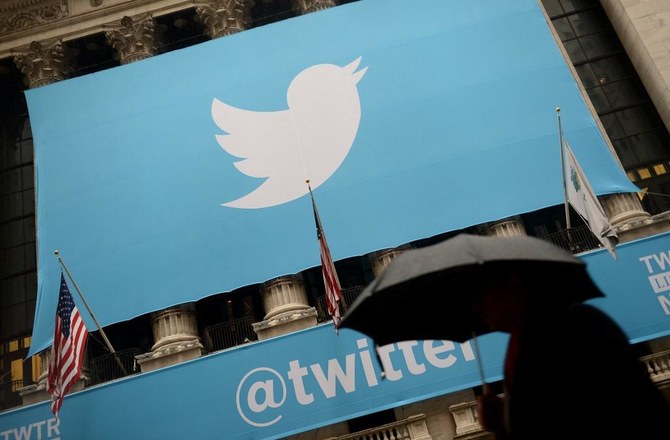
Whistleblower Peiter “Mudge” Zatko last month accused the social media firm of falsely claiming it had a solid security plan and making misleading statements about its defenses against hackers and spam accounts. (AFP/File)
Short Url
Updated 10 September 2022
Follow

Twitter agreed to pay whistleblower $7 million in June compensation settlement

  • Source said the settlement resolved a dispute about unpaid compensation and did not prevent him from filing a whistleblower complaint

LONDON: Twitter Inc. agreed in June to pay $7 million to settle a compensation dispute with the whistleblower whose allegations will be part of Elon Musk’s case against the company, according to a source familiar with the matter.
Whistleblower Peiter “Mudge” Zatko, who was fired by Twitter in January and was the company’s security head, last month accused the social media firm of falsely claiming it had a solid security plan and making misleading statements about its defenses against hackers and spam accounts.
Zatko will meet the US Senate Judiciary committee on Sept. 13 to discuss the allegations.
The settlement resolved a dispute about unpaid compensation and did not prevent him from filing a whistleblower complaint, which he did soon after reaching the agreement with Twitter, according to the source.
Zatko’s attorney said Zatko cannot comment on the existence of a settlement with Twitter.
Zatko’s settlement was first reported by the Wall Street Journal, which said he agreed to a nondisclosure agreement that forbids him from speaking publicly about his time at Twitter or disparaging the company.
Details of Zatko’s settlement will soon be made public in the court filings in Twitter’s legal battle with Musk, who has claimed he can walk away from his $44-billion agreement to buy the social media company.
Musk has alleged the company misled him about the number of bots or fake accounts on the platform and about the proper way to measure active users. Twitter is suing him to force him to buy the company for $54.20 a share. A trial is scheduled for next month.
Twitter stock was up about 1 percent in late Thursday trade at $41.72 a share.
Twitter did not immediately respond to a Reuters request for comment.


Paris exhibition marks 200 years of Le Figaro and the enduring power of the press

Updated 17 January 2026
Follow

Paris exhibition marks 200 years of Le Figaro and the enduring power of the press

  • The exhibition celebrated the bicentennial of Le Figaro, offering visitors a rare opportunity to step inside the newspaper’s vast historical archive

PARIS: One of France’s most influential newspapers marked a major milestone this month with a landmark exhibition beneath the soaring glass nave of the Grand Palais, tracing two centuries of journalism, literature and political debate.
Titled 1826–2026: 200 years of freedom, the exhibition celebrated the bicentennial of Le Figaro, offering visitors a rare opportunity to step inside the newspaper’s vast historical archive. Held over three days in mid-January, the free exhibition drew large crowds eager to explore how the title has both chronicled and shaped modern French history.
More than 300 original items were displayed, including historic front pages, photographs, illustrations and handwritten manuscripts. Together, they charted Le Figaro’s evolution from a 19th-century satirical publication into a leading national daily, reflecting eras of revolution, war, cultural change and technological disruption.
The exhibition unfolded across a series of thematic spaces, guiding visitors through defining moments in the paper’s past — from its literary golden age to its role in political debate and its transition into the digital era. Particular attention was paid to the newspaper’s long association with prominent writers and intellectuals, underscoring the close relationship between journalism and cultural life in France.
Beyond the displays, the program extended into live journalism. Public editorial meetings, panel discussions and film screenings invited audiences to engage directly with editors, writers and media figures, turning the exhibition into a forum for debate about the future of the press and freedom of expression.
Hosted at the Grand Palais, the setting itself reinforced the exhibition’s ambition: to place journalism firmly within the country’s cultural heritage. While the exhibition has now concluded, the bicentennial celebrations continue through special publications and broadcasts, reaffirming Le Figaro’s place in France’s public life — and the enduring relevance of a free and questioning press in an age of rapid change.