


AL-MUKALLA: Security authorities on Yemen’s remote island of Socotra have foiled an attempt to smuggle out seeds of threatened plant species, a move that has won acclaim from local conservationists who have long fought to preserve the island’s ecological diversity.
Three people have been arrested in connection with the smuggling of at least 3 kg of seeds from 12 different rare plant species hidden inside a vessel sailing to Al-Mukalla, the capital of Yemen’s southeastern province of Hadramout, a local source told Arab News.
According to locals, the bust occurred by chance while security forces were searching for gold stolen from a house on the island.
The incident caused Yemen’s Water and Environment Minister, Tawfid Al-Sharjabi, to issue an order requiring the Environment Protection Authority and its offices on the island to remain present at its sea and air ports and work with security officials to thwart any subsequent attempts to smuggle rare plants.
Conservationists applauded the seizure, and demanded more stringent security measures along the island’s exit points to stop the smuggling.
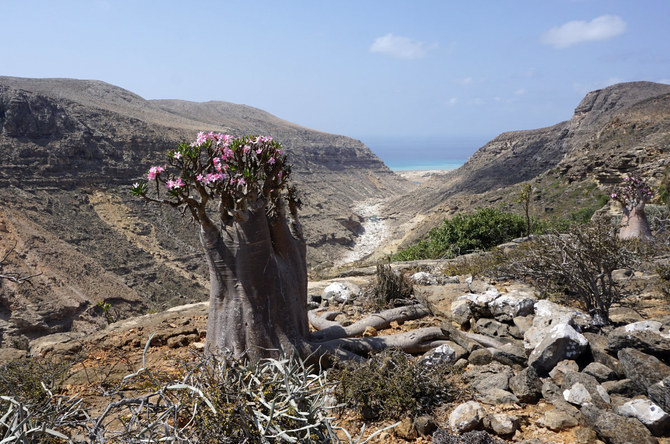
Following a personal inspection of the seized cargo, conservationist and former head of the EPA’s Socotra office Ahmed Saeed Suleiman told Arab News that it contained seeds from 12 cultivated trees native to the island, including Adenium obesum, Commiphora ornifolia, Commiphora socotrana, Commiphora sp, Dorstenia gigas, Sterculia africana var. socotrana, Boswellia ameero, Boswellia elongate, Boswellia socotrana, Boswellia nana, Boswellia dioscoridis and Dendrosicyos socotrana.
BACKGROUND
Socotra is home to 37 percent of the world's 825 plant species, 90 percent of its reptile species, and 95 percent of the world’s land snail species
A third of the main island's plants are unique, from bulbous bottle and cucumber trees to alien aloes.
The archipelago's remote location helped it forge its astonishing nature millennia ago
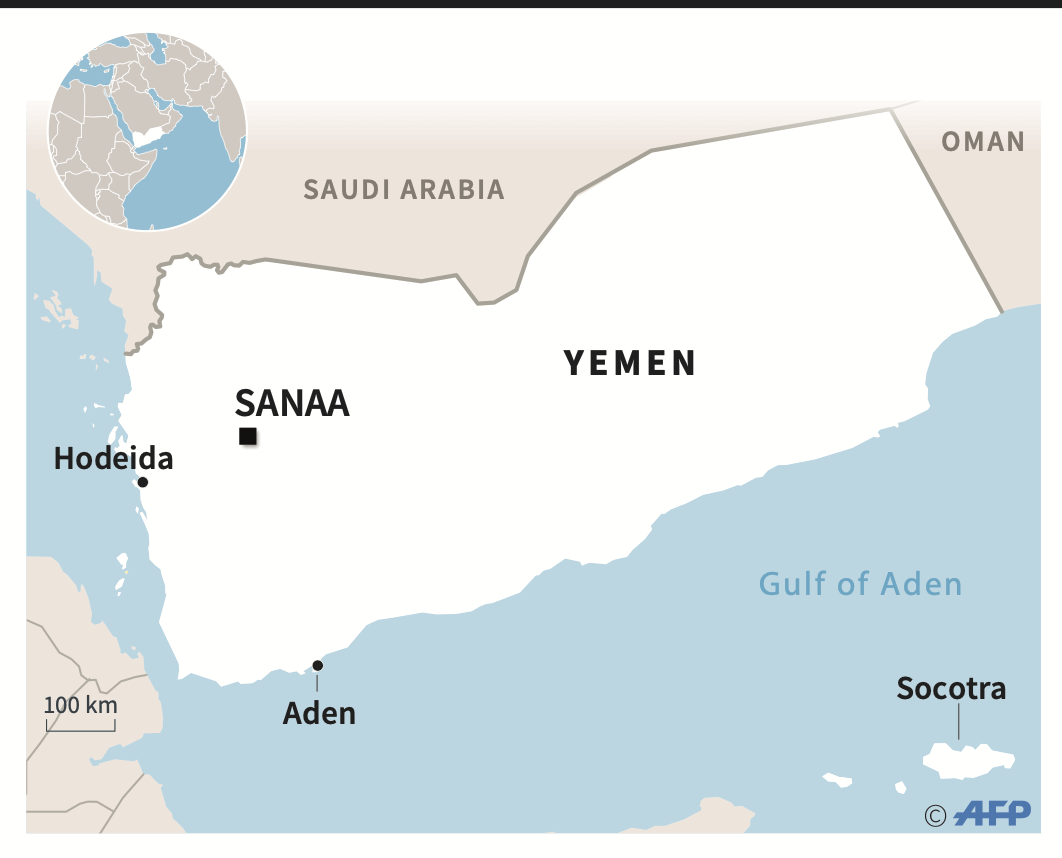
But the 130 Km long island also oversees busy global shipping lanes at the crossroads between Africa and the Arabian Peninsula
(Source: AFP)
Suleiman noted that smugglers used lax checks at the island’s sea and air ports, as well as the anarchy caused by the current conflict in Yemen, to smuggle rare trees off the island.
“Protecting indigenous species shouldn’t just apply to plants but also to insects and birds,” he said.
Suleiman asked for stricter rules and inspections at the island’s ports, the reactivation of EPA offices, and raising awareness among locals about the significance of preserving the island’s flora and wildlife diversity in order to combat trafficking.
“In recent years, chaos and changes in the civilian and military sectors have had a negative impact on services at sea and air ports, which have been limited to securing planes only,” he added.
UNESCO has designated the Yemeni island one of the world’s most significant flora and fauna sites because it is home to many unusual species of plant, bird, and marine life.
Socotra is home to 37 percent of the world's 825 plant species, 90 percent of its reptile species, and 95 percent of the world’s land snail species, according to the international body.


