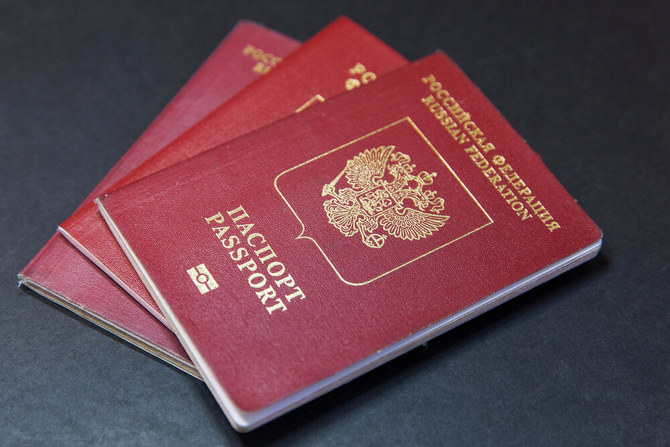
VILNIUS: Poland and the three Baltic states said Thursday they would temporarily restrict access for Russian citizens holding EU visas by September 19 to address “public policy and security threats.”
The prime ministers of Estonia, Latvia, Lithuania and Poland said in a statement they were concerned “about the substantial and growing influx of Russian citizens” into the EU.
“We believe that this is becoming a serious threat to our public security and to the overall shared Schengen area,” they said.
The statement said the four “agreed on a common regional approach and hereby express their political will and firm intention to introduce national temporary measures for Russian citizens holding visas.”
The measures would “restrict the entry into the Schengen area for Russian citizens traveling for tourism, culture, sport and business purposes.”
Exceptions will be made for various categories, including “dissidents,” “humanitarian cases,” family members and holders of residence permits in EU countries.
“We fully uphold the need to continue to support opponents of the Putin regime and provide them with opportunities to leave Russia,” the four leaders said.
But they added that it was “unacceptable that citizens of the aggressor-state are able to freely travel in the EU, whilst at the same time people in Ukraine are being tortured and murdered.”
The prime ministers said they would “continue to seek a common approach on the EU level.”
EU foreign ministers meeting in Prague last month agreed to suspend a 2007 visa facilitation deal with Russia, stopping short of a wider visa ban.
But EU foreign policy chief Josep Borrell said that countries bordering Russia could “take measures at a national level to restrict entry into the European Union.”
He emphasised, however, that any measures would have to conform with rules for the EU’s Schengen common travel zone and members of Russian civil society should continue to be able to travel to the EU.


![]()

Poland, Baltics agree EU visa ban plan for Russians: statement
Short Url
https://arab.news/wgcsw
Poland, Baltics agree EU visa ban plan for Russians: statement
- PMs of Estonia, Latvia, Lithuania and Poland said they were concerned "about the substantial and growing influx of Russian citizens" into the EU
- The prime ministers said they would "continue to seek a common approach on the EU level"


Latest updates



© 2026 SAUDI RESEARCH & PUBLISHING COMPANY, All Rights Reserved And subject to Terms of Use Agreement.