Saudi FM: Gulf, Central Asian countries have huge potential that will enhance growth

1 / 3
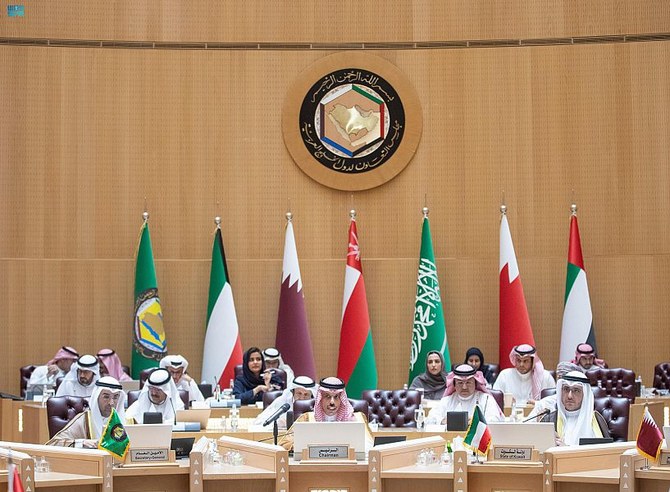
Saudi Arabia’s Foreign Minister Prince Faisal bin Farhan speaks at the first joint ministerial meeting between GCC states and Central Asian countries in Riyadh. (SPA)
2 / 3
Saudi Arabia’s Foreign Minister Prince Faisal bin Farhan speaks at the first joint ministerial meeting between GCC states and Central Asian countries in Riyadh. (SPA)
3 / 3
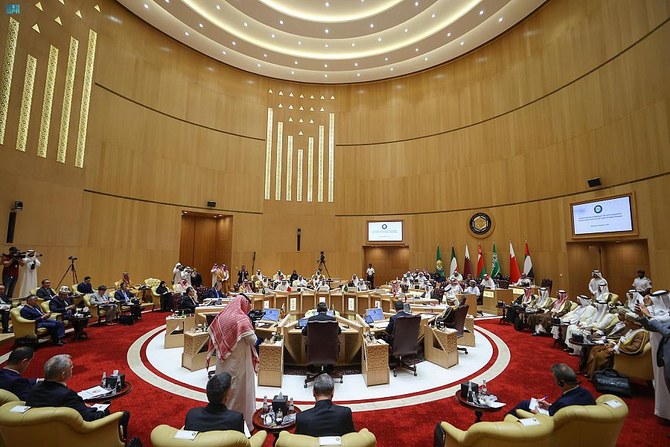
The first joint ministerial meeting between GCC states and Central Asian countries takes place in Riyadh on Wednesday. (SPA)
Short Url
Updated 07 September 2022
Follow

Saudi FM: Gulf, Central Asian countries have huge potential that will enhance growth

  • Prince Faisal said Gulf states and Central Asian countries were keen to discuss available opportunities in the fields of trade, investment, tourism, and energy

JEDDAH: Cooperation to enhance global economic recovery efforts was high on the agenda during the first joint ministerial meeting of the strategic dialogue between the Gulf Cooperation Council and the foreign ministers of Kazakhstan, Kyrgyzstan, Tajikistan, Turkmenistan and Uzbekistan, which convened in Riyadh on Wednesday.

It was chaired by Prince Faisal bin Farhan, the Saudi minister of foreign affairs and chairman of the current session of the GCC’s Ministerial Council.

Prince Faisal stressed the importance of intensifying joint cooperation between countries in the two regions in light of global challenges.

“The areas of cooperation between us are endless, and the ultimate goal is to achieve stability and prosperity for our countries,” Prince Faisal said.

“There are many ties and an extended history that unites Gulf states with the countries of Central Asia,” the minister added.

He also highlighted the importance of supporting all efforts aimed at reducing regional and international political tensions while respecting international standards and creating conditions for promoting sustainable economic recovery.

The participants included Khalifa Shaheen Almarar, the UAE’s minister of state; Abdullatif bin Rashid Al-Zayani, Bahrain’s foreign minister; Sayyid Badr Albusaid, the Omani foreign minister; Sheikh Mohammed bin Abdulrahman Al-Thani, Qatar’s foreign minister; Ahmed Nasser Al-Mohammed Al-Sabah, the Kuwaiti foreign minister; Nayef Falah Mubarak Al-Hajraf, secretary general of the GCC; Vladimir Norov, acting foreign minister of Uzbekistan; Rashid Meredov, Turkmenistan’s foreign minister; Sirojiddin Muhriddin, Tajikistan’s foreign minister; Mukhtar Tileuberdi, Kazakhstan’s foreign minister; and Jeenbek Kulubaev, Kyrgyzstan’s foreign minister.

Prince Faisal said Gulf states and Central Asian countries were keen to discuss available opportunities in the fields of trade, investment, tourism, and energy as a starting point toward enhancing joint cooperation, prosperity, and growth for the countries and peoples of the two regions.

The foreign minister reiterated the importance of continuous cooperation between Gulf states and the countries of Central Asia.

The ministers welcomed the convening of the meeting and underlined their commitment to establishing strong and ambitious future partnerships between their countries, based on common values and interests, the deep historical ties between their peoples, and existing cooperation at the bilateral and multilateral levels in a variety of fields.

They exchanged views on a number of regional and international issues and stressed the importance of coordinating their positions through strategic dialogue mechanisms that were established during the meeting.

In particular they emphasized the need for agreements relating to cooperation to address the effects of the COVID-19 pandemic; the recovery of supply chains; transport and communications; food security, energy security and water security; the development of green-energy sources and technologies; environmental challenges and climate change; education; the exchange of best practices and experiences in all fields; and the creation of business opportunities and support for investment, including appropriate trade and investment mechanisms.

They also underlined the importance of the link between the principles, goals and priorities for interaction among Central Asian countries, as part of a multilateral framework approved by the heads of those states on July 21 in Cholpon-Ata, Kyrgyzstan, and GCC decisions about enhancing cooperation with those countries.

To help achieve the goals, a joint action plan for strategic dialogue and cooperation between GCC and Central Asian states, covering the period 2023-2027, was approved. It includes political and security dialogue, economic and investment cooperation, enhanced communication between peoples, and the establishment of effective partnerships between the business sectors in countries in both regions.

The ministers said that all necessary measures will be taken to ensure the rapid implementation of the plans to their fullest, at bilateral and multilateral levels.

They welcomed the invitation extended to Kazakhstan to host the first Economic Forum of GCC and Central Asian countries in Astana in June 2023, along with the invitation to Uzbekistan to hold the second ministerial meeting of the strategic dialogue in Samarkand next year.


Ramadan brings local communities together to engage in volunteering activities

Updated 10 March 2026
Follow

Ramadan brings local communities together to engage in volunteering activities

  • For the Jeddah Volunteer group, local volunteers head out to lower-income neighborhoods to distribute meals
  • Supervisor Ahmed Al-Hamdan told Arab News that the iftar project is among the group’s most significant Ramadan initiatives

JEDDAH: Since the start of Ramadan, charities, mosques, restaurants, generous individuals and young volunteers across Saudi Arabia are coming together to make a tangible difference to the lives of those in need.

Volunteering activities usually peak in the weeks preceding Ramadan, with several initiatives taking place across the country.

“Every Ramadan, we are proud to see citizens and residents step up as volunteers across the Kingdom of Saudi Arabia, in Riyadh, Jeddah, Damam, Tabuk, Hail, Najran, Qassim and the rest of cities, embodying the spirit of giving and solidarity during this holy month. The people’s dedication and compassion have been a true reflection of Saudi Arabia’s values,” Sheikh Mansour Al-Shareef, imam of Al-Tawheed Mosque in Jeddah, told Arab News.

Al-Shareef underscored the spiritual essence of volunteerism, saying: “Volunteerism in Ramadan is not only about helping the needy but also about showing unity within communities.”

He noted the remarkable rise in community engagement in recent years. “Volunteering is on the rise with individuals from all walks of life contributing their time and resources to foster social solidarity, particularly during Ramadan.”

For the Jeddah Volunteer group, local volunteers head out to lower-income neighborhoods to distribute meals.

Supervisor Ahmed Al-Hamdan told Arab News that the iftar project is among the group’s most significant Ramadan initiatives.

He noted that the program aims to strengthen social solidarity and ease the burden on needy families, adding that every day during Ramadan, more than 100 volunteers arrive at the various iftar sites by the afternoon Asr prayer.

They work together to prepare special meals which include water, dates and rice, and later they distribute meals by hand. For many, the reward of helping those in need is what drives them to participate in volunteer campaigns.

It is becoming an act of duty for volunteer Noura Abdulaziz, who has been involved in such initiatives for the last two years.

She said: “I dedicate myself to this cause because it is the month of giving and it is our duty to give a hand in this special month. I really enjoy every minute of it.”

She pointed out that she sacrificed her time spent with her family to hand out meals to those who are in need.

“The number of iftars I have with my family is minimal, but they have no complaints as they understand the greater purpose,” she said.

Under the slogan “Ramadan Kareem,” fulfilling its annual commitment to community service, Kayani Event Management launched its annual “Iftar for the Fasting” campaign in the heart of Al-Balad district (historic Jeddah) for the fifth consecutive year, creating a scene of social solidarity within the ancient city.

The aim was to deliver Iftar meals to needy families and charitable organizations in the area, reinforcing the spirit of compassion embodied by the holy month.

Rana Bajouda, CEO of Kayani, told Arab News: “Our continuation for the fifth year is a confirmation of our commitment to our neighbors and our people in Jeddah, and our belief that giving is the true engine of success for any organization.”

From individual acts to organized government efforts, the General Directorate of Education in the Makkah Region launched a broad community initiative to provide Iftar meals for fasting visitors to the Holy Mosque, aiming to distribute 5,000 meals daily throughout the holy month of Ramadan.

Behind this initiative stands a team of 500 volunteers from the education sector, who work side by side, in a scene of faith that embodies the spirit of cohesion and clearly reflects the leading community role of the education sector in serving those who visit the Grand Mosque.