

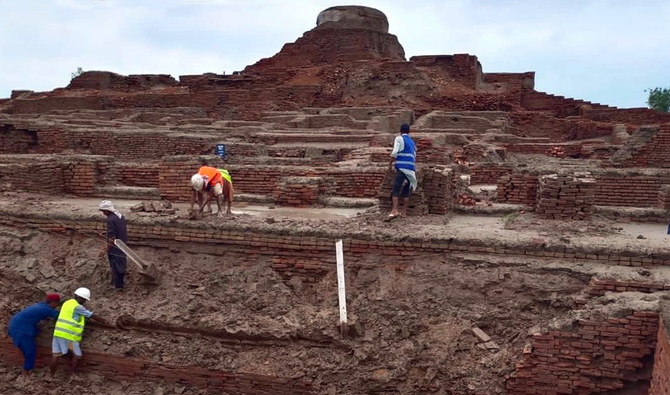

ISLAMABAD: Unprecedented rains and floods in Pakistan have destroyed around 70 percent of a famed archaeological site in the country’s south, particularly the excavated areas as rainwater seeped through and created furrows in the ancient structures, officials said on Tuesday.
The mounds and ruins of Mohenjo Daro in southern Sindh province, a United Nations Educational, Scientific and Cultural Organization (UNESCO) world heritage site located close to the Indus River, are considered among the best-preserved urban settlements in South Asia.
The ancient city, also known as “Mound of the Dead” in the local language, was discovered in 1922 and dates back 4,500 years. To this day, mystery surrounds the disappearance of Mohenjo Daro’s civilization, which coincided with those of ancient Egypt and Mesopotamia.
The raging waters of the nearby Indus have wreaked havoc across much of Pakistan, with at least 1,325 people killed and millions forced out of homes since mid-June. Though the flooding has not directly hit Mohenjo Daro, record rains have greatly damaged its ruins.
“Seventy percent of the ruins have been damaged as per our initial assessment,” Tariq Chandio, deputy commissioner of the Larkana district where the ruins are located, told Arab News.
“The last spell of rains continued for eight days and overall Mohenjo Daro received the highest rainfall in the whole province this year at 740.5mm.”
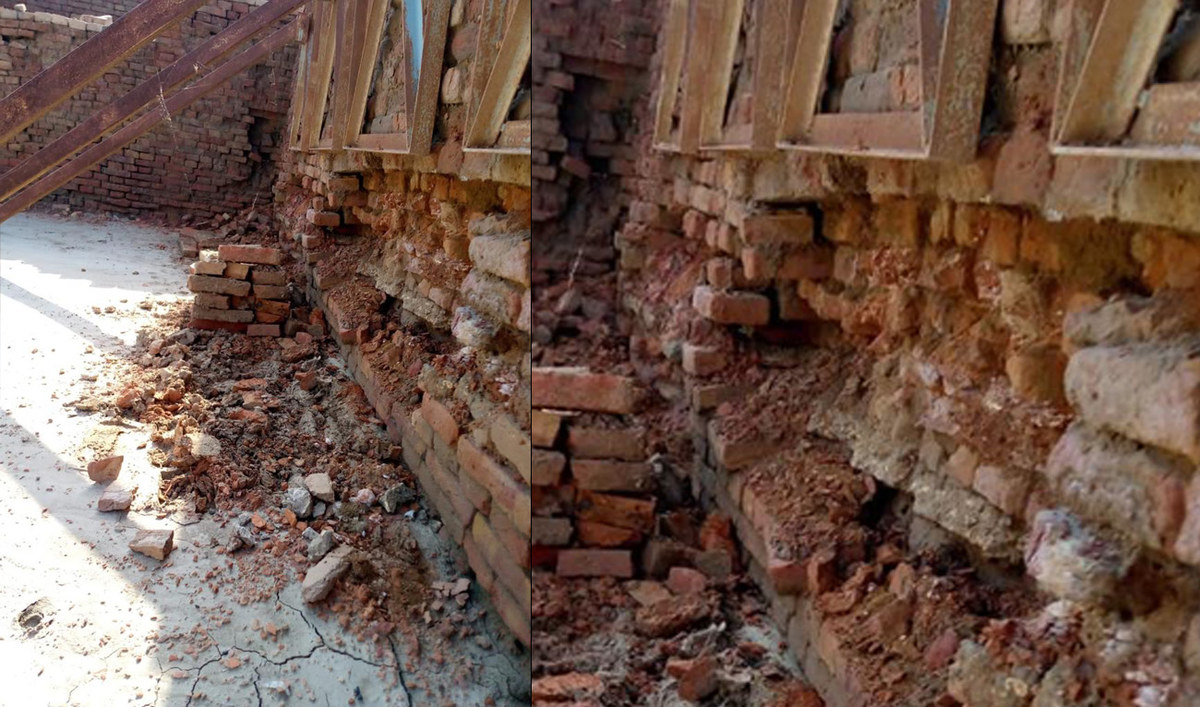
This picture shows damages caused by heavy monsoon showers at the famed archeological site of Mohenjo Daro in Larkana, Pakistan on August 26, 2022. (Supplied/Tariq Manzoor Chandio)
Chandio said workers had drained water from the ancient structures in upper areas, but lower ruins still had some water and were badly damaged.
“We visited the whole site with a team of observers from the United Nations (UN) general-secretary, who is expected to visit Mohenjo Daro on September 10 to see the situation of the protected area,” he said.
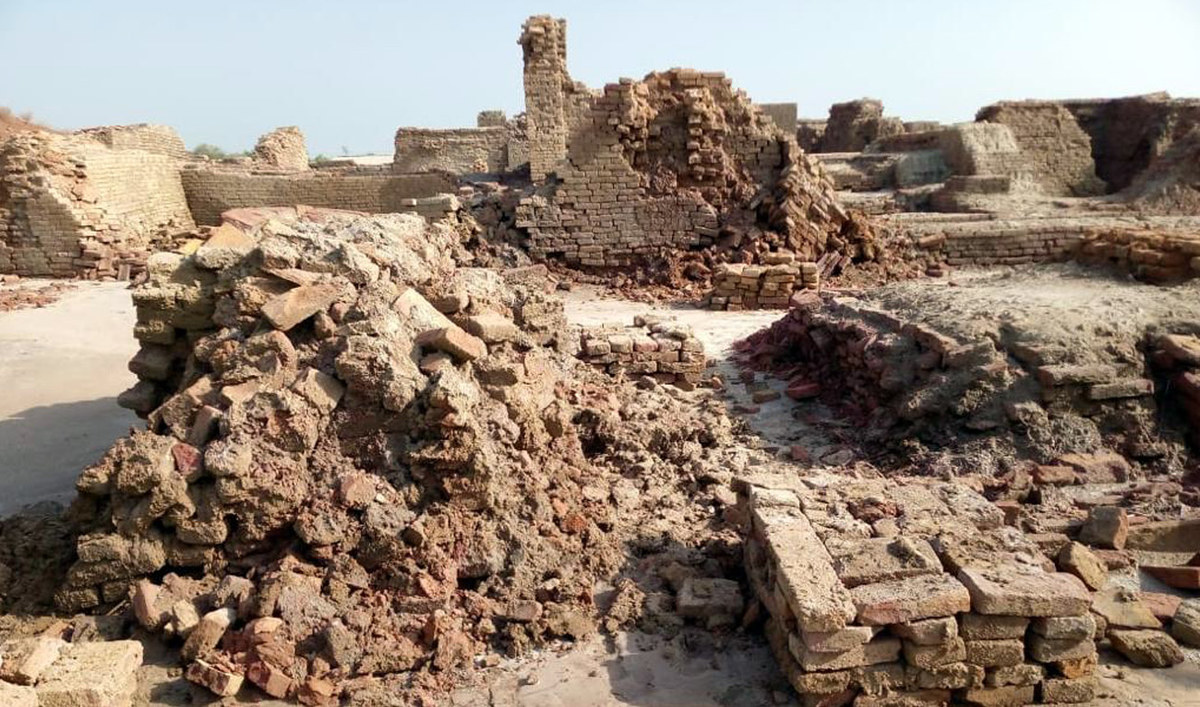
This picture shows damages caused by heavy monsoon showers at the famed archeological site of Mohenjo Daro in Larkana, Pakistan on August 26, 2022. (Supplied/Tariq Manzoor Chandio)
Sindhu Chandio, an assistant director at the Sindh cultural heritage department, said authorities had taken precautions but the recent rains were unprecedented and nothing worked against a disaster of such magnitude.
“Water was being drained right away at the time but it caused damage. We are working on the site for conservation and are hopeful to fix the damages,” she told Arab News.
Sindhu said although the rainwater was being drained out continuously, but it damaged the ancient site mostly made of mud. She said the UN delegation visited the site to inspect the damages.
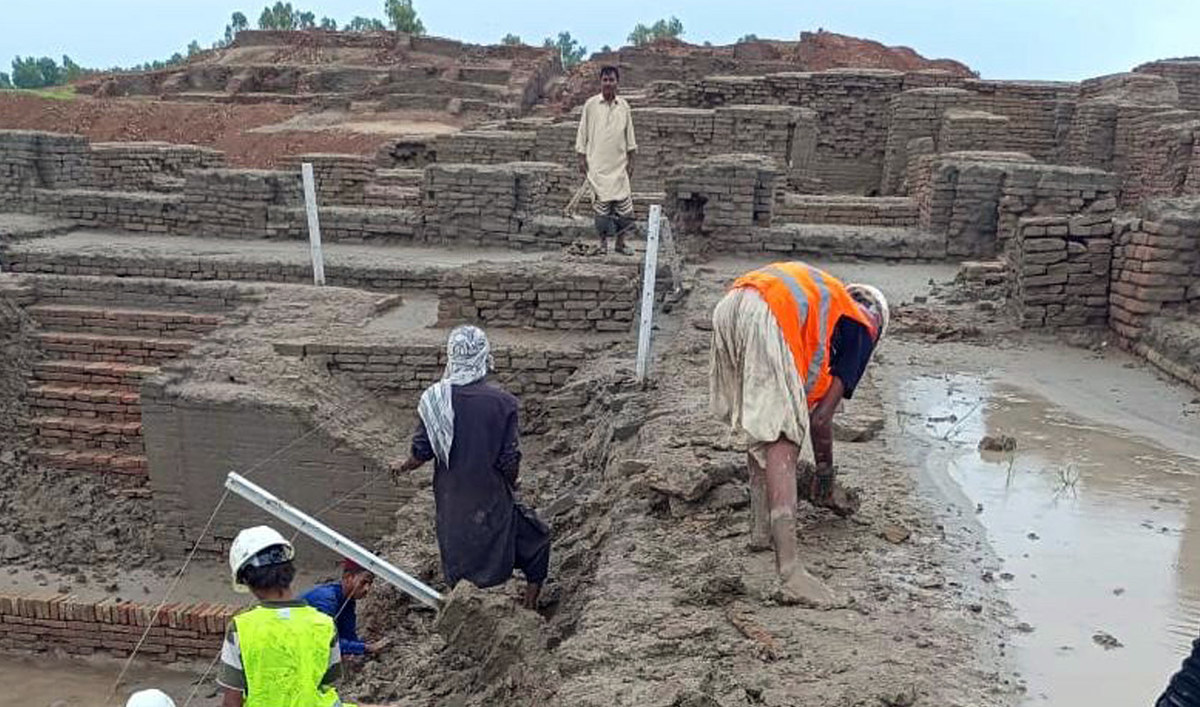
Employees of the Sindh government try to save ancient structures at Mohenjo Daro after heavy rains in Larkana, Pakistan on August 26, 2022. (Supplied/Tariq Manzoor Chandio)
“They will compile a report of damages and preservation,” Sindhu said, adding 60 percent of the damages were “recoverable.”
The site’s landmark “Buddhist stupa” — a large hemispherical structure associated with worship, meditation and burial — remained intact during the heavy rains, according to officials.
“The stupa at the maximum height was covered with polythene sheets so its damage was less than 5 percent,” Sindhu said. “But as Mohenjo Daro is a huge site, so it was almost impossible to save it from such a disaster.”

United Nations (UN) officials visit Mohenjo Daro in Larkana, Pakistan on September 6, 2022. (Supplied/Sindhu Chandio)
Jawad Aziz, an official of the UNESCO Pakistan culture program, said the UN agency was in touch with the Pakistani government and assessing the situation.
“We are in touch with the Government of Pakistan’s directorate of archaeology and antiquities,” he told Arab News. “Our teams are assessing the situation and doing their preparations to save the site.”
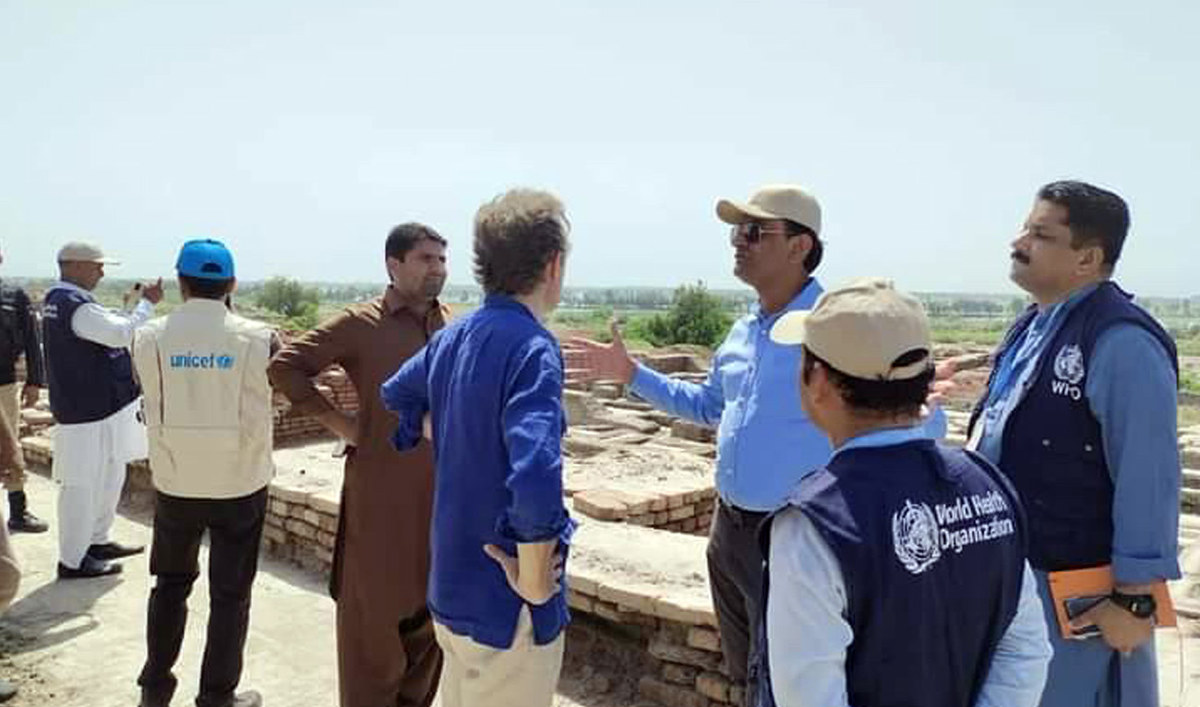
United Nations (UN) officials visit Mohenjo Daro in Larkana, Pakistan on September 6, 2022. (Supplied/Sindhu Chandio)
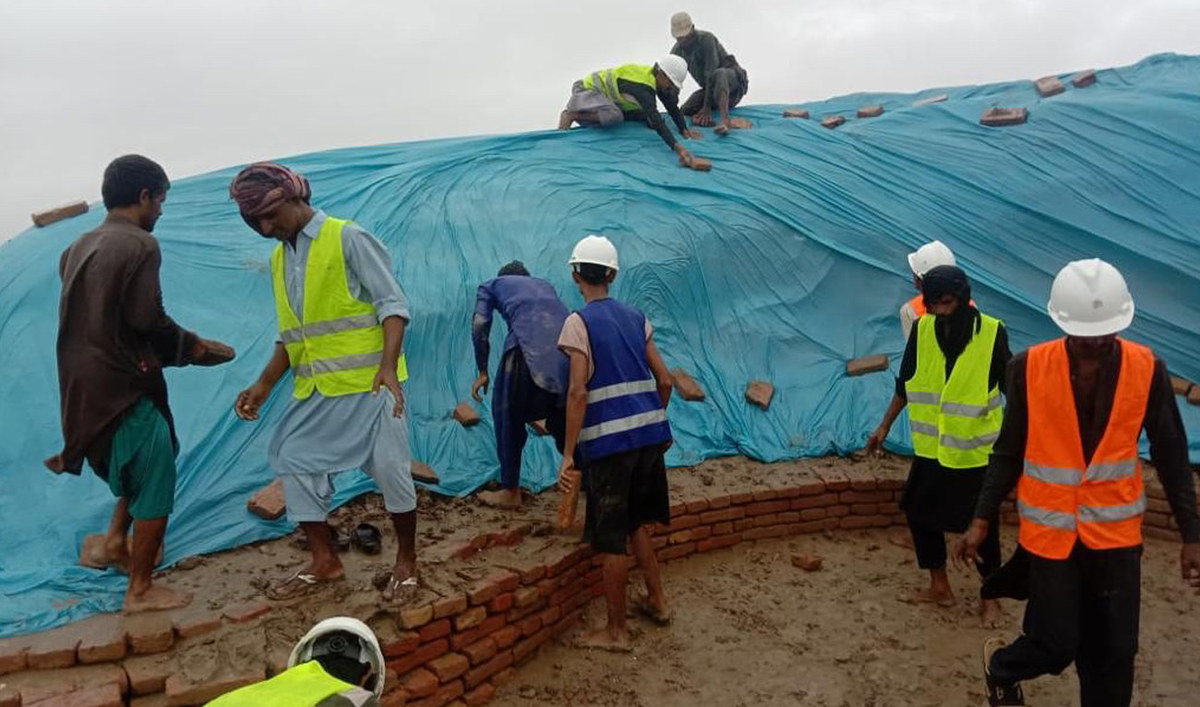
Employees of the Sindh government try to save ancient structures at Mohenjo Daro after heavy rains in Larkana, Pakistan on August 26, 2022. (Supplied/Tariq Manzoor Chandio)




