

Pakistan CPI inflation hits multi-decade high 27.3% on year in August

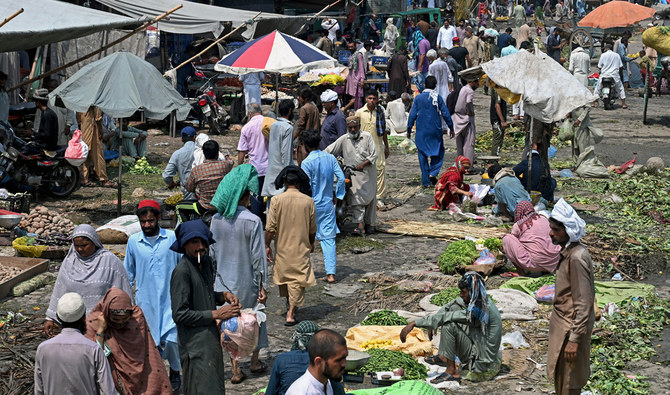
People buy vegetables at a local market in Lahore on August 30, 2022. (AFP)
Short Url
Updated 01 September 2022
Follow

Pakistan CPI inflation hits multi-decade high 27.3% on year in August

  • Price rises in staples, including vegetables, wheat and cooking oil led the high inflation, says Pakistan Bureau of Statistics
  • Pakistan’s 220 million people were already facing rampant inflation before the flooding and the economy is in turmoil

ISLAMABAD: Pakistan’s consumer price index (CPI) surged to a multi-decade high of 27.3% in August from a year earlier, government data showed on Thursday, as authorities warn massive flooding in the country could exacerbate already skyrocketing prices.

Price rises in staples, including vegetables, wheat and cooking oil led the high inflation, the Pakistan Bureau of Statistics said in a statement. In July, annual CPI inflation was at 24.9%.

Economists said the August inflation was the highest in more than 40 years.

“Everyone is asking if inflation is highest ever? Answer: Inflation is at a 47 (year) high following from 1975,” said Khaqan Hassan Najeeb, an economist and former adviser to Pakistan’s Ministry of Finance.

CPI was up 2.4% in August from July, slowing from 4.3% in the previous month, according to the statistics agency.

Vegetable and fruit prices have soared across Pakistan as devastating rains ruin crops and disrupt supplies, an early sign of how the worst floods in decades are creating food shortages at a time of financial crisis.

Pakistan’s 220 million people were already facing rampant inflation before the flooding and the economy is in turmoil, with fast-depleting foreign reserves and a record fall of the rupee against the dollar.

Officials say that more than 2 million acres (800,000 hectares) of agricultural land has been flooded, destroying most standing crops and preventing farmers from sowing new ones.

Authorities are looking for ways to fast-track food imports. Commerce Minister Naveed Qamar said on Wednesday the government was close to an agreement to import vegetables and other edible goods from Iran and Afghanistan, and an urgent request had gone to the cabinet to approve it.


Pakistan launches double-decker buses in Karachi after 65 years to tackle transport woes

Updated 11 sec ago
Follow

Pakistan launches double-decker buses in Karachi after 65 years to tackle transport woes

  • Karachi citizens will be able to travel in double-decker buses from Jan. 1, says Sindh government
  • City faces mounting transport challenges such as lack of buses, traffic congestion, poorly built roads

ISLAMABAD: The government in Sindh province on Wednesday launched double-decker buses in the provincial capital of Karachi after a gap of 65 years, vowing to improve public transport facilities in the metropolis. 

Double-decker buses are designed to carry more passengers than single-deck vehicles without taking up extra road space. The development takes place amid increasing criticism against the Sindh government regarding Karachi’s mounting public transport challenges and poor infrastructural problems. 

Pakistan’s largest city by population faces severe transportation challenges due to overcrowding in buses, traffic congestion and limited bus options. Commuters, as a result, rely on private vehicles or unregulated transport options that are often unsafe and expensive.

“Double-decker buses have once again been introduced for the people of Karachi after 65 years,” a statement issued by the Sindh information ministry said. 

Sindh Transportation Minister Sharjeel Inam Memon and Local Government Minister Syed Nasir Hussain Shah inaugurated the bus service. The ministry said the facility will be available to the public starting Jan. 1. 

The statement highlighted that new electric bus routes will also be launched across the entire province starting next week. It added that the aim of introducing air-conditioned buses, low-fare services, and fare subsidies is to make public transport more accessible to the people.

The ministry noted that approximately 1.5 million people travel daily in Karachi using the People’s Bus Service, while around 75,000 passengers use the Orange Line and Green Line BRT services.

“With the integration of these routes, efforts are being made to benefit up to 100,000 additional people,” the ministry said.