Five mosques in Makkah region to be restored as part of development project
The project aims to protect and renovate the mosques, prolong their lifespan, and maintain their architecture
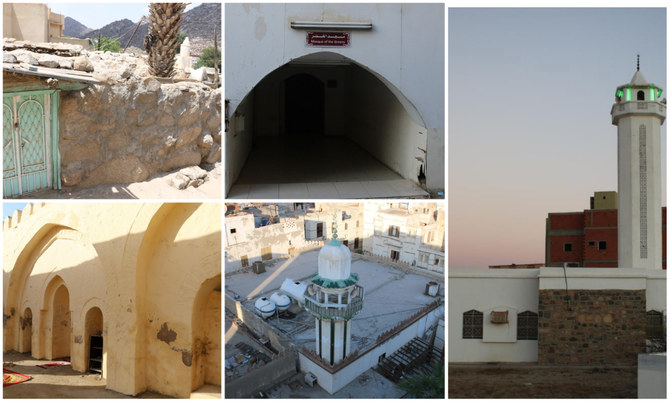
Al-Jubail Mosque, Al-Fath Mosque, Al-Khadr Mosque, Abu Inbeh Mosque, and Al-Baiah Mosque will be renovated
Updated 28 August 2022
Arab News
RIYADH: Five mosques in the Makkah region will be restored as part of the second phase of the Prince Mohammed bin Salman Project for the Development of Historical Mosques, Saudi Press Agency reported on Sunday.
The project aims to protect and renovate the mosques, prolong their lifespan, and maintain their architecture that has been affected by the changing climate over past centuries.
Al-Baiah Mosque, built by the Abbasid Caliph Abu Jafar Al-Mansour near Jamarat Al-Aqaba in Mina, is the first mosque to be developed in Makkah as part of the second phase of the project.
The area of the mosque after renovation will remain the same at 457.56 square meters, and it will have a capacity of 68 worshippers.
Two mosques in Jeddah governorate are part of the five; Abu Inbeh Mosque in Harat Al-Sham and Al-Khadr Mosque on Al-Dhahab Street in Al-Balad neighborhood.
Abu Inbeh Mosque was built more than 900 years ago and stands at 339.98 square meters.
After renovation, its area will reach 335.31 square meters and it will facilitate 357 worshippers.
Al-Khadr Mosque, around 66 kilometers from the Grand Mosque in Makkah, was built around 700 years ago.
Post-renovation, it will have an area of 355.09 square meters and a capacity of 355 worshippers.
The Prophet Muhammad is said to have prayed at the Al-Fath Mosque in Al-Jamoum governorate during the year he conquered Makkah.
Its area is expected to increase from 455.77 square meters to 553.50 square meters and its capacity will also increase from 218 to 333 worshippers.
Al-Jubail Mosque, which was built more than 300 years ago, is also part of the project and its post-renovation area will be 310 square meters. Its capacity will remain the same at 45 worshippers.
A total of 30 mosques will be included in the second phase of the development project that covers all regions in the Kingdom.
The project aims to highlight Saudi Arabia’s rich culture, restore historical mosques for worship and prayer, preserve the original features of historical mosques, and enhance their religious and cultural status.
Balad Beast brings global beats to historic streets
‘MDLBEAST put us on the international map,’ say Saudi electronic duo Dish Dash
Updated 31 January 2026
Afshan Aziz
JEDDAH: The music festival Balad Beast concluded its fourth edition this weekend, having transformed Jeddah’s UNESCO World Heritage district of Al-Balad into an open-air celebration of music, culture and creativity that attracted thousands of music lovers over two nights.
The festival, organized by Saudi music platform MDLBEAST, featured more than 70 local, regional and international artists across four stages, offering audiences a diverse journey through electronic, hip-hop and global sounds.
French Haitian singer-songwriter Naïka performed on the second night of Balad Beast. (Supplied)
Speaking to Arab News, MDLBEAST chief creative officer Ahmad Al-Ammary, also known as DJ Baloo, described Balad Beast as a “cultural takeover” adding that finding the right spaces for dance floors was a challenge, “but Balad is constantly evolving and we work with that change.”
Addressing the challenges of working in a heritage area, he said: “Balad is sensitive and condensed, so logistics can be complex. In our first year, heavy rain flooded one of the planned squares and we had to relocate the Souq Stage to a much smaller space, but it worked and it has remained there ever since.
HIGHLIGHT
Reggae superstar Shaggy noted that the reality of playing live in Saudi Arabia often surprises those who arrive with preconceptions.
“Yes, the alleys are narrow and the district is old, but they’re full of ideas, patterns, colors and visuals. Everything flows here,” he continued. “As a festival, it’s hard to define Balad, because it gives so much of itself creatively. It’s incredibly generous with its ideas and details, and inspiration comes from everywhere.”
Balad Beast featured more than 70 local, regional and international artists across four stages, offering audiences a diverse journey through electronic, hip-hop and global sounds. (Supplied)
Balad Beast featured performances from international artists including US rapper Playboi Carti, making his first appearance in Saudi Arabia; US rapper Destroy Lonely; Swedish DJ and producer Alesso; and Bosnian-German DJ Solomun on the opening night. The following night saw French-Haitian singer-songwriter Naïka, reggae superstar Shaggy, Dutch DJ Franky Rizardo, British DJ Pawsa, and US rapper Tyga, and more take the stage, while Saudi and regional artists including Cosmicat, TUL8TE, Zeina, Vinyl Mode, Moayed, Dish Dash, Musab, Varoo and HiFi appeared across the festival, offering audiences a mix of global and local talent.
Saudi electronic duo Dish Dash reflected on the festival organizer’s impact for local artists.
As a festival, it’s hard to define Balad, because it gives so much of itself creatively. It’s incredibly generous with its ideas and details, and inspiration comes from everywhere.
Ahmad Al-Ammary, MDLBEAST chief creative officer
“MDLBEAST put us on the international map,” the brothers told Arab News. “It helped us get recognized by festivals, promoters and event organizers abroad. When we travel, people don’t expect this level of talent coming from Saudi Arabia, especially considering we didn’t have this scene before.”
Shaggy, who performed a hit-filled set during the festival, told Arab News: “I’ve been blessed with some incredible songs, and I see music as a gift and a tool for service. When I go on stage, I’m there to entertain people, to make them smile and feel good, but that service also supports many livelihoods from the people working at this festival to those who work with me. These songs have become part of people’s lives, and I don’t take that lightly.”
Balad Beast featured more than 70 local, regional and international artists across four stages, offering audiences a diverse journey through electronic, hip-hop and global sounds. (Supplied)
Shaggy also noted that the reality of playing live in Saudi Arabia often surprises those who arrive with preconceptions.
“I’ve performed in Saudi Arabia more than once, and while there are certain rules that are different, it’s not an issue for me. My focus is always on delivering the hits and giving the audience a great time,” he said.
“There’s a big misconception. People have more freedom than (outsiders) think. Everyone has been extremely nice.”
Asked what advice he would offer to aspiring artists, Shaggy said: “Understand that what you’re given is a gift and a form of service. Stay humble, do the work, and remember why you’re doing it.”
As Al-Ammary noted, there are many such aspiring artists now making a name for themselves in the Kingdom.
“Talent is emerging everywhere, at different levels,” he said. “The scene is still in a mysterious and surprising phase. There’s a rawness to it.”