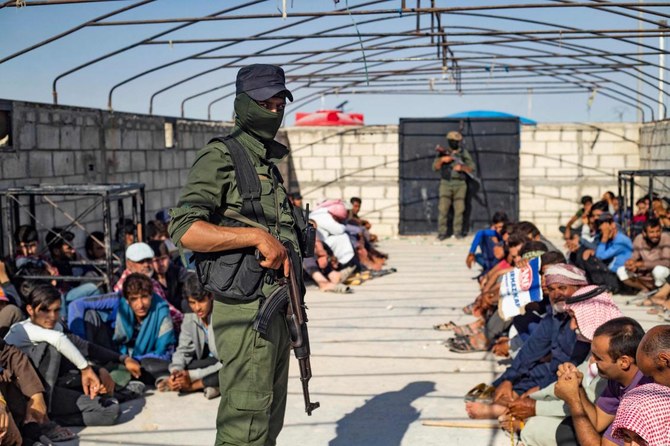
AL-HOL, Syria: US-backed Syrian Kurdish security forces have launched a new operation targeting Daesh sleeper cells in a large northeastern detention camp where violence has reached record levels.
At least 44 people including 14 women have been killed this year in Al-Hol camp, which holds internal refugees and families of suspected Daesh fighters.
“We launched the campaign at this time because of the urgent need brought on by the escalation and increase in violent cases by Daesh cells in Al-Hol camp,” said Ali Hassan, a spokesperson for the internal security forces operating in Syria’s semi-autonomous northeast.
He told Reuters the victims showed signs of “brutal torture,” were often killed with silenced pistols or rifles and their bodies hidden in sewage pipes.
“Compared to last year, there is an increase in the pace of operations within the camp, especially during and after the attempted prison break,” Hassan said.
He was referring to a January riot in a northeast Syrian prison, where Daesh suspects attempting a jailbreak took over part of the detention facility and dozens escaped.
Hassan said perpetrators of the violence in Al-Hol likely had contact with Daesh units still roaming free.
Al-Hol houses around 55,000 people, including Syrians, Iraqis and other nationals who fled Daesh-held areas as the jihadists faced an onslaught by the US-backed Syrian Democratic Forces.
The UN refugee agency in June described the situation at the camp as “catastrophic” saying that an additional “safe space” should be created to protect women and girls from attacks.
The agency said humanitarian organizations had had their facilities vandalized and equipment looted and that repeated lockdowns due to security incidents in the camp meant aid workers had reduced access to people in need.


![]()

US-backed Syrian Kurdish forces move to halt ‘brutal torture’ at Daesh camp
Short Url
https://arab.news/pf4kr
US-backed Syrian Kurdish forces move to halt ‘brutal torture’ at Daesh camp
- At least 44 people including 14 women have been killed this year in Al-Hol camp
- Victims showed signs of “brutal torture” and were often killed with silenced pistols


Latest updates


© 2026 SAUDI RESEARCH & PUBLISHING COMPANY, All Rights Reserved And subject to Terms of Use Agreement.