
KARACHI: Art curator Zahra Khan, who organized Pakistan’s first national pavilion at the Venice Biennale, is advocating the promotion of the country’s centuries-old culture as a key means of cultural diplomacy.
Khan, 35, grew up in Islamabad, graduated in international relations and fine arts from the University of Pennsylvania and the history of art from SOAS, London.
In 2012, she established with her mother an art gallery, Satrang Gallery, in Islamabad and there was no looking back ever since as she has been curating art exhibitions and shows, working seamlessly between Pakistan and the UK.
“A country’s culture is its most profitable good and Pakistan is so lucky because we have centuries of culture. So, why not use it to our advantage!” Khan told Arab News in a telephonic interview from London earlier this week.
“I think there should be a fund dedicated toward supporting arts. There should be a cultural fund that the government sets aside because really there is no greater form of tourism and there is no greater form of cultural diplomacy than the arts.”
She recalled how visitors would come by and say they had no idea of what Pakistan looked like, when she curated the country’s first national pavilion at the Venice Biennale in 2019.
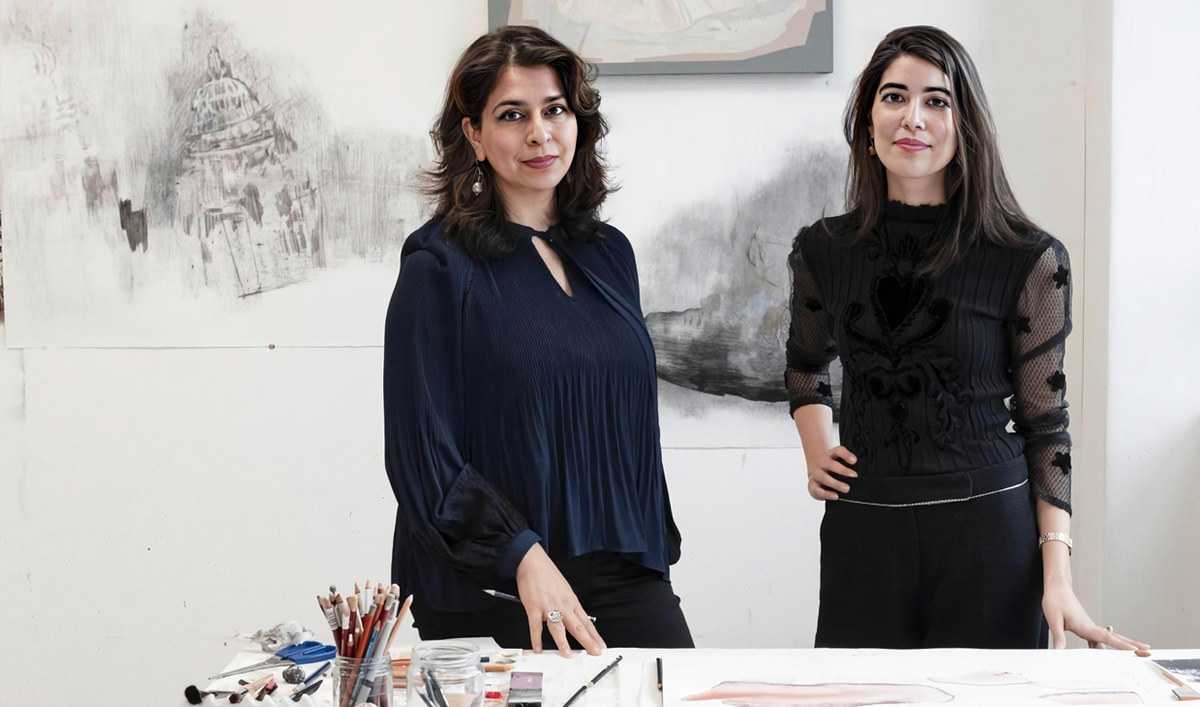
Zahra Khan, right, poses with Naiza Khan before Venice Biennale 2019, at the artist’s studio in London in January 2019. (Carlotta Cardana)
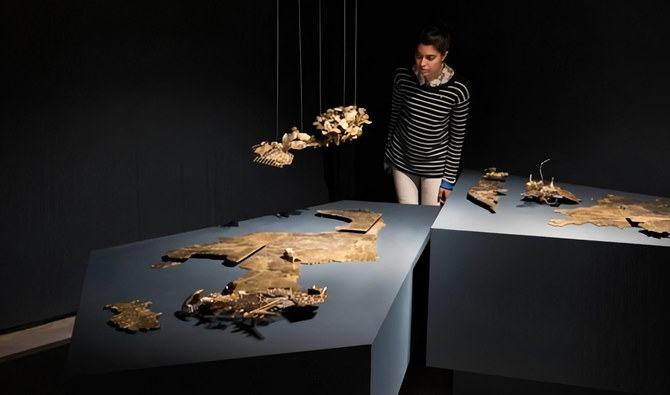
“The pavilion presented Manora Field Notes, an exhibition of new work by the artist Naiza Khan, that gave a particular view into Pakistan through Manora Island (off the coast of Karachi),” Khan said.
“This provided a point of departure from which audiences could gain an understanding of the wider region. We received a note afterwards from a woman who thanked us for the opportunity to learn about the history of the country she was raised in, and for new eyes from which to appreciate it.”
For Khan, visual arts of Pakistan and the region of South Asia “reflect the people and the places.”
“People don’t always realize that actually artists are representing their personal experiences which, in many cases, are very similar to the same experiences that locals have lived through. And especially in terms of aesthetic architectural legacy, it is important to really explore the rich architecture we already have in historic cities.”
She has been trying to create this context with her exhibitions.
In 2018, for example, she placed contemporary art installations within the Fakir Khana Museum and Haveli, a private family-run museum in Lahore’s old city, as part of the 2018 exhibition, titled “I, too, am a part of this history.”
“It was a vital way for visitors to link contemporary art to Lahore’s historic history. The haveli has a provenance from Maharaja Ranjit Singh’s generals,” she said.
“Similarly, I curated an installation and film-based exhibition, Sagar Theatre on Queen’s Road (2020), at the subsequently torn down Plaza Cinema, which was originally Lahore’s oldest Sagar Theatre house. The exhibition brought up memories from visitors at the movies, attending ballroom dance classes and the overwhelming importance of protecting historic art spaces.”