



RIYADH: Crisis management measures and financial guarantees will be part of a new tourism law unveiled by the Saudi Cabinet to boost a “renaissance” in the sector.
The incoming regulatory system, which will help tourism’s development in line with Saudi Vision 2030’s objectives, addresses the development of the regulatory and legislative environment of the sector.
The changes include measures to manage crises, ward off risks, and provide financial guarantees for certain tourism activities, strengthening the relation between investors, tourists and relevant authorities.
Overall tourism spending in Saudi Arabia, including residents and foreigners, rose 52 percent in 2021 to SR95.6 billion ($25.5 billion) from SR63.4 billion the previous year, data published by the Saudi Central Bank, also known as SAMA, revealed earlier this month.
“The new system will enable us to carry out our tasks to ensure the provision of high-quality services that enrich the experience of the tourist and visitor and enable us to attract investments and supervise the sector efficiently and effectively,” Saudi Minister of Tourism Ahmed Al-Khateeb said on his Twitter account.
“The new system will contribute to a qualitative renaissance of the Saudi tourism sector and its development in line with the objectives of the Saudi Vision 2030,” he added.
In a separate statement, Al-Khateeb added: “This law follows the Kingdom’s recent announcement of the Regional Tourism Development Councils Regulation, a major milestone in advancing Saudi Arabia’s National Tourism Strategy. The regulation will accelerate the development of tourist destinations in the various regions, including NEOM, Al-Soudah, the Red Sea, and Diriyah Gate.”
The new system includes a set of articles related to the licensing of activities, their classifications, standards, requirements, and control over them, while also providing sufficient flexibility for the sector, according to the Saudi Press Agency.
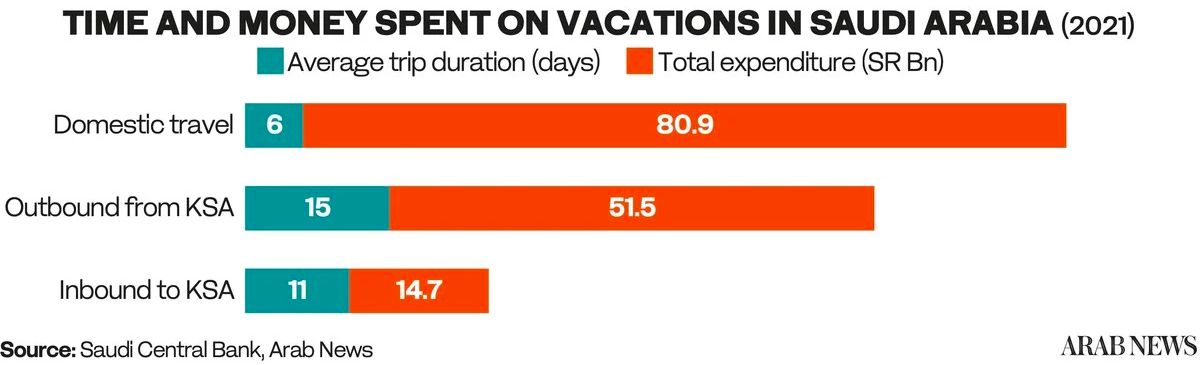
It aims to support and facilitate the completion of procedures for obtaining licenses for hospitality facilities and other tourism activities.
All tourism activities will now be processed through a comprehensive service center.
The minister of tourism explained that the regulatory system comes as a culmination of the sector’s reform process, as it was built based on the best international practices selected from the World Economic Forum’s Travel & Tourism Competitiveness Index.
“This system is not enough, it provides solutions to current problems, but sets a future vision for tourism patterns that may arise later,” Al-Khateeb said.
The Ministry of Tourism also intends to provide a set of incentives, such as the exemption from taxes or customs duties after the approval of the concerned authorities.
There will also be a database providing statistics and information on all aspects of the tourism sector in the Kingdom.
Jamil Attar, CEO of hospitality firm Tarfeeh Fakieh, told Arab News: “This pioneering national strategy aims to increase the tourism sector’s overall contribution to Saudi Arabia’s GDP from its current rate of 3 percent to more than 10 percent by 2030.”
He said it will empower the private sector by offering various services and resources, helping organizations overcome challenges ranging from accessibility issues to quality management.
“The framework also helps new projects secure permits for hospitality activities and events to cultivate the tourism experience further and help position Saudi Arabia as a key destination worldwide,” he further noted.
The Cabinet also gave the green light for transfer of ownership of assets, as well as financial and contractual liabilities and rights related to healthcare services provided by the Ministry of Health, to Health Holding Co. or any of its subsidiaries.
Culture tourism up
Domestic cultural tourism in Saudi Arabia surged by 30 percent in 2021 compared to 2020, according to a report published by the Saudi Ministry of Culture.
According to the report, the driving factors behind this rebound in cultural tourism are the lifting of pandemic restrictions and increase in cultural activities.
The report also showed a consistent upward trend in demand for cultural activities, with domestic cultural tourism seeing annual growth rates of 4.5 percent between 2017 and 2021.
The report further noted that the Kingdom witnessed 85 percent growth in cinema ticket sales between 2020 and 2021 and the rate of those who attended a musical concert at least once rose by 12.5 percent in the same period.
“The Kingdom is undergoing an unprecedented cultural transformation and which is continuing to gather pace. We have built an environment that enables creatives to flourish; proud of their shared history while eager to embrace their future,” said Saudi Culture Minister Prince Badr bin Abdullah bin Farhan.


