

Xiaomi unveils emotion-detecting humanoid robot ‘CyberOne’

CyberOne is fitted with advanced arms and legs, supports bipedal-motion posture balancing, and reaches a peak torque of up to 300 Nm.
Short Url
Updated 20 August 2022
Follow

Xiaomi unveils emotion-detecting humanoid robot ‘CyberOne’

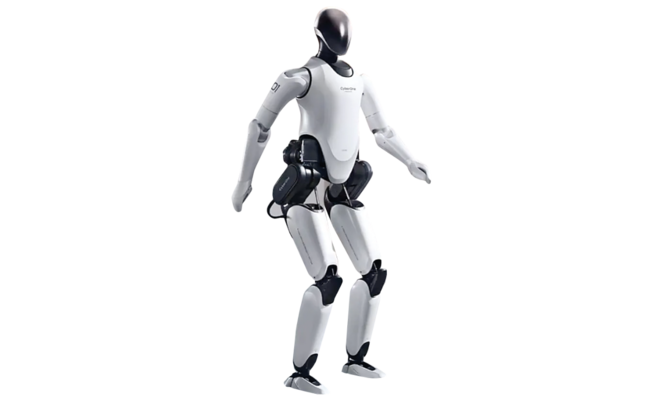
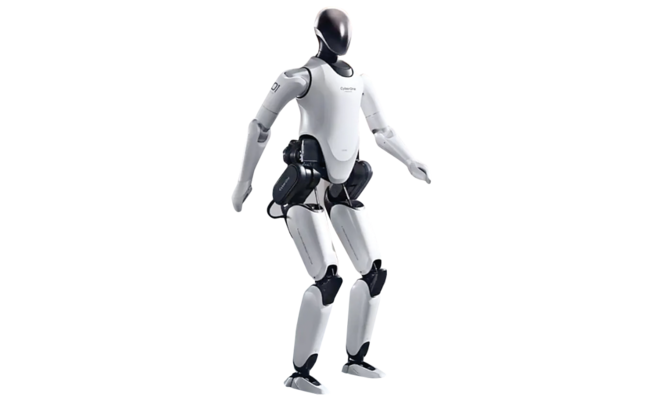
CyberOne, Xiaomi’s first humanoid robot, debuted at the company’s new product launch event in Beijing on Aug. 11, alongside other innovative products.

As the newest member of Xiaomi’s Cyber series, joining last year’s quadruped robot Cyberdog, CyberOne is fitted with advanced arms and legs, supports bipedal-motion posture balancing, and reaches a peak torque of up to 300 Nm. Also demonstrated was the ability to detect human emotion, advanced vision capabilities, and functionality allowing it to create three-dimensional virtual reconstructions of the real world, alongside a host of other advanced technologies.

“CyberOne’s AI and mechanical capabilities are all self-developed by Xiaomi Robotics Lab. We have invested heavily in R&D spanning various areas, including software, hardware, and algorithms innovation,” said Lei Jun, founder, chairman and CEO of Xiaomi Group.

“With AI at its core and a full-size humanoid frame as its vessel, this is an exploration of possibilities of Xiaomi’s future technological ecosystem and a new breakthrough for the company.”

CyberOne is a humanoid robot measuring 177 cm in height and 52 kg in weight, with an arm span of 168 cm. Compared to a quadruped robot, this humanoid robot is more mechanically complex, requiring more powerful motors, more degrees of freedom, and complex humanoid biped control algorithms. CyberOne supports up to 21 degrees of freedom in motion and achieves a real-time response speed of 0.5 ms for each degree of freedom, which allows it to fully simulate human movements.

A robot’s motion performance is dependent on the performance of each joint motor. The technological requirement for building such motors is extremely high as it is necessary to generate more kinetic energy without increasing the size of components. In order to ensure the flexibility of CyberOne’s upper limbs, Xiaomi has developed a high-efficiency motor weighing only 500 g with a rated output torque of up to 30 Nm for the upper limb joint motor. The hip joint motor is similarly capable of an instantaneous peak torque of up to 300 Nm.

Thanks to the self-developed humanoid bipedal control algorithm, CyberOne’s walking posture has been programmed to be both natural and stable. On top of that, CyberOne is capable of holding up to 1.5 kg in weight with a single hand.

Altogether, CyberOne is a humanoid robot with well-developed coordination and exceptional motion capabilities.

Humanoid robots rely on vision to process their surroundings. Equipped with a self-developed Mi-Sense depth vision module and combined with an AI interaction algorithm, CyberOne is capable of perceiving 3D space, as well as recognizing individuals, gestures and expressions, allowing it to not only see but to process its environment.

CyberOne is able to detect happiness, and even comfort the user in times of sadness. All of these features are integrated into CyberOne’s processing units, which are paired with a curved OLED module to display real-time interactive information.

“We think that intelligent robots will definitely be a part of people’s lives in the future,” added Lei Jun.


Jameel Observatory-CREWSnet advances climate resilience in Bangladesh

Updated 20 January 2026
Follow

Jameel Observatory-CREWSnet advances climate resilience in Bangladesh

The Jameel Observatory Climate Resilience Early Warning System Network, an initiative co-founded by the Massachusetts Institute of Technology and Community Jameel to reinvent climate change adaptation in vulnerable communities into a proactive, integrated and evidence-based process, announced the launch of its Adaptation Fortress initiative, transforming existing cyclone shelters and providing protection from heat waves in Bangladesh for the first time.
The first Adaptation Fortress is under construction in Satkhira district, southwest Bangladesh. If this pilot is successful, the initiative will open a pathway, with additional funding, to scaling up to 1,250 Adaptation Fortresses providing heatwave relief to half a million of the region’s most vulnerable residents.
More than 30 million people live in southwestern Bangladesh. Between 2019 and 2021, including in the midst of the COVID-19 pandemic, multiple cyclones hit the region, devastating land, homes and entire communities. The threats posed by climate change — rising sea levels and more extreme weather — mean that people living in this region are likely to face similar crises in the years ahead. In addition to cyclones, extreme heat is a growing threat, putting people at risk of dehydration and heatstroke. In 2024, the UN found that heat waves caused nationwide school closures for two weeks, with some schools closing for six to eight weeks due to the combined impact of heat waves and flooding.
In Bangladesh, the Jameel Observatory-CREWSnet has used its mid-century climate projections and analysis of local human systems to design a pilot for a multi-purpose, multi-objective structure called an Adaptation Fortress.
By engaging extensively with local communities, the Jameel Observatory-CREWSnet, which includes among its partners BRAC, a global nongovernmental organization established in Bangladesh, is demonstrating a new model of climate adaptation that repurposes schools that are also cyclone shelters to serve as sanctuaries during extreme heat events.
The climate resilient shelter model is the first of its kind in Bangladesh and serves as a blueprint for infrastructure development across South Asia. Designed to protect the most vulnerable community members during government-declared heat emergencies, Adaptation Fortresses feature solar power generation and battery backup systems to ensure the shelter is resilient to outages during extreme heat conditions. The site also includes rainwater harvesting capacity and is designed so that excess energy generated when air conditioning is not in use is made available for community use.
Mohammed Abdul Latif Jameel KBE, founder and chairman of Community Jameel, said: “The Jameel Observatory-CREWSnet’s construction of this first pilot Adaptation Fortress marks a milestone for Bangladesh and the region. It lays the foundation for a proactive response to cyclones and heat stress — emergencies that the team has projected will become frequent events, threatening the lives of millions in Bangladesh. By adapting infrastructure today, we are building the resilience needed for tomorrow.”
Professor Elfatih Eltahir, lead principal investigator of the Jameel Observatory-CREWSnet, said: “Bangladesh built a vast network of cyclone shelters that have been effective in protecting vulnerable populations. For the first time the Jameel Observatory-CREWSnet is introducing the concept of shelter from heat waves as well as cyclones in southwest Bangladesh. This integrated and proactive initiative will significantly improve climate resilience in a region with some of the highest risks from climate change.”
Dr. Deborah Campbell, executive director of the Jameel Observatory-CREWSnet, said: “Bangladesh is getting hotter and will experience more frequent and severe heat waves, leaving many people very vulnerable to heat stress and lacking the resources to adapt. The Adaptation Fortress initiative will provide shelter for the most vulnerable community members in southwest Bangladesh and has the potential to serve as a model for similar proactive climate resilience infrastructure development across Bangladesh and South Asia.”
Dr. Md Liakath Ali, principal investigator of the Jameel Observatory-CREWSnet at BRAC, said: “BRAC is proud to partner with the Jameel Observatory-CREWSnet in pioneering the Adaptation Fortress initiative, an important step toward protecting vulnerable communities from the growing risks of extreme heat in coastal Bangladesh. By transforming existing cyclone shelters into multi-purpose, climate-resilient infrastructure, we are demonstrating how locally grounded solutions can address emerging climate hazards while strengthening community well-being. Alongside the pilot, we are committed to engaging policy makers so that future heat and climate risks are integrated into national planning processes. The lessons from this initiative will not only support communities in the southwest, but also inform long-term, scalable strategies for resilience across the country.”