

Philippine official cites Saudi Arabia’s commitment to migrant workers’ rights

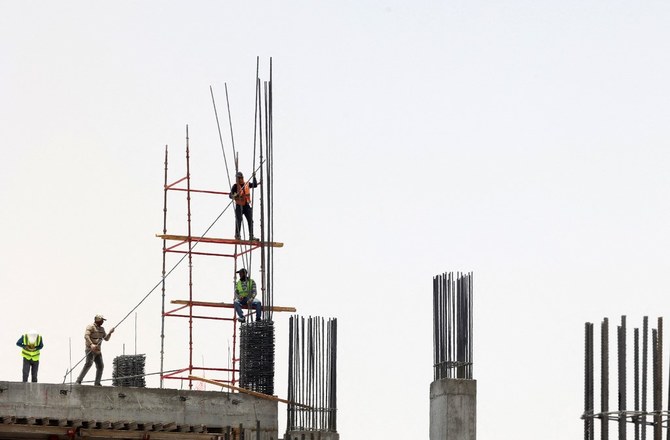
Over 150 countries voted in favor of the UN Global Compact on Migration, including Saudi Arabia, which protects migrants and migrant workers’ rights. (AFP file photo)
Short Url
Updated 18 August 2022
Follow

Philippine official cites Saudi Arabia’s commitment to migrant workers’ rights

  • Over 150 countries voted in favor of the UN Global Compact on Migration with the exception of five countries
  • Saudi Arabia has signed 23 agreements with labor-exporting countries, the contents of which conform to international standards

DUBAI: Philippine migrant workers secretary Susan Ople has cited Saudi Arabia’s commitment to support migrant workers’ rights, as she announced stricter measures to protect the rights and welfare of overseas Filipino workers (OFWs), particularly domestic workers.

The official, in a statement highlighted Saudi Arabia’s “public expression of support for the UN Global Compact on Safe, Orderly and Regular Migration, which declares that the protection of migrants and migrant workers is a shared responsibility among States.”

“Even countries where the sponsorship or ‘Kafala system’ is in place have signed this UN document, signifying their support to sound migration governance and humane treatment of migrant workers, including those in vulnerable occupations such as domestic work,” Ople said in her statement.

Over 150 countries voted in favor of the UN Global Compact on Migration with the exception of five countries: the Czech Republic, Hungary, Israel, Poland and the United States.

Sattam Alharbi, Deputy Minister of Human Resource and Social Development, in an earlier UN forum in New York, reiterated the robust partnership between the Philippines, as the labor-sending country, and Saudi Arabia, a country of migrant labor destination.

Saudi Arabia has signed 23 agreements with labor-exporting countries, the contents of which are per international standards, to ensure a partnership based on the promotion of human rights between employees and employers.

In 2021, about 1.6 million overseas Filipinos comprised Saudi Arabia’s 13.49 million expatriate population. Saudi Arabia is the leading destination for OFWs, making about 26.6 percent of those being deployed.

“Safeguarding the rights and welfare of our migrant workers is at the heart of the DMW’s programs, services, and agreements. We will always strive to do our best amid so many challenges in the world we live in,” Ople said.

Some of the initiatives to be put in place to ensure protection of OFWs include the performance review and assessment of licensed recruitment agencies and their foreign counterparts, the issuance of country-specific employment contracts taking, stricter guidelines to only qualified and fully trained household workers are deployed abroad and white-listing of ethical recruitment agencies and foreign recruitment agencies.

Meanwhile, the names of foreign employers and recruitment agencies, both local and foreign, that have been blacklisted due to recruitment and labor violations would be published as a warning to the public.


Russia says foreign forces in Ukraine would be ‘legitimate targets’

Updated 5 sec ago
Follow

Russia says foreign forces in Ukraine would be ‘legitimate targets’

  • Moscow has repeatedly said it will not tolerate the presence in Ukraine of troops from Western countries

MOSCOW: Russia would regard the deployment of any foreign military forces or infrastructure in Ukraine as foreign intervention and treat those forces as legitimate ​targets, the Foreign Ministry said on Monday, citing Minister Sergei Lavrov.
The ministry’s comment, one of many it said were in response to questions put to Lavrov, also praised US President Donald Trump’s efforts at working for a resolution of the war and said he understood the fundamental reasons behind the conflict.
“The deployment of ‌military units, facilities, ‌warehouses, and other infrastructure of ‌Western ⁠countries ​in Ukraine ‌is unacceptable to us and will be regarded as foreign intervention posing a direct threat to Russia’s security,” the ministry said on its website.
It said Western countries — which have discussed a possible deployment to Ukraine to help secure any peace deal — had to understand “that all foreign military contingents, including German ⁠ones, if deployed in Ukraine, will become legitimate targets for the Russian ‌Armed Forces.”
The United States has spearheaded ‍efforts to hold talks aimed ‍at ending the conflict in Ukraine and a second three-sided ‍meeting with Russian and Ukrainian representatives is to take place this week in the United Arab Emirates.
The issue of ceding internationally recognized Ukrainian territory to Russia remains a major stumbling block. ​Kyiv rejects Russian calls for it to give up all of its Donbas region, including territory Moscow’s ⁠forces have not captured.
Moscow has repeatedly said it will not tolerate the presence in Ukraine of troops from Western countries.
The ministry said Moscow valued the “purposeful efforts” of the Trump administration in working toward a resolution and understanding Russia’s long-running concerns about NATO’s eastward expansion and its overtures to Ukraine.
It described Trump as “one of the few Western politicians who not only immediately refused to advance meaningless and destructive preconditions for starting a substantive dialogue with Moscow on the ‌Ukrainian crisis, but also publicly spoke about its root causes.”