

Saudi fashion designer Honayda Serafi on Harrods career breakthrough

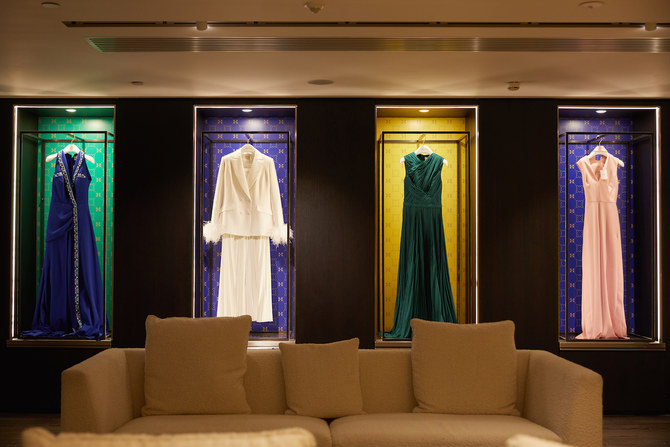
Honayda is the first Saudi label to be displayed at Harrods. (Supplied)
Short Url
Updated 18 August 2022
Follow

Saudi fashion designer Honayda Serafi on Harrods career breakthrough

DUBAI: From Priyanka Chopra to Lupita Nyong’o and Adriana Lima, Saudi Arabian designer Honayda Serafi has dressed many A-listers around the world. Since founding her label Honayda in 2016, Serafi has captured the attention of some of Saudi’s most stylish women and celebrities with her standout designs in elegant and sophisticated silhouettes. This month, she became the first Saudi designer to showcase her collection at Harrods in London, reaching yet another pinnacle for her label.

“I feel very proud as Honayda is the first female-led Saudi label to be displayed at Harrods. The collaboration had been cooking for about eight months, and it was a pleasure working with their team on this exciting launch of exclusive pieces available only at Harrods. It is an honor to be retailing at one of the world’s oldest and most prestigious department stores — but definitely, the journey is ongoing, and we are not stopping here,” said Serafi.

Not only is this a major milestone for the brand, but it also serves as an inspiration for other emerging labels from the Kingdom. Since founding her brand, Serafi has always aimed to join the international fashion scene, while also aiming to inspire other female Saudi designers into believing in their potential. “I hope this brings inspiration to all talented Saudi designers. The world is full of opportunities, and there is a place for everyone. To the rising designers, I tell them to focus on their goals and to keep pushing themselves harder,” she said.

The Saudi design scene has rapidly evolved in the last few years, with talent from the region being recognized internationally, especially on the red carpet. With the establishment of the Fashion Council and its initiatives like the mentorship and incubation programs, homegrown designers can access the many resources they need to advance in the industry.
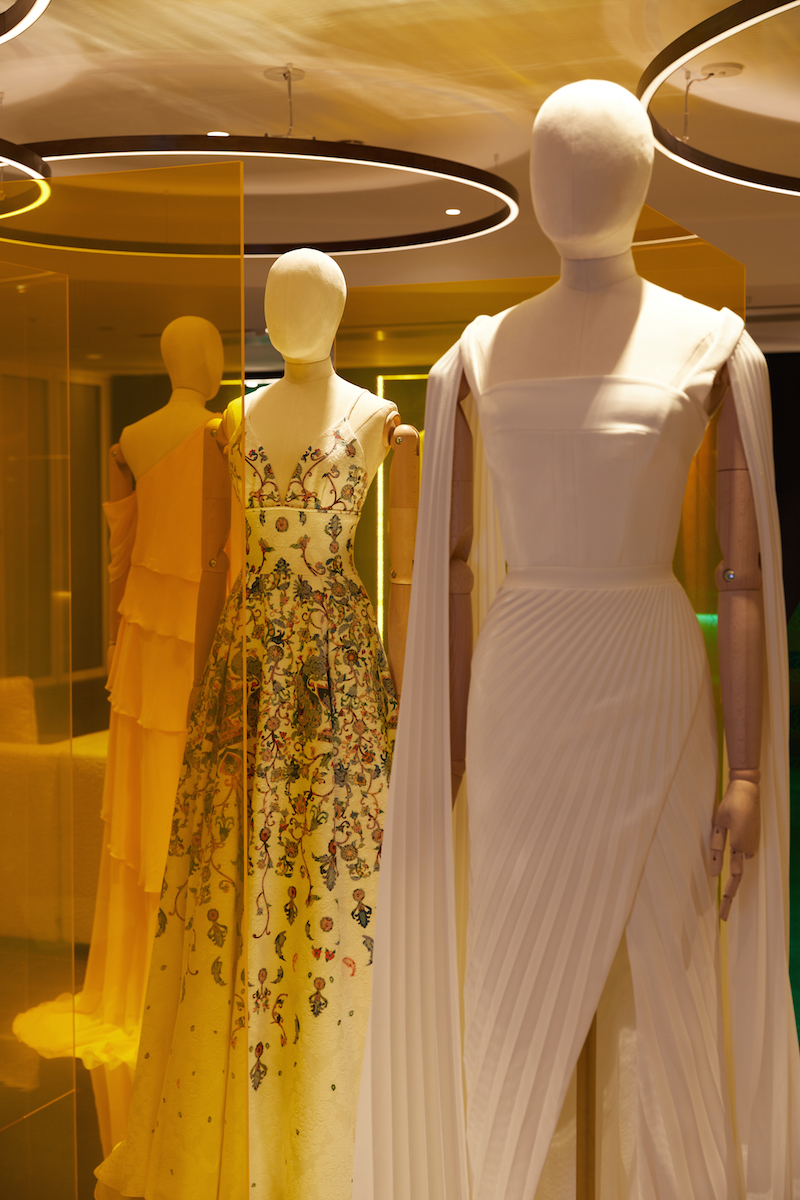


Honayda creations at Harrods, London. (Supplied)

“When I first started my brand, the fashion scene in Saudi Arabia was still young. I discovered every aspect of creating from my own experiences — starting from sourcing to tailoring and selling. Since then, I’ve seen amazing growth in the industry. By forging and implementing several programs that aim to promote Saudi fashion locally and internationally, the Fashion Commission has put a great deal into developing the sector in line with the Kingdom’s Vision 2030.”

Proudly wearing her Saudi heritage on her sleeve, Serafi’s mission has always been to empower women through her clothes. “I believe in women empowering women. The brand was nurtured in a way to have a cause and to be one with a voice. Stepping ahead by supporting and lifting each other proves achievable when we join forces. Women know and love Honayda because they relate to it.”

The starting point of every Honayda collection is based on the women who have inspired Serafi and those who have left a mark in history — be it from the past or the modern day. Her fall/winter 22 collection at Harrods is no different. Titled “A Charm from Afghan,” the designs are an ode to the powerful character of Afghan women, their strength and the country’s spectacular architecture.


Decoding villains at an Emirates LitFest panel in Dubai

Updated 25 January 2026
Follow

Decoding villains at an Emirates LitFest panel in Dubai

DUBAI: At this year’s Emirates Airline Festival of Literature in Dubai, a panel on Saturday titled “The Monster Next Door,” moderated by Shane McGinley, posed a question for the ages: Are villains born or made?

Novelists Annabel Kantaria, Louise Candlish and Ruth Ware, joined by a packed audience, dissected the craft of creating morally ambiguous characters alongside the social science that informs them. “A pure villain,” said Ware, “is chilling to construct … The remorselessness unsettles you — How do you build someone who cannot imagine another’s pain?”

Candlish described character-building as a gradual process of “layering over several edits” until a figure feels human. “You have to build the flesh on the bone or they will remain caricatures,” she added.

The debate moved quickly to the nature-versus-nurture debate. “Do you believe that people are born evil?” asked McGinley, prompting both laughter and loud sighs.

Candlish confessed a failed attempt to write a Tom Ripley–style antihero: “I spent the whole time coming up with reasons why my characters do this … It wasn’t really their fault,” she said, explaining that even when she tried to excise conscience, her character kept expressing “moral scruples” and second thoughts.

“You inevitably fold parts of yourself into your creations,” said Ware. “The spark that makes it come alive is often the little bit of you in there.”

Panelists likened character creation to Frankenstein work. “You take the irritating habit of that co‑worker, the weird couple you saw in a restaurant, bits of friends and enemies, and stitch them together,” said Ware.

But real-world perspective reframed the literary exercise in stark terms. Kantaria recounted teaching a prison writing class and quoting the facility director, who told her, “It’s not full of monsters. It’s normal people who made a bad decision.” She recalled being struck that many inmates were “one silly decision” away from the crimes that put them behind bars. “Any one of us could be one decision away from jail time,” she said.

The panelists also turned to scientific findings through the discussion. Ware cited infant studies showing babies prefer helpers to hinderers in puppet shows, suggesting “we are born with a natural propensity to be attracted to good.”

Candlish referenced twin studies and research on narrative: People who can form a coherent story about trauma often “have much better outcomes,” she explained.

“Both things will end up being super, super neat,” she said of genes and upbringing, before turning to the redemptive power of storytelling: “When we can make sense of what happened to us, we cope better.”

As the session closed, McGinley steered the panel away from tidy answers. Villainy, the authors agreed, is rarely the product of an immutable core; more often, it is assembled from ordinary impulses, missteps and circumstances. For writers like Kantaria, Candlish and Ware, the task is not to excuse cruelty but “to understand the fragile architecture that holds it together,” and to ask readers to inhabit uncomfortable but necessary perspectives.