

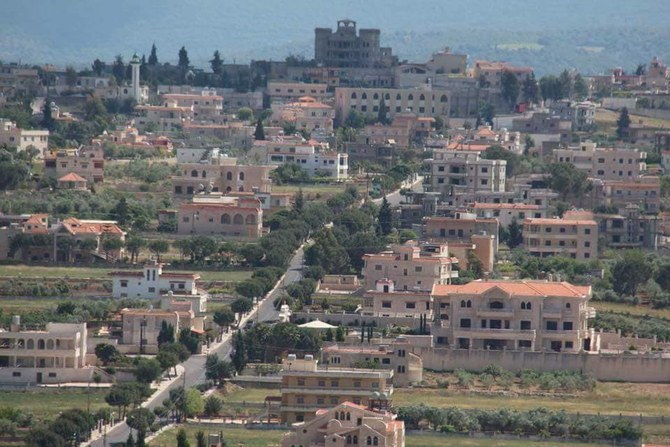

BEIRUT: The father of Hadi Matar, the man who stabbed novelist Salman Rushdie in the US on Friday, is refusing to talk to anyone. Since hearing about his 24-year-old son’s crime, he has not received any visitors at his home in the southern Lebanese town of Yaroun — not even the town’s mayor.
Mayor Ali Qassem Tuhfa told Arab News: “Matar’s parents have been separated for 10 years. The father returned to Yaroun while his family stayed in the US. He revived the family’s old business of raising livestock and has been taking care of a small herd. He has little to no social life and does not talk to anyone.”
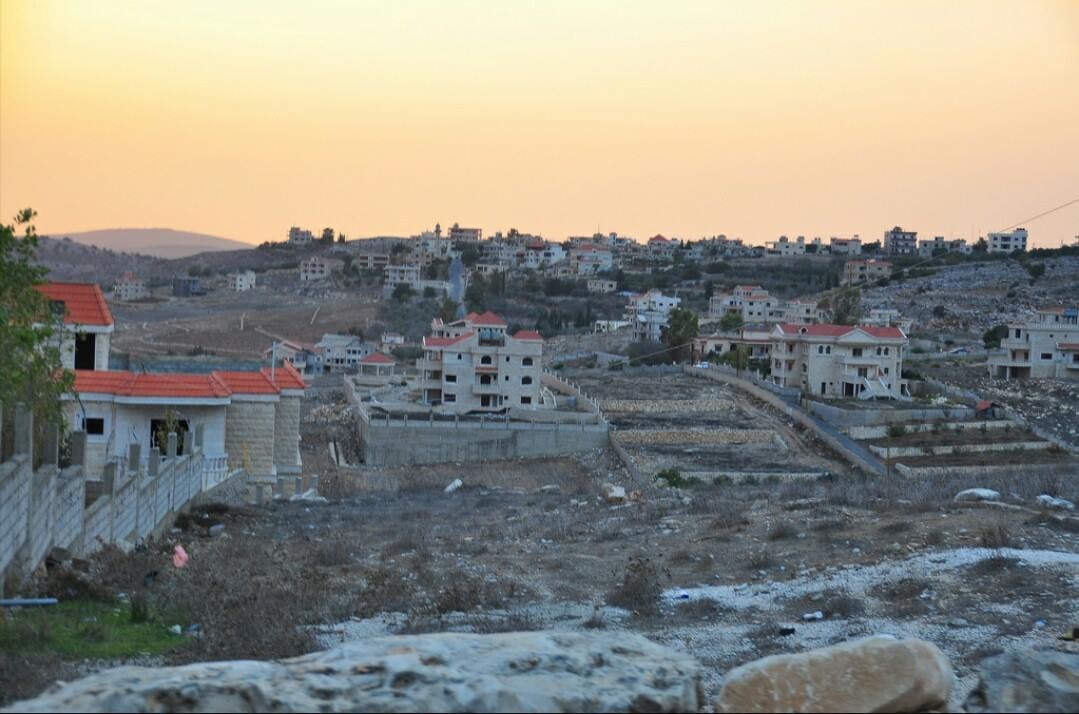
Yaroun is close to the town of Maroun Al-Ras in the district of Beit Jbeil. (Arab News)
Yaroun is close to the town of Maroun Al-Ras in the district of Beit Jbeil. It is about 125 km from Beirut. Previously, the people of the town were famous for farming and raising livestock.
Yaroun is a border town that was abandoned by many residents during the Israeli occupation of southern Lebanon in the 1970s. Some also emigrated before then, leaving only about 500 residents. This number increases with the temporary return of expatriates during the summer and other holidays, with records showing that 9,000 people originate from the town.
Both Christians and Muslims live in Yaroun, the mayor explained, while noting that the majority of emigrants have gone to Australia and North and South America.
Samer Wehbe, a journalist from the area, said: “When the expatriates gradually returned, they built beautiful houses that resembled the homes in which they lived abroad, giving the town a wealthy appearance. The majority of townspeople do not live there permanently; only when they come back to Lebanon on holidays and special occasions. Political affiliations remain vague, although the town is located in a pro-Hezbollah area, as it is adjacent to Maroun Al-Ras, in which Hezbollah scored major victories against the Israeli occupation.”

Yaroun is about 125 km from Beirut. Previously, the people of the town were famous for farming and raising livestock. (Arab News)
Mayor Tuhfa said that Matar was born and raised in the US. “I have been the mayor for six years and have never seen him in town,” he said.
Tuhfa explained: “Matar’s mother is also from Yaroun, but she is not related to her husband. Her name is Silvana Firdaus. Matar has one sister who also lives with her mother in the US.”
He added: “The news of Matar’s crime raised questions in the town, which mainly focused on ‘why did he do that?’ His act was even condemned, bearing in mind that no one knows him (Matar) on a personal level.”
Activists’ reactions on social media platforms were mixed. One considered that Matar is “only an American of Lebanese descent, who apparently suffers a deep identity crisis.”
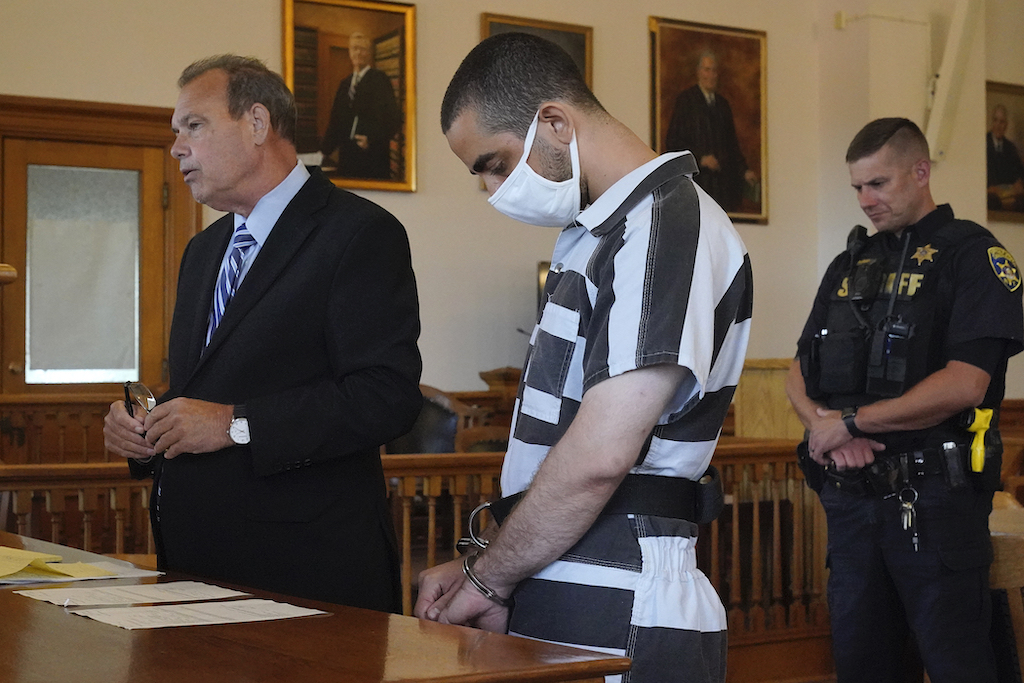
Hadi Matar, 24, center, listens to his public defense attorney Nathaniel Barone, left, addresses the judge while being arraigned in the Chautauqua County Courthouse in Mayville, NY., Saturday, Aug. 13, 2022. (AP)
Hezbollah refrained from commenting on the attack on Rushdie. According to Reuters, an official said the group “had no additional information on the stabbing attack against novelist Salman Rushdie.” The official added: “We don’t know anything about this subject so we will not comment.”
Nevertheless, in recent days, an old video of Hezbollah Secretary-General Hassan Nasrallah inciting his supporters to kill Rushdie has circulated on social media platforms.


