Saudi-American Native Fury 2022 maneuvers begin in Yanbu

1 / 7
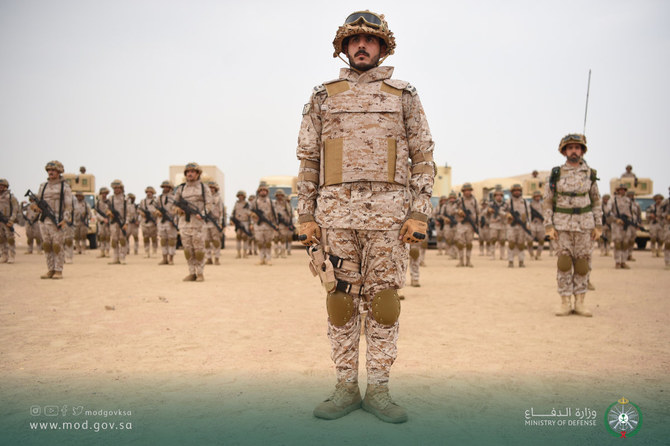
The “Outrageous Anger 22” exercise was launched by the Royal Saudi Armed Forces and US Marine Corps. (Twitter/@modgovksa)
2 / 7
The “Outrageous Anger 22” exercise was launched by the Royal Saudi Armed Forces and US Marine Corps. (Twitter/@modgovksa)
3 / 7
The “Outrageous Anger 22” exercise was launched by the Royal Saudi Armed Forces and US Marine Corps. (Twitter/@modgovksa)
4 / 7
The “Outrageous Anger 22” exercise was launched by the Royal Saudi Armed Forces and US Marine Corps. (Twitter/@modgovksa)
5 / 7
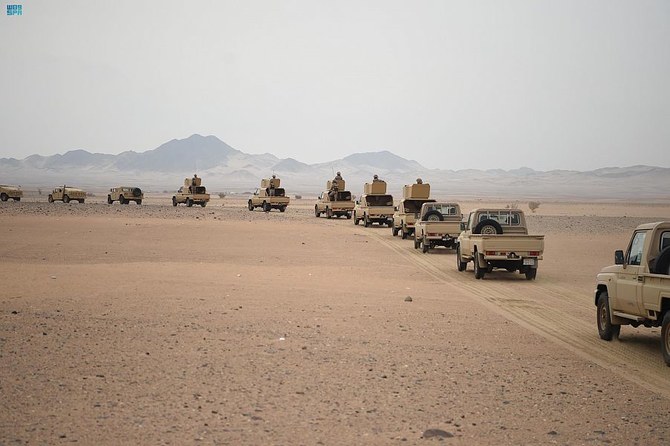
Photo/Saudi Press Agency
6 / 7
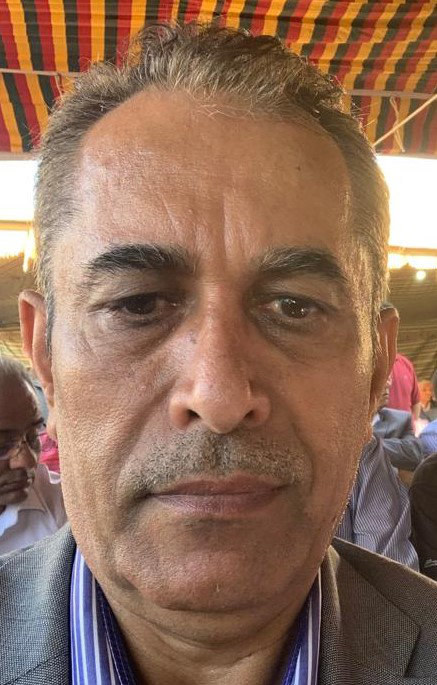
Ali Al-Balawi, a strategic analysis expert. (Supplied)
7 / 7
Saudi-American Native Fury exercise will raise the level of compatibility and combat readiness of the Saudi and American forces. (SPA)
Short Url
Updated 14 August 2022
Follow

Saudi-American Native Fury 2022 maneuvers begin in Yanbu

  • Exercise to raise level of combat readiness of Saudi, American forces
  • The month-long drill includes logistical exercises and operations with live ammunition

RIYADH: The Native Fury 2022 drill between Saudi armed forces and US marine corps has begun in Yanbu’s exercise operations area.

The exercise will last nearly a month and include many drills and exercises on logistics as well as live ammunition shooting.

It was opened by Saudi Air Force Major General Ahmed Aldebais and US Marine Corps Maj. Gen. Paul J. Rock and a number of senior officials from both sides, who toured the sites of the drill.

The exercise commander Col. Saud Al-Aqili said that the “Native Fury” exercise aimed to “practice and train the implementation of bilateral operational and logistical military plans, exchange experiences between the two sides, and complementary work with civil authorities to implement such mixed exercises.”
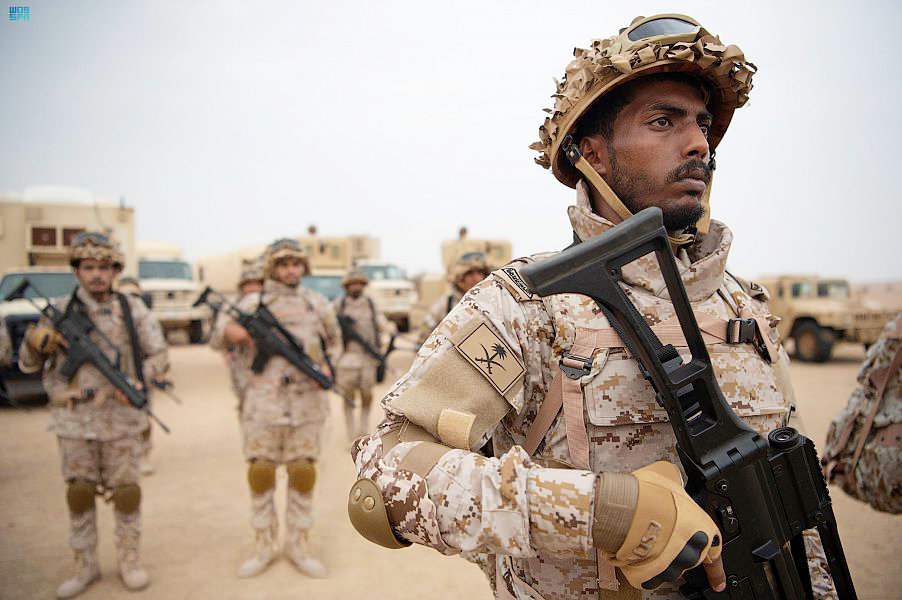


The exercise was opened by Saudi Air Force Major General Ahmed Aldebais and U.S. Marine Corps Maj. Gen. Paul J. Rock and a number of senior officials from both sides and is taking place in Yanbu. (SPA)

Col. Matthew H., commander of the American forces participating in the exercise, said that the maneuvers improved complementary work and raise the level of compatibility and combat readiness of the Saudi and American forces.

Relations between the two countries date back to 1931, when the Kingdom began the commercial journey of oil exploration and production.

In 1933, King Abdulaziz bin Abdulrahman Al-Saud granted an American company the right to explore for oil, which was followed by the signing of a cooperation agreement between the two countries.

The historic meeting on board the US cruiser (USS Quincy) on Feb. 14, 1945 between King Abdulaziz and US President Franklin Roosevelt established decades of relations and strategic partnership between Saudi Arabia and the US.

Ali Al-Balawi, a strategic analyst, told Arab News: “The exercise means a lot as it affirms the importance of Saudi-American joint military cooperation safeguarding common interests and regional security.”

Al-Balawi said that the exercise confirmed that joint training programs between the Saudi Armed Forces and the United States Marines “will continue, as planned, and are not influenced by any other political factors.”

He said that this meant that security and stability were given priority over many other matters, “especially because American military and intelligence officials realize that without the Saudi positive role there will be no security or stability in the Middle East and no protection to the US interests.”  

Saudi Arabia, according to Al-Balawi, is a pivotal and important country with moderate policies, which “are important factors in the international and regional stabilization industry.”

He said that the combat efficiency of the Saudi Army, as well as the quality of the advanced and sophisticated weapons it deals with, qualified it for joint training with the US Navy. He highlighted the importance of the waterways surrounding Saudi Arabia and the international trade passing through the region, which required Saudi power.

Al-Balawi said that the goal of the exercise was to emphasize Saudi Arabia and America’s ability to provide regional security requirements, to send a message to all threats to vital waterways in the region, and to show that Saudi forces have the rehabilitation and training capability to deal with emergency conditions as they occur.


14 sculptures go on display at public spaces in Riyadh

Updated 5 sec ago
Follow

14 sculptures go on display at public spaces in Riyadh

  • The works were chosen by Riyadh Art from its international Tuwaiq Sculpture symposium to reflect its ‘vision of weaving beauty and intellect into the city’s fabric’
  • Initiative aligns with efforts to make art a key part of city’s identity that improves quality of life and promotes the cultural economy, says Royal Commission for Riyadh City’s Khalid Al-Hazani

RIYADH: Fourteen sculptures selected from the annual international Tuwaiq Sculpture symposium, a Riyadh Art program, went on display on Wednesday at three prominent public spaces across the Saudi capital: ROSHN Front, the SEDRA residential community, and Sports Boulevard.

The project is part of Riyad Art’s efforts to showcase artworks in public spaces, and the addition of more works in other places is expected later.

Khalid Al-Hazani, the executive vice president of the lifestyle sector at the Royal Commission for Riyadh City, said: “This step reflects (Riyadh Art’s) vision of weaving beauty and intellect into the city’s fabric, and creating vibrant and culturally rich public spaces, allowing art to become an integral part of people’s daily lives.”

It is also in line with Riyadh Art’s broader strategy for transforming the city into an open-air art gallery, he added, thereby “turning art into a central element of the city’s identity and a key contributor to improving quality of life and promoting the cultural economy.” 

The Riyadh Art Program installed on Wednesday 14 sculptures selected from the Tuwaiq International Sculpture Symposium at prominent locations in Riyadh, including the ROSHN Front, SEDRA Residential Community, and Sports Boulevard. (Supplied)

The three chosen locations were considered perfect places to host the artworks because of their vibrancy, strong community connections and accessibility, Al-Hazani noted.

“This provides residents and visitors with the opportunity to engage with the sculptures in their everyday lives,” he said.

Seven of the sculptures have been installed at ROSHN Front, considered a key urban hub. The artworks on display there form a thought-provoking artistic landscape that encourages interaction, organizers said, and explores a number of themes including the values of urban transformation, community spirit, and creative curiosity.

Three sculptures are on display at the SEDRA residential community. Chosen to complement its serene character and nature-integrated urban planning, they blend in with their surroundings to reflect the values of environmental harmony, contemplation and renewal, organizers explained.

The remaining four sculptures are at Sports Boulevard, known for its open, green spaces. These works reflect several concepts, in particular ideas of nature, balance and public health.

All of the sculptures are part of Riyadh Art’s permanent collection, which includes works created by local and international artists during the Tuwaiq Sculpture symposium.