

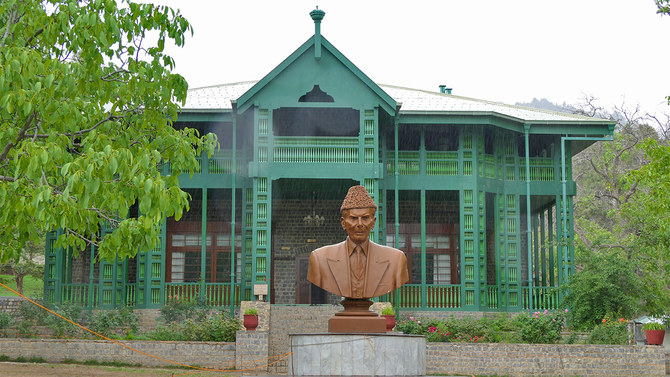
Summer home where Pakistani founder spent final days lives on as monument to his memory

The picture taken on August 2, 2022 shows exterior view of Quaid-e-Azam Residency in Ziarat, Balochistan, Pakistan. (AN Photo)
Short Url
Updated 14 August 2022
Follow

Summer home where Pakistani founder spent final days lives on as monument to his memory

  • Two-story wooden building called Quaid-e-Azam Residency was built by British in Ziarat Valley in 1892
  • It was a summer retreat of Muhammad Ali Jinnah, today one of Pakistan’s most widely visited heritage sites

QUETTA: A single bed, modest wooden furniture, and black and white photographs on the walls of a small bedroom in a 19th-century residence in southwest Pakistan present an unassuming setting. 

But this is no ordinary room: it has special significance for Pakistanis as the place where the country's founding father spent some of the last days of his life.  

The Ziarat, or Quaid-e-Azam, Residency, has a two-story wooden structure amidst a juniper forest and was built during British rule in 1892. Located in Ziarat Valley, a picturesque hill station in Balochistan province, the house was a summer retreat of Muhammad Ali Jinnah, Pakistan’s Quaid-e-Azam (Great Leader). It was also where Jinnah stayed for two months as he tried to recover from a lung disease a year after the success of his movement to separate Pakistan from India on Aug. 14, 1947 after the end of British colonial rule. 

Decades later, people from across the country visit Ziarat to pay tribute to Jinnah's memory.
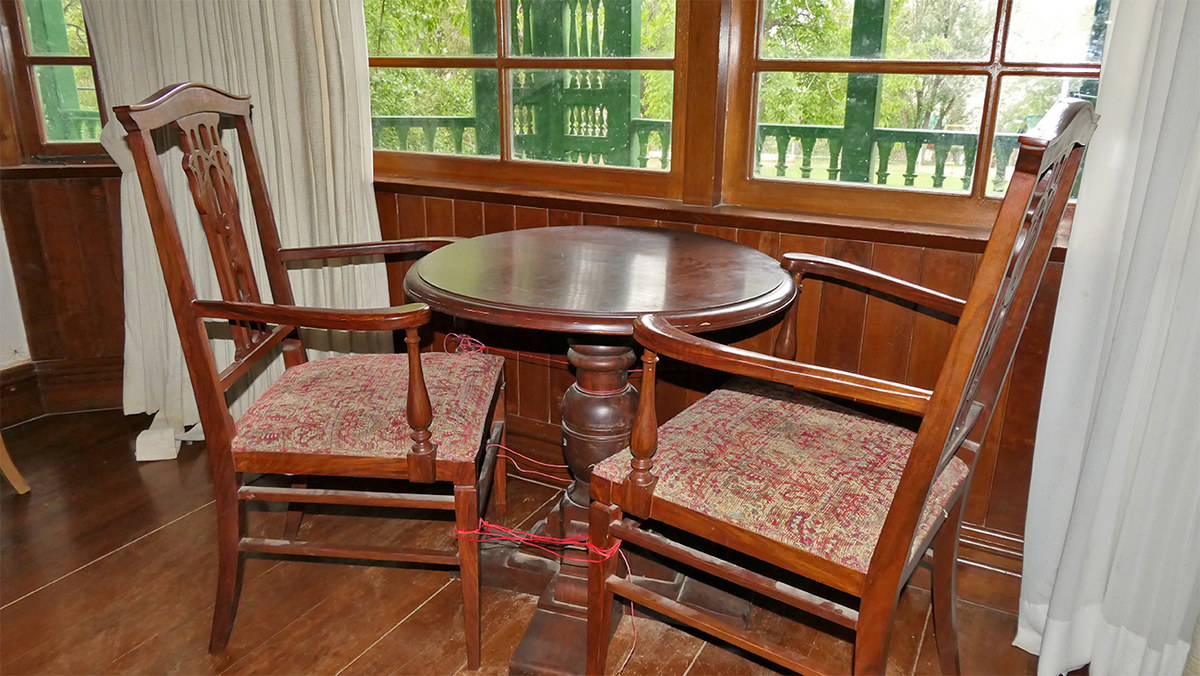


Chairs and a table used by Pakistani founder Muhammad Ali Jinnah for political meetings on display at his summer residence in Ziarat, Balochistan, on Aug. 2, 2022. (AN Photo)  

“We have read about the Quaid Residency in books and heard stories from our elders … but when I stepped inside the residency, my feelings changed,” Chanda Ashraf, a 21-year-old student from Gujranwala, told Arab News.  

“Inside this residency, I have experienced how the Quaid lived here and his existence was tangible,” she said. “I request all Pakistanis to visit this place once in their lifetime.”

The house has eight rooms, fitted with cedar wood. Jinnah’s bedroom is on the second floor, in front of his sister’s, Fatimah Jinnah, who took care of him in Ziarat.
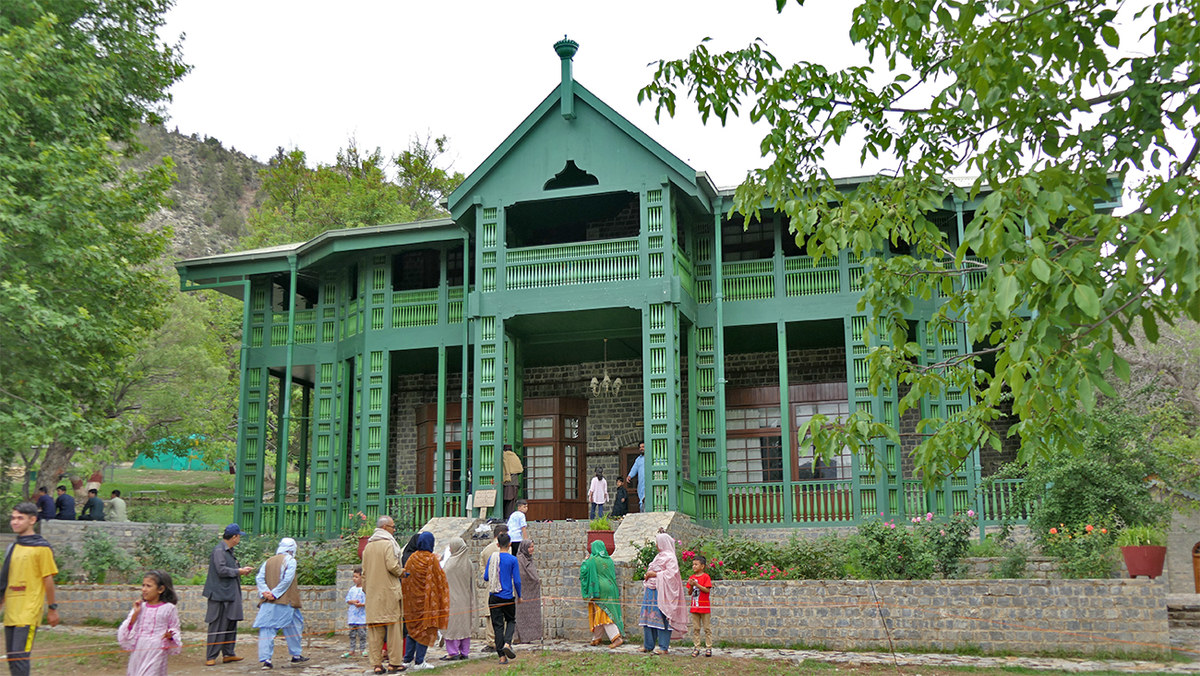


Tourists take photos in front of Pakistani founder Muhammad Ali Jinnah’s summer residence in Ziarat, Balochistan, on Aug. 2, 2022. (AN Photo)

Jinnah had had tuberculosis since the 1930s, but hid his condition because he believed it would hurt him politically, historians say. In July 1948, Jinnah arrived in Quetta and journeyed to the higher retreat at Ziarat, where the Pakistani government sent the best doctors it could find to treat him. It was here that a diagnosis of tuberculosis and advanced lung cancer was confirmed. 

On August 13, on the eve of the first anniversary of the independence for which he had fought so hard, the founding father was moved to the lower altitude of Quetta and finally back to Karachi on September 11, 1948. 

Jinnah died later that night at 10:20 pm at his home in Karachi. He was 71 years old and Pakistan was a little over one. 

Today, the Quaid’s clothes and the tableware he and his sister had used at the Ziarat summer home are on display at the residency - now a museum and one of Pakistan’s most widely visited national heritage sites. 
The Quaid-e-Azam Residency has also appeared on the 100-rupee note since 2006.
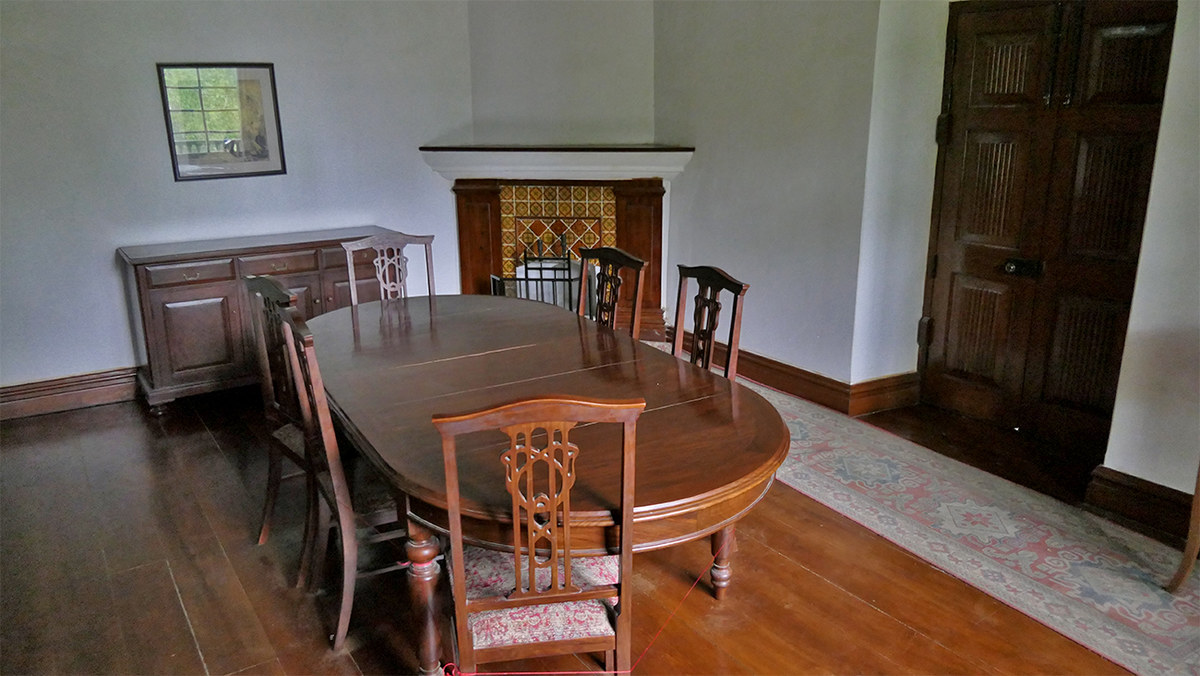


A dining table used by Pakistan founder Muhammad Ali Jinnah is on display at his summer residence in Ziarat, Balochistan, on Aug. 2, 2022. (AN Photo)  

Muhammad Rahim, who for the past 19 years has been working as an official tour guide at the residency, said he was proud to be working at the house belonging to the man who had “struggled for an independent country for our future generations.”

“My late uncle Toti Khan had performed duties in the residency when Quaid-e-Azam Muhammad Ali Jinnah had come to live here back in the summer of 1948,” he told Arab News.  
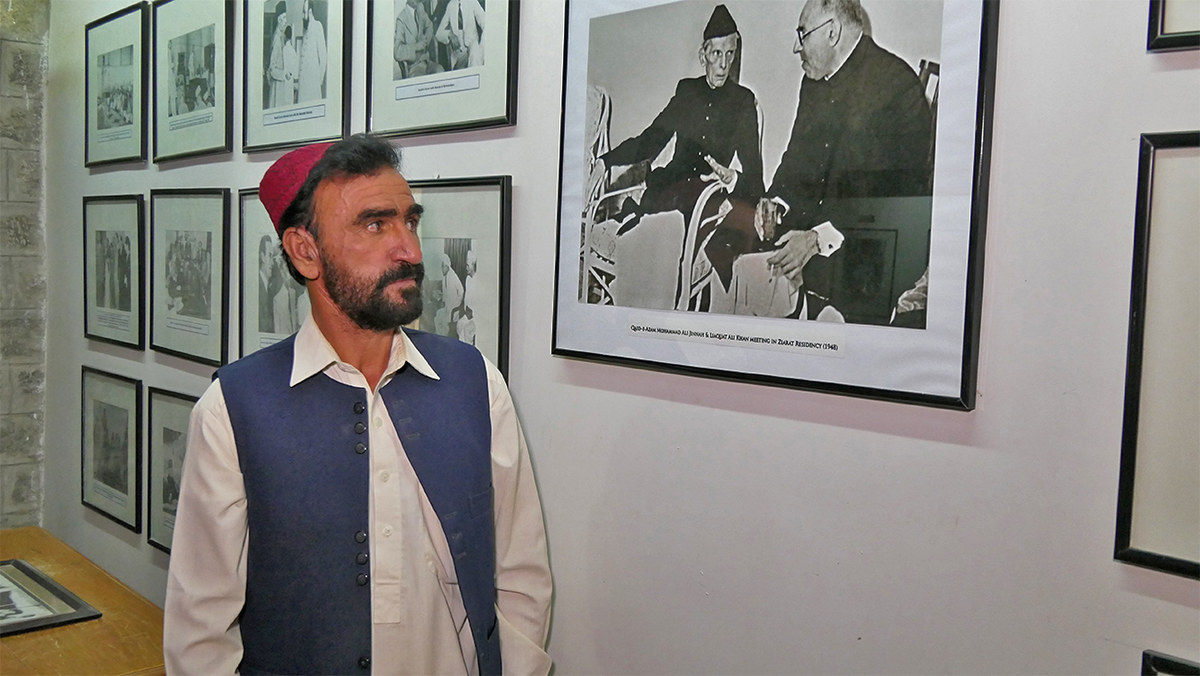


Muhammad Rahim, a guide at the Quaid-e-Azam Residency, poses at the museum’s gallery with photos of Pakistani founder Muhammad Ali Jinnah, in Ziarat, Balochistan, on Aug. 2, 2022. (AN Photo)  

“Despite two janitors hired for cleaning Quaid’s residence, I clean the entire residency with my hands, because I consider it as my service for the Quaid.”

The building was damaged in 2013, when a blaze tore through its wooden structure after a grenade attack by a Baloch separatist group. It was restored within four months.

Balochistan has long been the scene of a low-level insurgency, and a few attacks have been reported in Ziarat district in recent years, but the province’s tourism minister, Abdul Khaliq Hazara says, told Arab News the security situation was normal and thousands of people visited Jinnah’s residence every year.

“The government has been developing the infrastructure in Ziarat to facilitate tourists,” he said. “The Quaid Residency is a national heritage.”

A visitor Mohamad Alam Qasim said: "Not just for Balochistan, this is Pakistan’s heritage. Quaid-e-Azam was our national hero. He was everyone's leader."


Pakistan opposition continues sit-in outside parliament over ex-PM Khan’s eye treatment

Updated 5 sec ago
Follow

Pakistan opposition continues sit-in outside parliament over ex-PM Khan’s eye treatment

  • Opposition leader says the protest will continue until Imran Khan, currently at Adiala prison, is admitted to Shifa Hospital
  • The government says Khan’s medical report will be compiled again, promising no negligence in the matter under judicial oversight

ISLAMABAD: Pakistan’s opposition alliance is continuing its sit-in outside the Parliament House in Islamabad for the second day on Saturday, seeking shifting of jailed former prime minister Imran Khan to a private hospital for treatment of his worsening eye condition.

The protest follows a rare prison visit earlier this week by Barrister Salman Safdar, appointed as amicus curiae by the Supreme Court to assess Khan’s health and living conditions at Rawalpindi’s Adiala jail. In his report, Safdar highlighted “seriousness” of Khan’s ocular condition and recommended an independent examination.

On Friday evening, opposition members gathered outside the parliament building in Islamabad to stage a sit-in, with the police locking its gates and cordoning off surrounding roads to prevent protesters from gathering in front of the building, witnesses and opposition leaders said.

Mehmood Khan Achakzai, the head of the Tehreek-e-Tahafuz-e-Ayeen-e-Pakistan opposition alliance, criticized the authorities for the measures to prevent opposition members from reaching the sit-in venue in Islamabad.

“We are not the ones who make threats, but if you continue with this attitude, after two or three days every roundabout in Pakistan will be closed,” Achakzai said on X late Friday. “Then we will not even be able to handle the people.”

In an earlier post on X, the alliance said its leadership would continue the sit-in “until Imran Khan is admitted to Al-Shifa Hospital.”

“We have staged a sit-in for the earliest medical check-up of Imran Khan, which would take just ten minutes,” Achakzai told reporters on Friday evening. “If it is conducted, we will end our protest.”

According to a Feb. 6 medical report from the Pakistan Institute of Medical Sciences (PIMS) cited in Safdar’s filing, Khan was diagnosed with “right central retinal vein occlusion” after reporting reduced vision in his right eye. He underwent an intravitreal injection at PIMS and was discharged with follow-up advice.

In his interaction with Safdar, Khan said he had suffered “rapid and substantial loss of vision over the preceding three months” and claimed his complaints had not been addressed promptly in custody. He further said he had been left with “only 15 percent vision in his right eye.”

Safdar’s report noted that the 73-year-old former premier appeared “visibly perturbed and deeply distressed” over the loss of vision, though it also recorded that he expressed satisfaction with his safety, basic amenities and food provisions in prison.

Responding to the controversy, Parliamentary Affairs Minister Tariq Fazal Chaudhry rejected PTI’s claims that Khan had been suffering from an eye issue since October last year, noting that the ex-premier was visited by his sister on Dec. 2 but she did not mention the medical issue.

“Medical report will be compiled again, the chief justice of the Supreme Court is himself monitoring this case,” he said. “Wherever it will be requested, Imran Khan’s eye will be examined at.”

Chaudhry vowed there would be no negligence.

Khan has been in custody since August 2023 in connection with multiple cases that he and his party describe as politically motivated. The government denies the allegation.

Concerns over his health resurfaced after authorities confirmed he had briefly been taken from prison to a hospital in Islamabad for an eye procedure. While the government said his condition was stable, Khan’s family and PTI leaders alleged they were not informed in advance and that he was being denied timely and independent medical access.